









Was this page helpful?

| Public website: | en.kawaguchiko.net |
|---|
| Power Grid: |
100 V, 50 Hz Plug: Type A
Type A:
 Read about power adapters |
|---|---|
| Currency: |
Japanese Yen (JPY) $1 ≈ ¥158 |
| Cashless info: |
Rating 4/5
Cashless payments are becoming more common, especially in cities, with some shops still preferring cash. Be prepared for occasional cash-only situations in rural areas.
Save with a travel credit card |
| eSIM providers: |
Best value: Saily Flexibility: Airalo Read our in-depth comparison |
| Tipping: | Tipping is not customary in Japan and can be considered rude. Excellent service is the norm, and tipping is unnecessary in most places. |
|---|---|
| Public drinking: | Public drinking is legal and commonly accepted, particularly during festivals and events. |
| Public smoking: | Smoking is prohibited in indoor public places but allowed in designated outdoor areas. Some restaurants may have smoking sections. |
| New Year (January) |
One of the most important holidays, expect crowded temples and high prices. Plan ahead. |
|---|---|
| Golden Week (April-May) |
The busiest travel time, expect high demand for accommodation and transportation. |
| Obon (August) |
A time to honor ancestors, many businesses close, and transportation can be crowded. |
| Emergency contact: | Emergency Number: 110 (Police), 119 (Fire & Ambulance) |
|---|---|
| Taxi apps: | Uber, JapanTaxi, DiDi |
| Other: | Japan is a country of respect, so understanding local customs and etiquette is important. Public transportation is efficient, but can be crowded during peak hours. |
The best times to travel section shows how the months compare for a visit, so you can find the time of year that fits what you want to do.
Background colors of the months:
The color shows the typical temperature: yellow (hot), green (mild) and blue (cold). How strong the color is shows the travel season: full color means high season, soft color means shoulder season and soft-striped means off season.
Weather symbols:
Each month has one symbol showing what the weather is typically like, such as hot and sunny, freezing or a rainy or snowy season. Use them to quickly spot months that match the weather you want, or to avoid the ones that don't.
Crowdedness:
The people icon shows how busy the place usually is. The more people, the more crowded it gets.
Additional notes:
The gray info boxes point out special things worth knowing, like recurring weather issues or seasonal events.
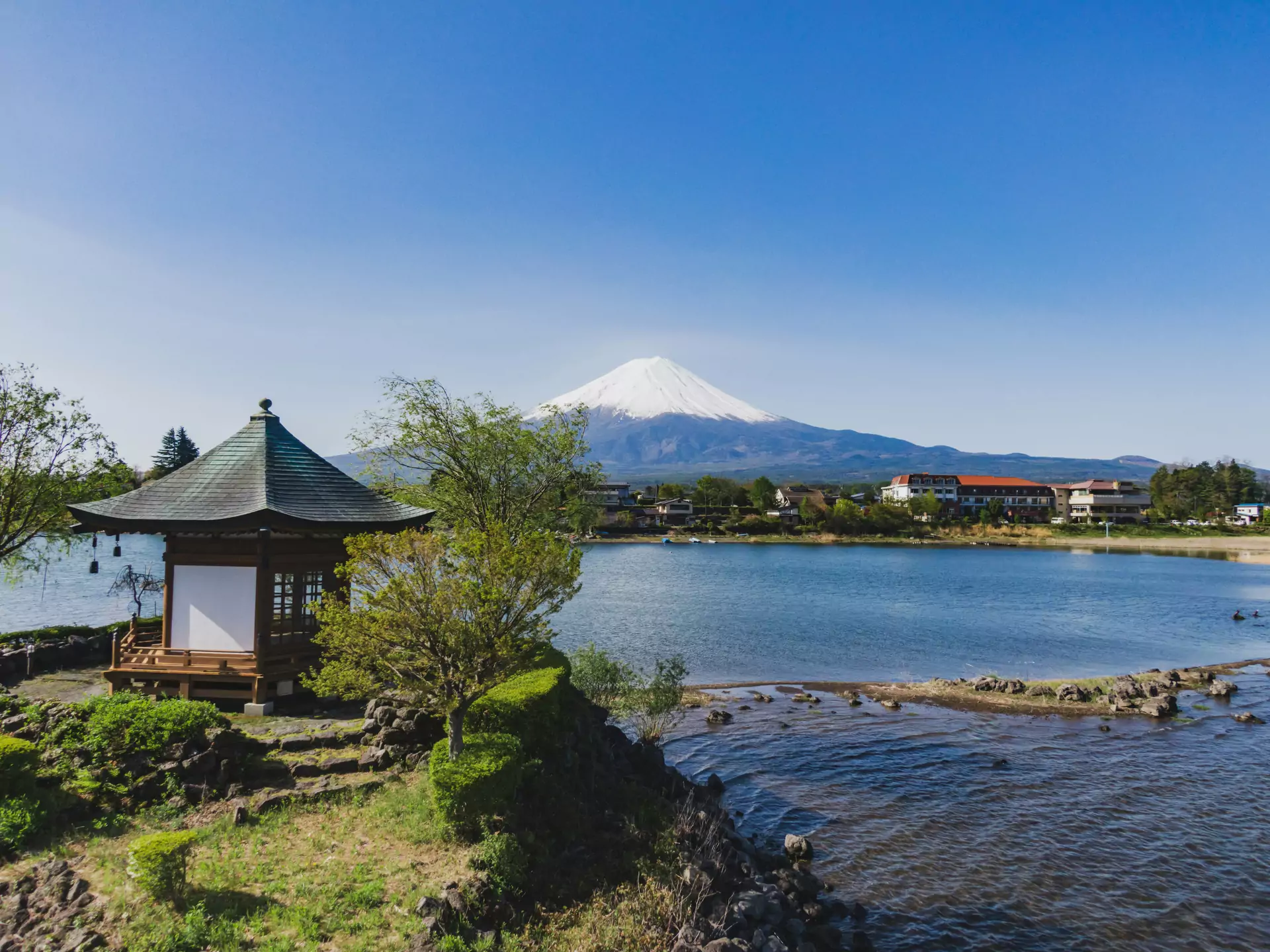
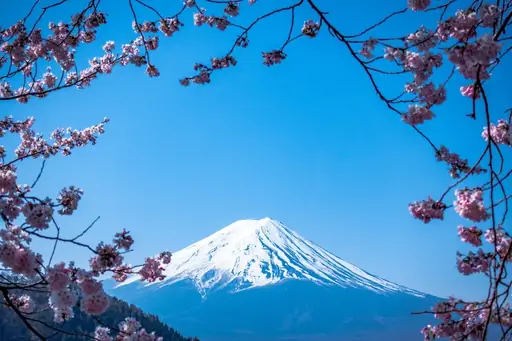
Lake Kawaguchi belongs to a group of five lakes that formed when volcanic lava flows dammed the valleys north of the mountain. It's the easiest of the five to reach from Tokyo and the most developed, with a station, hotels, museums and a lively shore. On calm, clear days Mount Fuji appears upside down in the water. The north side of the lake is the place to go early, since haze and cloud often hide the mountain later.
Several activities take you onto or above the water. A lake cruise gives views of the peak from the surface. The ropeway up Mount Tenjo gives a panorama over the lake and the cone behind it. Tenjoyama Park at the top is a favorite photo spot. Bicycles can be rented for a ride between the museums and many hot spring baths have a view of Mount Fuji.
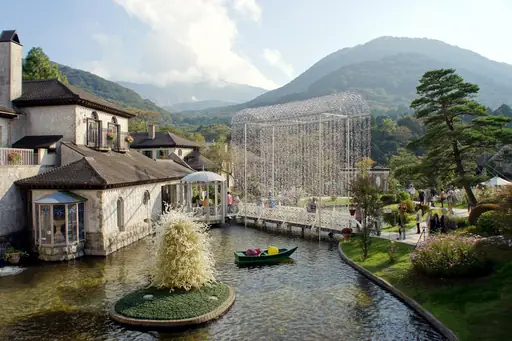
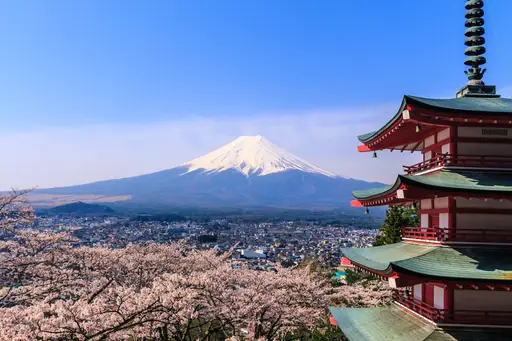
The museums around the shore suit a rainy hour. Itchiku Kubota Art Museum shows kimono and traditional gardens, Kawaguchiko Art Museum has works depicting Mount Fuji and Kawaguchiko Music Forest displays instruments in a European-style garden. Chureito Pagoda in Arakurayama Sengen Park is a short trip away and frames Fuji behind its tiers.
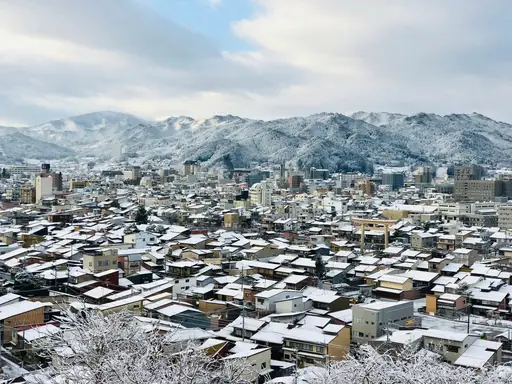
The seasons change the shore. Cherry trees are lit at night during the mid-April blossom festival and the Herb Festival and lavender follow from late June to mid-July. Maples color the northern shore through November. Winter is the best time to see Mount Fuji clearly, with crisp air and few clouds. Plan on a full day or stay overnight to catch the calm morning light.
Lake Kawaguchi is where Mt. Fuji is reflected in still water on calm, clear days. It's the most accessible of the Fuji Five Lakes, which makes it a favorite for quick getaways and longer stays. Cherry blossoms in spring and autumn foliage bring color to the shore. The lakeside promenades, museums and hot spring baths give you plenty of reasons to stay longer. There's a playful side too, with amusement parks, ropeways and lavender fields in summer. The mountain itself can hide behind clouds, especially on summer afternoons. Early mornings are the best time for a clear view. A lake cruise shows the peak from the water and the ropeway up Mount Tenjo gives a view over the lake and the cone behind it. Museums around the shore, including the Itchiku Kubota Art Museum, suit a rainy hour. Winter has the clearest air for Fuji views while lavender fills the shore in early summer. Plan on a full day or stay overnight to catch the calm morning light.
Kawaguchiko Station is the main stop for the lake. From Shinjuku take the JR Chuo Line to Otsuki, about an hour away, then change to the Fuji Kyuko Line for Kawaguchiko Station. The whole trip takes about 2 hours and 5 minutes on a limited express. The JR Rail Pass isn't accepted on the Fuji Kyuko Line. Highway buses run from the Shinjuku Expressway Bus Terminal to Kawaguchiko Station in just under 2 hours for around ¥2,000 ($12.62) and they avoid the change at Otsuki. Buses also link Kawaguchiko Station with Mishima Station and Shin-Fuji Station on the Tokaido Shinkansen, in about 1.5 hours and 2 hours 15 minutes. From the station, walk, rent a bicycle or use local sightseeing buses to circle the lake. Most bus routes around the Five Lakes connect at Kawaguchiko Station. By car the Kawaguchiko interchange on the Chuo Expressway is about 1 hour 30 minutes from Tokyo.
Staying by the lake lets you catch Mount Fuji at sunrise and in calm evening light, when day trippers have left. Lake Kawaguchi has the widest choice of any of the Five Lakes, from Japanese inns with hot spring baths to modern hotels and guesthouses. Many rooms face the mountain, which is worth requesting when booking. The north shore and the streets around Kawaguchiko Station are the most convenient bases for buses and the ropeway. Rooms fill during the cherry blossom festival, the lavender weeks and the autumn foliage, so book early for those dates. Lake Yamanaka and Lake Saiko are quieter alternatives a short bus ride away, with smaller hotels and campgrounds.
The area is best explored by a mix of local buses, rental bicycles and walking.
Buses:
Local buses such as the Red Line sightseeing bus connect the major attractions. Most bus routes around the Five Lakes meet at Kawaguchiko Station. During peak seasons buses and ropeways can get crowded, so start early for a more relaxed experience.
Bicycles and walking:
The lakeside has promenades and parks for walking and rental bicycles suit rides between the museums. The Mount Fuji ropeway is a 15-minute walk from Kawaguchiko Station.
Lake cruises:
A lake cruise gives views of the peak from the water and works well as a break between museum visits and the ropeway.
The lake area has a wide mix of casual eating. Around Kawaguchiko Station you'll find noodle shops, cafes and set-meal restaurants. Hoto, a hearty noodle stew with vegetables, is a Yamanashi specialty and warms you up in cool weather. Many inns serve multi-course dinners of local ingredients.
Cafes and bakeries along the shore have lake views and are good for a break after the cruise or a cycle ride. Convenience stores near the station are handy for water and snacks if you're heading to the ropeway or the museums. Lunch is busiest on weekends and during the cherry blossom and autumn leaf festivals, so an early or late meal helps avoid waits.
Log in to add this place to a travel list and get a summary of all recommended items for your whole trip.
We calculate the average costs when traveling to destinations and compare those with the living costs at your home. With this you can get an estimate of how expensive or cheap the destination is for you.
To customize this, you can set up which location and price level are used for the calculations in your account settings.
The exchange rate price factor shows how expensive or cheap a currency currently is compared to its historical average. It's a quick way to see if a country is currently more or less affordable due to exchange rate changes.
