








Was this page helpful?

| Power Grid: |
100 V, 50 Hz Plug: Type A
Type A:
 Read about power adapters |
|---|---|
| Currency: |
Japanese Yen (JPY) $1 ≈ ¥158 |
| Cashless info: |
Rating 4/5
Cashless payments are becoming more common, especially in cities, with some shops still preferring cash. Be prepared for occasional cash-only situations in rural areas.
Save with a travel credit card |
| eSIM providers: |
Best value: Saily Flexibility: Airalo Read our in-depth comparison |
| Tipping: | Tipping is not customary in Japan and can be considered rude. Excellent service is the norm, and tipping is unnecessary in most places. |
|---|---|
| Public drinking: | Public drinking is legal and commonly accepted, particularly during festivals and events. |
| Public smoking: | Smoking is prohibited in indoor public places but allowed in designated outdoor areas. Some restaurants may have smoking sections. |
| New Year (January) |
One of the most important holidays, expect crowded temples and high prices. Plan ahead. |
|---|---|
| Golden Week (April-May) |
The busiest travel time, expect high demand for accommodation and transportation. |
| Obon (August) |
A time to honor ancestors, many businesses close, and transportation can be crowded. |
| Emergency contact: | Emergency Number: 110 (Police), 119 (Fire & Ambulance) |
|---|---|
| Taxi apps: | Uber, JapanTaxi, DiDi |
| Other: | Japan is a country of respect, so understanding local customs and etiquette is important. Public transportation is efficient, but can be crowded during peak hours. |
The best times to travel section shows how the months compare for a visit, so you can find the time of year that fits what you want to do.
Background colors of the months:
The color shows the typical temperature: yellow (hot), green (mild) and blue (cold). How strong the color is shows the travel season: full color means high season, soft color means shoulder season and soft-striped means off season.
Weather symbols:
Each month has one symbol showing what the weather is typically like, such as hot and sunny, freezing or a rainy or snowy season. Use them to quickly spot months that match the weather you want, or to avoid the ones that don't.
Crowdedness:
The people icon shows how busy the place usually is. The more people, the more crowded it gets.
Additional notes:
The gray info boxes point out special things worth knowing, like recurring weather issues or seasonal events.
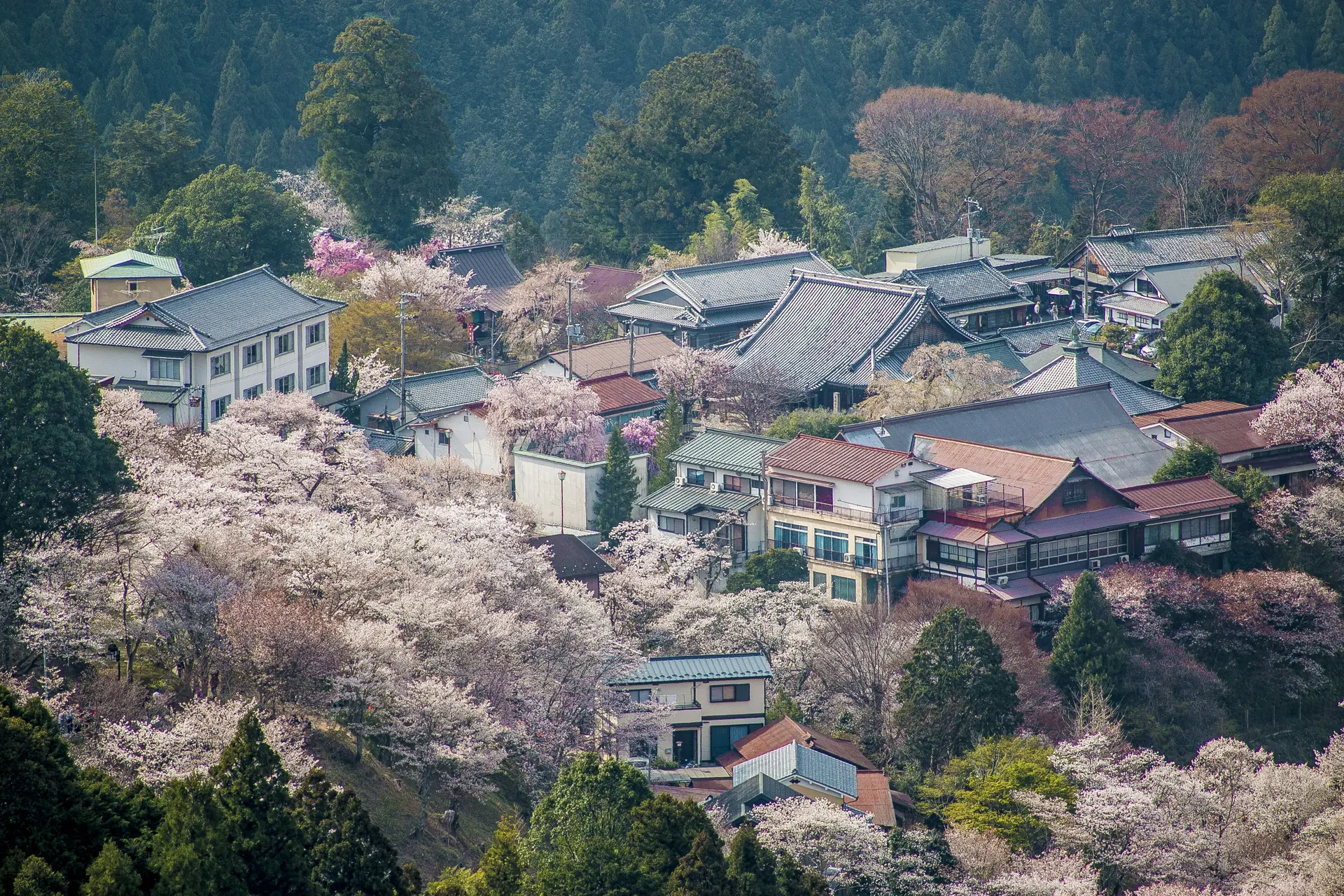
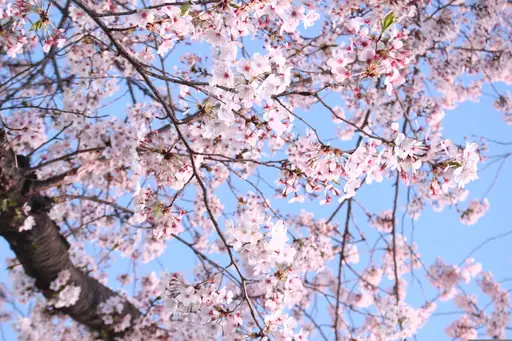
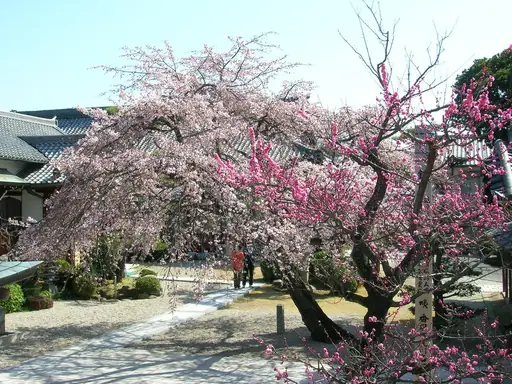
Mount Yoshino is best known for its 30,000 cherry trees, planted over centuries as offerings to the deity of the mountain. They fill the slopes in four areas called Shimo, Naka, Kami and Oku Senbon, from the foot of the mountain to the inner ridge. Because the areas are at different heights, the blossoms open in waves, with the lower Shimo Senbon first and the highest Oku Senbon last, often after the lower trees have finished. This staggered bloom stretches the season over a couple of weeks in April and gives visitors more than one chance to catch it.
The mountain is also an important religious site. Kinpusen-ji is the center of Shugendo, a mountain worship tradition that mixes Buddhist and Shinto beliefs. Its Zao-do Hall is a National Treasure, 110 ft high and built in 1592. The temple is part of the UNESCO listing Sacred Sites and Pilgrimage Routes in the Kii Mountain Range. Yoshimizu Shrine and the ruins of an old imperial court recall the mountain's role in Japanese history, as the base of Emperor Go-Daigo during the 14th century.
Most visitors start at Kintetsu Yoshino Station, at the foot of the slope. From there a short ropeway ride takes you up to the Shimo Senbon area. Walking up takes under 20 minutes. The ridge is about 4.5 mi from end to end, so visitors walk as far as they like and take buses for the upper parts. Naka Senbon is the main temple town with lodgings and shops, while Kami Senbon is quieter and offers the classic valley view.
Plan for half a day at the very least. Allow a full day if you want to reach the upper groves on foot. Day-trip crowds usually arrive late morning and leave by mid-afternoon, so an early start or an overnight stay gives the most peaceful views. Outside blossom season the mountain is much quieter, with fresh green in summer and red leaves in autumn.
Trains on the Kintetsu line are the usual way to reach Mount Yoshino. From Osaka, start at Osaka-Abenobashi Station, which connects to Tennoji Station on the JR Osaka Loop Line. The ride on the Kintetsu line to Yoshino Station takes about 1 hour 15 minutes. From Nara allow roughly 90 minutes with a change at Yoshinoguchi. From Kyoto the usual route is a Kintetsu limited express toward Kashiharajingu-mae, then a change to a train for Yoshino. Allow around two hours. Kansai Airport (KIX) is reached via Osaka, so allow a few hours in total. At Yoshino Station the Yoshino Ropeway rides up to the town in about 3 minutes. In the spring season it runs daily, while at other times it runs mainly from Friday to Monday with substitute buses on other days. Check before you go. Driving from Osaka or Nara takes around two hours but roads and parking fill up during blossom season, so a train is usually easier.
Staying in Yoshino itself is the best choice for blossom views and quiet evenings. The mountain town has ryokan, many with hot spring baths that non-guests can often use for a small fee. Temple lodgings called shukubo offer simple rooms and vegetarian meals while night illuminations light up the town in blossom season. Outside blossom season the choice is small, so many visitors treat Yoshino as a day trip and stay in Nara or Osaka. Nara has a wider range of hotels near its stations and Osaka has far more. Both are reachable by Kintetsu trains in about one to one and a half hours. Rooms in Yoshino fill up months ahead for early April, so book early. An overnight stay lets you see the groves at sunrise and leave after the day trippers go, which is the main reason to stay on the mountain.
Food on the mountain is traditional and simple. The town around Naka Senbon has restaurants, tea shops and food stalls, with options that fit a quick lunch. Shops often sell kuzu, a starch from the root of a local plant, in sweets and noodles. Kakinoha sushi, small pieces of vinegared rice with mackerel, salmon or sea bream wrapped in persimmon leaves, is a popular picnic food.
Shukubo lodgings often serve vegetarian temple meals. Outside lodgings the number of restaurants is limited, so eat when you see a good spot.
Bring water and snacks if you plan to walk the upper groves, since shops thin out beyond the main town.
Log in to add this place to a travel list and get a summary of all recommended items for your whole trip.
We calculate the average costs when traveling to destinations and compare those with the living costs at your home. With this you can get an estimate of how expensive or cheap the destination is for you.
To customize this, you can set up which location and price level are used for the calculations in your account settings.
The exchange rate price factor shows how expensive or cheap a currency currently is compared to its historical average. It's a quick way to see if a country is currently more or less affordable due to exchange rate changes.
