






Was this page helpful?

| Opening hours: |
|
||
|---|---|---|---|
| Public website: | www.tokyodisneyresort.jp |
| Power Grid: |
100 V, 50 Hz Plug: Type A
Type A:
 Read about power adapters |
|---|---|
| Currency: |
Japanese Yen (JPY) $1 ≈ ¥158 |
| Cashless info: |
Rating 4/5
Cashless payments are becoming more common, especially in cities, with some shops still preferring cash. Be prepared for occasional cash-only situations in rural areas.
Save with a travel credit card |
| eSIM providers: |
Best value: Saily Flexibility: Airalo Read our in-depth comparison |
| Tipping: | Tipping is not customary in Japan and can be considered rude. Excellent service is the norm, and tipping is unnecessary in most places. |
|---|---|
| Public drinking: | Public drinking is legal and commonly accepted, particularly during festivals and events. |
| Public smoking: | Smoking is prohibited in indoor public places but allowed in designated outdoor areas. Some restaurants may have smoking sections. |
| New Year (January) |
One of the most important holidays, expect crowded temples and high prices. Plan ahead. |
|---|---|
| Golden Week (April-May) |
The busiest travel time, expect high demand for accommodation and transportation. |
| Obon (August) |
A time to honor ancestors, many businesses close, and transportation can be crowded. |
| Emergency contact: | Emergency Number: 110 (Police), 119 (Fire & Ambulance) |
|---|---|
| Taxi apps: | Uber, JapanTaxi, DiDi |
| Other: | Japan is a country of respect, so understanding local customs and etiquette is important. Public transportation is efficient, but can be crowded during peak hours. |
The best times to travel section shows how the months compare for a visit, so you can find the time of year that fits what you want to do.
Background colors of the months:
The color shows the typical temperature: yellow (hot), green (mild) and blue (cold). How strong the color is shows the travel season: full color means high season, soft color means shoulder season and soft-striped means off season.
Weather symbols:
Each month has one symbol showing what the weather is typically like, such as hot and sunny, freezing or a rainy or snowy season. Use them to quickly spot months that match the weather you want, or to avoid the ones that don't.
Crowdedness:
The people icon shows how busy the place usually is. The more people, the more crowded it gets.
Additional notes:
The gray info boxes point out special things worth knowing, like recurring weather issues or seasonal events.
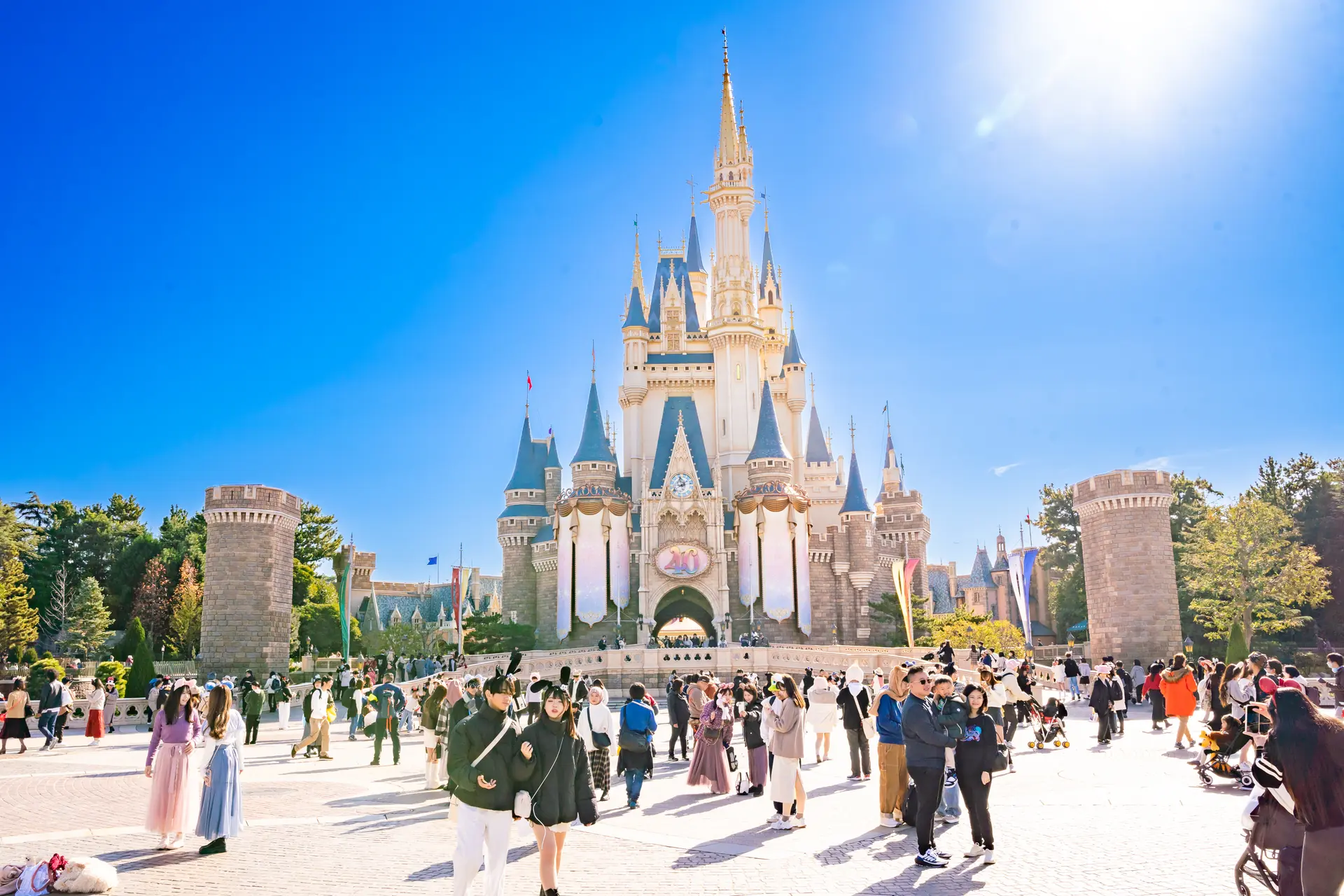
Tokyo Disneyland opened in 1983 and was Disney's first park outside America. It's in Urayasu in Chiba Prefecture just east of central Tokyo. Together with Tokyo DisneySea it forms Tokyo Disney Resort. The park is split into seven themed lands and visitors enter through World Bazaar, a covered shopping street that also holds the stroller and wheelchair rentals.
From there the other lands are spread around the park. Adventureland and Westernland have river and railroad rides, including a riverboat and rafts to Tom Sawyer Island. Fantasyland has the fairy-tale rides, including Pooh's Hunny Hunt and the Enchanted Tale of Beauty and the Beast. Toontown is aimed at younger children and Tomorrowland has space-themed attractions as well as Toy Story Mania, a shooting-game ride. Shows include Mickey's PhilharMagic and The Enchanted Tiki Room and the park also stages parades and character greetings.
Seasonal events change the look of the park through the year. Disney Halloween runs from mid-September to the end of October and Disney Christmas from mid-November to December 25. Costume rules apply during parts of the Halloween period, so check the official guidance before dressing up. Parts of Tomorrowland have had construction closures, so the attraction list can differ from older guides.
Tickets are for a specific date and park. A one-day passport lets you in from opening and prices change by date, with adult tickets starting around ¥8,900 ($56.15) and rising on busy days. After 3 and After 5 passports allow later entry at lower prices. Opening hours vary by day and one example is 9:00 AM – 9:00 PM, so check the calendar. Plan on a full day and expect queues for the most popular rides. The park can close or change hours after an earthquake or other events outside its control.
Tokyo Disneyland is in Urayasu in Chiba east of central Tokyo. The nearest station is JR Maihama Station on the Keiyo Line and the Musashino Line. The Disney Resort Line monorail also connects the resort. From Tokyo Station the Keiyo Line takes roughly 15 to 20 minutes. Shuttle buses run to the park from several places. Tokyo Station takes about 30 to 40 minutes, Shinjuku about 50 to 60 minutes and Tokyo Skytree Town about 45 to 55 minutes. The bus from Haneda Airport (HND) takes about 55 to 60 minutes and the bus from Narita Airport (NRT) about 65 to 90 minutes. Many visitors prefer the train from the city since it avoids road traffic. Driving is possible but the resort asks guests to use public transportation because of heavy traffic in the parking areas and on the roads.
Most visitors stay in central Tokyo and ride out for the day, since the Keiyo Line from Tokyo Station reaches Maihama in roughly 15 to 20 minutes. Staying in the Tokyo Station area or along the Keiyo Line suits you if you want to see the rest of the city as well. Staying near the resort puts you closer to the gates. The Disney hotels are inside the resort and other hotels cluster around Maihama Station and the Disney Resort Line stops. Rooms near the park tend to cost more and fill up quickly on weekends and during seasonal events. Disney Hotel guests and guests at affiliated hotels may face limits when buying park tickets, so check the hotel's rules when booking. A cheaper option is to choose a business hotel a few stops away on the same railway line.


Food inside Tokyo Disneyland ranges from quick counters to sit-down restaurants and themed snacks sold from carts and stands around the park. Mobile ordering and show restaurant reservations are among the resort's services, which helps at busy times.
Guests are asked not to eat their own meals inside the parks. If you bring food, eat it in a picnic area outside the park and tell a cast member if you plan to re-enter the same day. You can carry a meal in a bag while you walk around. Guests with food allergies and families with infants who need canned or jarred formula can bring their own food into restaurants after speaking with a cast member. The resort also has a page for guests with dietary limitations.
Log in to add this place to a travel list and get a summary of all recommended items for your whole trip.
We calculate the average costs when traveling to destinations and compare those with the living costs at your home. With this you can get an estimate of how expensive or cheap the destination is for you.
To customize this, you can set up which location and price level are used for the calculations in your account settings.
The exchange rate price factor shows how expensive or cheap a currency currently is compared to its historical average. It's a quick way to see if a country is currently more or less affordable due to exchange rate changes.
