
Tomio344456, CC BY-SA 4.0, via Wikimedia Commons
Asia › Japan › Kyushu › Nagasaki

Nagasaki

Scroll
Peace memorials, trade history and harbor views

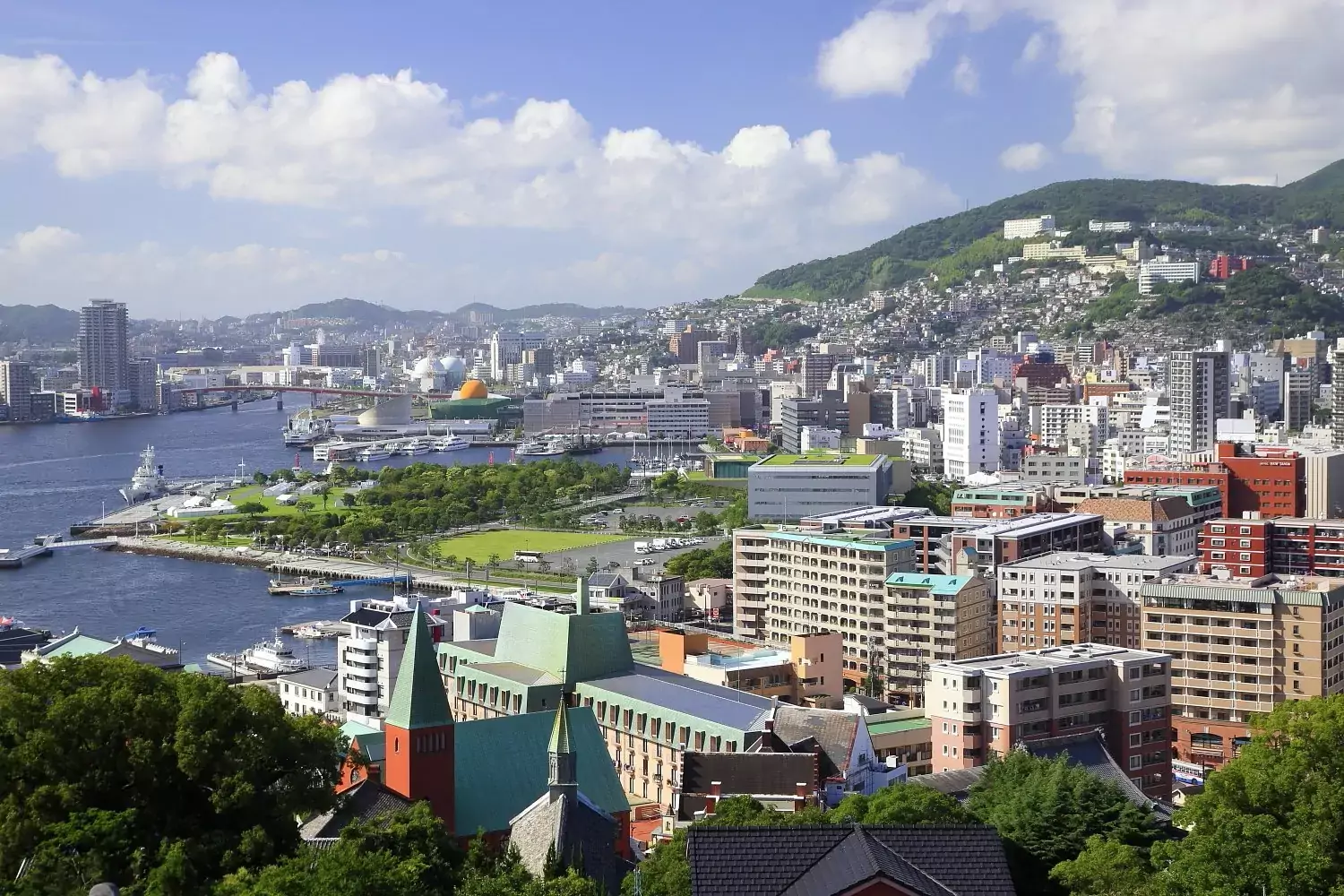
Nagasaki is a port city on the west coast of Kyushu, set around a deep harbor with hills above it. It was the only place where Dutch and Chinese traders could operate during Japan's long period of isolation. It was also the target of the second atomic bomb, dropped on Aug 9, 1945, which devastated the Urakami district. Visitors can follow both stories at the Peace Park and Atomic Bomb Museum, on Dejima and in the old merchants' houses of Glover Garden. The center is compact and trams reach most sights, so a day or two is enough.

City in Japan
Climate zone: Humid subtropical

Humid subtropical: Warm temperate climates with hot, humid summers, mild winters and evenly distributed rainfall, common on eastern continental margins.

See climate table
Price level: $$$
$Cheap
$$Medium
$$$Expensive, upscale
$$$+Very expensive, luxury
See price details
Safety: 8.8
General Safety:9
Health & medical:9
Accessibility:6
Tap water:9
Read details
Tourist English: 3/5
English is moderately available at major hotels, museums, and tourist spots. Tram signage and many menus include English, but smaller shops and local eateries may have limited English – translation apps are helpful.
Last update: Oct 18, 2026
* We earn a commission from some links on this page.
Nagasaki Summary

These place ratings give you a quick overview of how well a destination matches different types of trips.

"Best for" scores:
The specific interest scores show where this place really shines – whether it's ideal for hiking, food & drink experiences, museums or other activities. These highlights help you understand what makes the destination special at a glance.

"Your personal" scores:
This reflects how well a place matches your personal preferences. You can adjust the importances of travel topics or other personal requirements categories in your account settings.

"Suited for" badges:
These give you a quick overview of how well a destination suits specific types of travelers, to help you find the places that match your lifestyle, preferences or travel situation.

Read how our scores work
Important for history and harbor scenery. Visit peace memorial sites, explore hillside viewpoints, ride scenic ropeways and enjoy local seafood in historic port neighborhoods.
Place score
7.9
Best at:
Spotless
9
Historic sites
9
Festivals
9
Local cuisine
8
Museums
8
Personal score
?
Log in to see how this place matches your personal travel interests.
Suited for
👶 7
Families
🧓 5
Seniors
🛡️ 9
Travel Beginners
👩 9
Solo
Japan – Quick facts
Power Grid: 100 V, 50 Hz
Plug: Type A
Type A:
Diagram of a Type A power plug

Read about power adapters
Currency: Japanese Yen (JPY)
$1 ≈ ¥158
Cashless info: Rating 4/5
Cashless payments are becoming more common, especially in cities, with some shops still preferring cash. Be prepared for occasional cash-only situations in rural areas.

Save with a travel credit card
eSIM providers: Best value: Saily
Flexibility: Airalo
Read our in-depth comparison
Tipping: Tipping is not customary in Japan and can be considered rude. Excellent service is the norm, and tipping is unnecessary in most places.
Public drinking: Public drinking is legal and commonly accepted, particularly during festivals and events.
Public smoking: Smoking is prohibited in indoor public places but allowed in designated outdoor areas. Some restaurants may have smoking sections.
New Year
(January)
One of the most important holidays, expect crowded temples and high prices. Plan ahead.
Golden Week
(April-May)
The busiest travel time, expect high demand for accommodation and transportation.
Obon
(August)
A time to honor ancestors, many businesses close, and transportation can be crowded.
Emergency contact: Emergency Number: 110 (Police), 119 (Fire & Ambulance)
Taxi apps: Uber, JapanTaxi, DiDi
Other: Japan is a country of respect, so understanding local customs and etiquette is important. Public transportation is efficient, but can be crowded during peak hours.
Best times to travel

The best times to travel section shows how the months compare for a visit, so you can find the time of year that fits what you want to do.

Background colors of the months:
The color shows the typical temperature: yellow (hot), green (mild) and blue (cold). How strong the color is shows the travel season: full color means high season, soft color means shoulder season and soft-striped means off season.

Weather symbols:
Each month has one symbol showing what the weather is typically like, such as hot and sunny, freezing or a rainy or snowy season. Use them to quickly spot months that match the weather you want, or to avoid the ones that don't.

Crowdedness:
The people icon shows how busy the place usually is. The more people, the more crowded it gets.

Additional notes:
The gray info boxes point out special things worth knowing, like recurring weather issues or seasonal events.

for Nagasaki, Japan
☁️
Jan
🌥️
Feb
🌦️
Mar
🌤️
Apr
🌦️
May
⛈️
Jun
⛈️
Jul
🌦️
Aug
🌦️
Sep
🌤️
Oct
🌤️
Nov
☁️
Dec
High season: March - May, Oct. - Nov.
Shoulder season: Feb., Aug. - Sep., Dec.
Crowdedness: 7 (Many tourists)
Tap on a month for more info Hover over a month for more info
Rainy season early June to mid-July; typhoons possible August to October
Lantern Festival (Chinese New Year) runs 15 days, late January to late February
Nagasaki Kunchi festival runs October 7 to 9

Why travel to Nagasaki?

The atomic bombing of Nagasaki on Aug 9, 1945 is remembered at several sites close together. Hypocenter Park marks the point above which the bomb exploded. The nearby Peace Park has the Peace Statue and the Atomic Bomb Museum. Urakami Cathedral, rebuilt after the bombing, is a short walk or tram ride away. Nagasaki was also a trading port for centuries. Dejima, a fan-shaped artificial island, was the Dutch trading post from 1641 to 1859 and has 16 restored buildings. Glover Garden has the old merchants' houses on a hillside above the harbor. Oura Church is a National Treasure and part of the World Heritage sites tied to the city's Christian history. Shinchi Chinatown goes back to the Chinese community that traded here. For views, Mount Inasa is 1,100 ft high above the harbor and its night view is often ranked among Japan's best. Gunkanjima (Hashima), the abandoned coal-mining island, can only be visited on a guided boat tour. The Lantern Festival around Chinese New Year puts lights across the center. The Kunchi festival at Suwa Shrine in early October has dragon dances. One day covers the center and two days give room for the Peace Park, the Inasa night view and a Gunkanjima tour.

🏯Places worth seeing
  • 1 Nagasaki National Peace Memorial Hall for the Atomic Bomb Victims
  • 2 Oura Catholic Church
  • 3 Nagasaki Penguin Aquarium
  • 4 Hashima
  • 5 Dejima
  • 6 Shinchi Chinatown (Tsuki-machi)
  • 7 Peace Park (Matsuyama-machi)
  • 8 Nagasaki Atomic Bomb Museum
  • 9 Megane Bridge
🎡Places for activities
  • 1 Glover Garden
  • 2 Gunkanjima Island Tour
  • 3 Nagasaki Seaside Park
  • 4 Nagasaki Bio Park
  • 5 Nagasaki Ropeway
🏞️Natural landmarks
  • 1 Bay of Omura
  • 2 Kazagashira Park
  • 3 Nagasaki Harbor
  • 4 Nagasaki Harbor
  • 5 Tachibana Bay
🛍️Shopping
  • 1 Amu Plaza Nagasaki
  • 2 Hamano-machi Shopping Arcade
  • 3 Nagasaki Shinchi Chinatown
  • 4 Nishi-Isahaya Station Area Information
  • 5 Glover Garden Shop
🍽️Eat & Drink
  • 1 Shikairou
    Shikairou is credited with creating Nagasaki champon and sara udon, serving seafood, pork and vegetables over noodles in a rich pork-and-chicken broth. It is at 4-5 Matsugaemachi, near Glover Garden and Oura Church on Nagasaki’s harbourfront hillside.
  • 2 Kozanro
    Kozanro serves refined champon and crispy thin-noodle sara udon, with premium versions featuring abundant seafood. It is in Shinchi Chinatown, beside the Shinchi Chinatown tram stop and within a short walk of the waterfront.
  • 3 Kyorakuen
    Kyorakuen is a long-running local Chinese restaurant serving straightforward champon and sara udon. It is at 5-4 Furukawamachi, near Meganebashi Bridge and the Hamamachi covered shopping arcade in central Nagasaki.
  • 4 Soshuurin
    Soshuurin serves champon and sara udon, especially known for its very thin, crisp fried noodles topped with seafood-and-vegetable sauce. Its main restaurant is in Shinchi Chinatown, around three minutes on foot from the Chinatown tram stop.
  • 5 Edo-bishi
    Edo-bishi serves Nagasaki-style champon and sara udon alongside Chinese-influenced dishes such as nasi goreng. It is at 1-6 Edomachi, near Nagasaki City Hall and five minutes on foot from the Shinchi Chinatown area.
  • 6 Tsuruchan
    Tsuruchan is a classic café-restaurant known for Turkish rice, a Nagasaki dish combining rice, spaghetti and a cutlet topped with sauce. It is at 3-17 Aburayamachi near Shianbashi tram stop, in central Nagasaki’s dining district.
  • 7 Yossou
    Founded in 1866, Yossou serves chawanmushi steamed egg custard and mushi-zushi, colourful steamed sushi, as part of Nagasaki’s distinctive culinary tradition. It is at 7-8 Hamamachi, in the Hamamachi Arcade near Kankodori tram stop.
  • 8 Fukusaya Honten
    Founded in 1624, Fukusaya makes Nagasaki castella, a moist sponge cake with a coarse sugar base, using a traditional hand-mixed method. The main shop is at 3-1 Funadaikumachi, near Meganebashi Bridge and the Teramachi temple district.
  • 9 Bunmeido Sohonten
    Bunmeido Sohonten is a historic castella maker producing the egg-rich sponge cake that became one of Nagasaki’s signature sweets. Its main shop is near Nagasaki Station, convenient for buying castella before a train journey.
  • 10 Kagetsu
    Kagetsu offers formal shippoku cuisine, a shared multicourse style that blends Japanese, Chinese and Western influences shaped by Nagasaki’s port history. It is in Maruyama, near Shianbashi tram stop and the preserved former geisha district.
🎈Events
  • Nagasaki Peron Championships
  • Winter Europe Night Illuminations at Huis Ten Bosch
  • Nagasaki Peace Ceremony (August 9)
  • Cherry Blossom Festival (Spring)
  • Nagasaki Okunchi Festival
  • Nagasaki Oyster Festival
  • Nagasaki International Film Festival
  • Nagasaki Lantern Festival (Jan-Feb)
  • Kite-flying Tournament (April-May)
  • Tall Ships Festival (April)
  • Nagasaki Port Festival (July)
  • Peiron Dragon Boat Championship (July)
  • Nakajima River Summer Festival (August)
  • Spirit Boat Procession (August)
  • Nagasaki Kunchi Festival (October)
  • Takengei Bamboo Acrobatics (October)
  • Maruyama Hana Festival (November)

Knowledge before you go

  • Gunkanjima can be visited only on a booked guided tour.
  • A one-day tram pass costs ¥600 ($3.79) and pays for itself after about four rides at the flat fare.
  • Ask for a transfer ticket to change tram lines at Shinchi Chinatown without paying a second fare.
  • A free evening shuttle serves the Inasa ropeway from selected hotels, so ask yours about it when you check in.

How to travel to Nagasaki

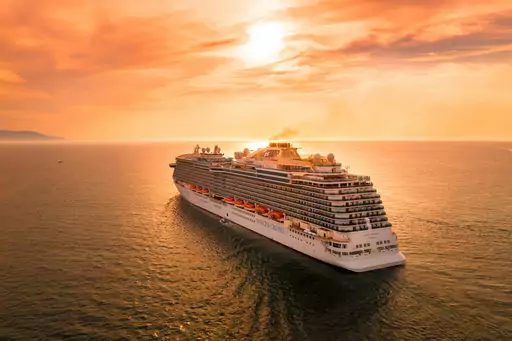
Trains from Fukuoka and flights are the easiest ways to reach Nagasaki. From Hakata Station in Fukuoka the Relay Kamome limited express takes about an hour to Takeo-Onsen and the Nishi Kyushu Shinkansen covers the rest to Nagasaki in about 25 minutes. Highway buses from Fukuoka also run. Flights from Tokyo Haneda take about two hours and Nagasaki Airport (NGS) is about 19 mi from the center. The limousine bus to Nagasaki Station takes around 45 minutes for ¥1,200 ($7.57). From Tokyo or Osaka the train means a Shinkansen to Hakata first so flying is usually easier. Cruise ships also call at Nagasaki Port.

Access summary

  • From Nagasaki Airport (NGS): Limousine bus to city, about 40–60 minutes.
  • From Fukuoka: Limited express train or highway bus, roughly 2–2.5 hours.
  • From Hakata/Shinkansen: Transfer to Kamome train toward Nagasaki, around 1.5–2 hours.

Where to stay in Nagasaki

Most visitors stay near Nagasaki Station or around Shianbashi and Hamanomachi in the city center. The station area has business hotels and the train and bus links. Shianbashi and Hamanomachi are next to the shopping arcades, restaurants and bars and are a short tram ride from Dejima, Chinatown and Peace Park. The hillside around Oura and Glover Garden is quieter with some smaller hotels but the streets are steep for luggage. Accommodation is mostly business hotels and mid-range hotels with a few guesthouses and ryokan. Rooms get tight and prices rise around the August 9 peace ceremony, the Kunchi festival in October, the Lantern Festival and Golden Week. Nagasaki can be a day trip from Fukuoka but a night here lets you see the harbor lights from Mount Inasa.

How to get around Nagasaki

Nagasaki is hilly but compact, with the main sights between Nagasaki Station, the harbor and the Urakami district to the north. Trams are the main way around and you don't need a car in the city.

Trams:
A few tram lines cover Nagasaki Station, Dejima, Shinchi Chinatown, Glover Garden and Oura Church.
Peace Park is about 10 minutes north of the center by tram. Fares are a flat ¥150 ($0.95) per ride and IC cards work on board.

Walking:
The center itself is compact and walkable but the city is hilly, with steep inclines around Glover Garden and Mount Inasa.

Buses and boats:
Buses reach what the trams don't, such as the Penguin Aquarium and the lower ropeway station for Mount Inasa, which is about 5 minutes from the station.
Ferries and boat tours leave from the harbor for Gunkanjima.

Food in Nagasaki

Nagasaki's food comes from its centuries as a trading port. Kakuni manju, a braised pork belly bun, is a popular snack. Seafood and pork are common so vegetarians will need to ask. Convenience stores and supermarkets cover breakfast and snacks.

Champon and sara udon:
Champon is the local noodle dish, with vegetables, pork and seafood in a creamy pork and chicken bone broth.
A Chinese restaurant created it in the Meiji period to feed Chinese students cheaply. Sara udon is a version with thin crispy noodles under a thick vegetable and seafood sauce.

Turkish rice:
Turkish rice is a Nagasaki plate of pilaf and spaghetti with a pork cutlet under demi-glace or curry.

Castella:
Castella, a moist sponge cake brought by Portuguese missionaries in the mid-1600s, is Nagasaki's best-known sweet.

Budget snapshot
Costs compared to home

We calculate the average costs when traveling to destinations and compare those with the living costs at your home. With this you can get an estimate of how expensive or cheap the destination is for you.

To customize this, you can set up which location and price level are used for the calculations in your account settings.

-51 %
Daily expenses in Nagasaki are around 51% lower than the average across United States. That means you'll spend a lot less on meals and getting around.
Exchange rate trend

The exchange rate price factor shows how expensive or cheap a currency currently is compared to its historical average. It's a quick way to see if a country is currently more or less affordable due to exchange rate changes.

-17 %
Your exchange rate (USD to JPY) is 17% better than in recent years. That means traveling now is considerably cheaper compared to the past.

Travel costs

To help you plan your trip, we provide estimated daily costs per person (when traveling as a pair) for different travel styles. These numbers give you an idea of what you might spend each day at this destination, including accommodation, food, transport and activities.

Additionally, we also provide average hotel costs for different travel styles to give you an estimate for the accommodation only.

Please note that these are only estimates. The real costs depend on booking times, season and other factors.

Daily cost summary

Travel style categories explained:

Backpacker:
Staying in hostels or budget hotels, cooking your own meals or eating cheap and choosing low-cost activities.

Mid-range:
Staying in mid-range hotels, eating at a mix of restaurants and casual spots and enjoying a variety of activities.

Luxury:
Staying in luxury hotels, dining out at high-end restaurants and enjoying premium experiences without worrying about the price.

Backpacker Mid-range Luxury
💵 Total costs per day, including accommodation
$44
$91
$268
🏨 Accommodation per night, per person
$20
$48
$103
🍝 Food per day
$19
$33
$103
🚕 Transportation per day
$5
$10
$62
Food & Drink
🍽️ Restaurant Dinner, per person
$10
🍛 Lunch Set, per person
$4.90
🍟 Fast food combo
$4.70
🍝 Preparing your own food, per day
$7.50
☕ Cappuccino
$3.60
🍺 Beer in a restaurant, 0.5 l / 16 oz
$2.30
Transportation
🚌 Public transport ticket
$1.05
🚕 Taxi Ride, 10 km / 6 mi
$40
⛽ Gas, 1 l / ¼ gal
$1.10
Other
🎞️ Movie ticket
$13
👩‍⚕️ Doctor's consult
$26
🤧 Cold medication
$8
💇 Basic haircut
$11

Safety information overview

General safety
9
Nagasaki is very safe with low crime and well-used streets and trams in the evening. Typhoons from late summer to autumn can disrupt flights and ferries. The hillside areas have steep stairs that get slippery in rain so watch your step at night.
Health & Medical
9
Medical care is good with large hospitals and many clinics in the city, though English is limited at smaller practices. Pharmacies are easy to find. Summers are hot and humid so heat is the main everyday risk. Travel insurance is sensible.
Accessi­bility
6
The center around Nagasaki Station, Dejima and Chinatown is mostly flat and easy to walk. Glover Garden, Oura Church and the hillside streets have steep inclines and stairs. Some older trams have steps at the door while newer ones have low floors.
Tap water
9
Tap water in Nagasaki is safe to drink like in the rest of Japan. Vending machines and convenience stores sell bottled water and cold drinks all over the center. Hot summers and hilly walks make a refillable bottle worth carrying.

Packing recommendations for Nagasaki

Log in to add this place to a travel list and get a summary of all recommended items for your whole trip.

Looking for inspiration?

Discover
Best couple vacation destinations in Asia
Asia is perfect for couples who want their holiday to feel like a shared adventure rather than just a change of scenery. Few continents offer so many ways to be amazed together.…
Read more
Discover
Top cruise destinations and major routes
Cruise travel has evolved considerably beyond its traditional demographic and now encompasses everything from large resort ships carrying thousands of passengers to small…
Read more
Discover
Best destinations for first-time travelers in Asia
Asia has one of the best established beginner travel routes anywhere, largely because so many first time travelers have worn the path before you. Southeast Asia in particular…
Read more
Discover
Best cities to visit in Asia
Asia's world cities combine ancient urban histories with some of the most dramatic contemporary development anywhere, producing metropolitan environments where centuries of…
Read more
Discover
Top museum destinations and cultural institutions
Museum travel has developed a dedicated following built around the world's great permanent collections, blockbuster exhibition programmes and the architecturally significant…
Read more
Discover
Best solo travel destinations in Asia
Asia is where most solo travelers figure out they can actually do this. The backpacker trails through Southeast Asia have been running for decades, and the infrastructure along…
Read more
Discover
Top solo travel destinations and safe hubs
Traveling alone sounds like a bigger deal than it is. The first day feels strange – eating dinner by yourself, navigating without someone to double-check the map with, making every…
Read more
Discover
Best couple vacation destinations
Travelling as a couple sounds simple enough, yet the best couple vacation destinations mean something different to almost every pair. What feels romantic to one couple can feel…
Read more
Discover
Top historical destinations and historic sites
The most compelling history destinations are places where the past is still physically present and legible in the landscape, the architecture and the daily life of the people who…
Read more
Discover
Best cruise destinations in Asia
Asia's cruise offer ranges from the established port-hopping itineraries of Southeast Asia and the river cruising networks of the great continental waterways to the remote…
Read more
Discover
Best destinations for first-time travelers
A first trip abroad works best somewhere that eases you in, rather than throwing every possible culture shock and logistical headache at you at once. Some first-time travelers…
Read more
Discover
World cities and iconic metropolises
The world's great cities earn that status through a combination of cultural depth, historical layering, architectural ambition and the particular energy that comes from being a…
Read more
Discover
Best museum destinations in Asia
Asia's museum offer encompasses one of the world's most diverse ranges of cultural traditions, artistic languages and historical periods, with institutions across the continent…
Read more
Discover
Best historical destinations in Asia
Asia's historical depth is staggering, encompassing some of the oldest continuous civilisations on earth and a range of empires, belief systems and cultural traditions that have…
Read more
Discover
Most beautiful beaches and coastal escapes
For a lot of people, a beach is the whole point of a holiday, but what makes a beach day perfect really depends on personal taste. Some travellers want isolation and the feeling…
Read more
Feedback