
Junpei5885, CC BY-SA 3.0, via Wikimedia Commons
Asia › Japan › Kyushu › Kagoshima

Kagoshima

Scroll
Volcano views, samurai history and black pork

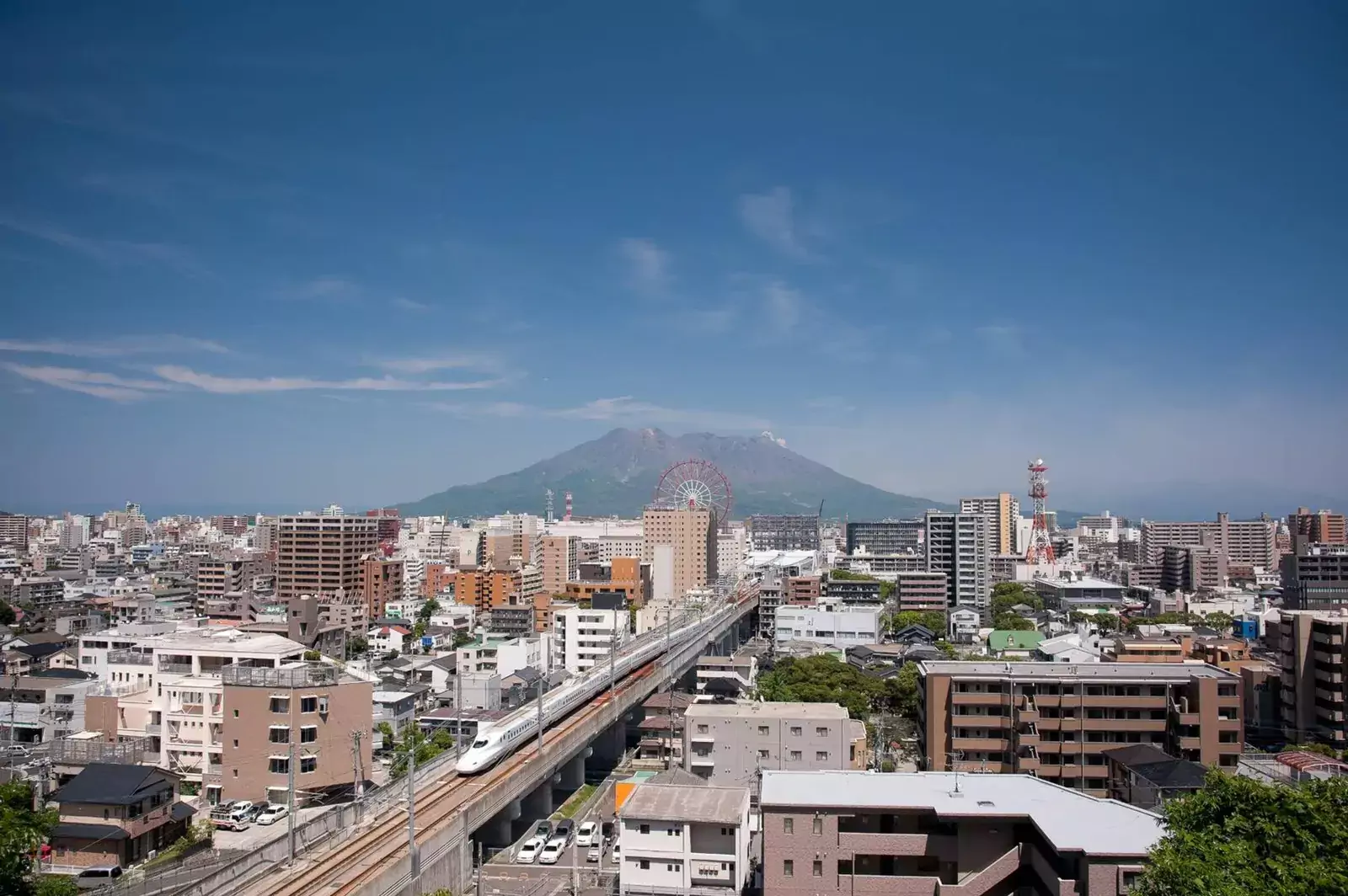
Kagoshima is the main city of southern Kyushu and is on a bay facing Sakurajima, an active volcano that sends up ash on many days. It was the seat of the Shimazu clan and the Satsuma domain, which played a large part in the Meiji Restoration. Visitors can ride the 15-minute ferry to Sakurajima, walk the Sengan-en garden or climb Shiroyama for the view. The center around Kagoshima-Chuo Station and Tenmonkan is compact, so a day covers the city and a second day suits Ibusuki's sand baths or a closer look at the volcano.

City in Japan
Climate zone: Humid subtropical

Humid subtropical: Warm temperate climates with hot, humid summers, mild winters and evenly distributed rainfall, common on eastern continental margins.

See climate table
Price level: $$$
$Cheap
$$Medium
$$$Expensive, upscale
$$$+Very expensive, luxury
See price details
Safety: 8.8
General Safety:9
Health & medical:9
Accessibility:7
Tap water:9
Read details
Tourist English: 3/5
English is moderately available at major hotels, tourist information centers, and attractions. Many signs and menus are bilingual, but smaller shops and restaurants may have limited English – translation apps are useful.
Last update: Oct 20, 2026
* We earn a commission from some links on this page.
Kagoshima Summary

These place ratings give you a quick overview of how well a destination matches different types of trips.

"Best for" scores:
The specific interest scores show where this place really shines – whether it's ideal for hiking, food & drink experiences, museums or other activities. These highlights help you understand what makes the destination special at a glance.

"Your personal" scores:
This reflects how well a place matches your personal preferences. You can adjust the importances of travel topics or other personal requirements categories in your account settings.

"Suited for" badges:
These give you a quick overview of how well a destination suits specific types of travelers, to help you find the places that match your lifestyle, preferences or travel situation.

Read how our scores work
Great for volcano landscapes and hot springs. View active Sakurajima volcano, enjoy seaside onsen, explore local markets and take ferries to scenic islands.
Place score
7.7
Best at:
Volcanoes
10
Spirits
9
Sea
8
Spotless
8
Local cuisine
8
Personal score
?
Log in to see how this place matches your personal travel interests.
Suited for
👶 7
Families
🧓 7
Seniors
🛡️ 8
Travel Beginners
👩 8
Solo
Japan – Quick facts
Power Grid: 100 V, 50 Hz
Plug: Type A
Type A:
Diagram of a Type A power plug

Read about power adapters
Currency: Japanese Yen (JPY)
$1 ≈ ¥158
Cashless info: Rating 4/5
Cashless payments are becoming more common, especially in cities, with some shops still preferring cash. Be prepared for occasional cash-only situations in rural areas.

Save with a travel credit card
eSIM providers: Best value: Saily
Flexibility: Airalo
Read our in-depth comparison
Tipping: Tipping is not customary in Japan and can be considered rude. Excellent service is the norm, and tipping is unnecessary in most places.
Public drinking: Public drinking is legal and commonly accepted, particularly during festivals and events.
Public smoking: Smoking is prohibited in indoor public places but allowed in designated outdoor areas. Some restaurants may have smoking sections.
New Year
(January)
One of the most important holidays, expect crowded temples and high prices. Plan ahead.
Golden Week
(April-May)
The busiest travel time, expect high demand for accommodation and transportation.
Obon
(August)
A time to honor ancestors, many businesses close, and transportation can be crowded.
Emergency contact: Emergency Number: 110 (Police), 119 (Fire & Ambulance)
Taxi apps: Uber, JapanTaxi, DiDi
Other: Japan is a country of respect, so understanding local customs and etiquette is important. Public transportation is efficient, but can be crowded during peak hours.
Best times to travel

The best times to travel section shows how the months compare for a visit, so you can find the time of year that fits what you want to do.

Background colors of the months:
The color shows the typical temperature: yellow (hot), green (mild) and blue (cold). How strong the color is shows the travel season: full color means high season, soft color means shoulder season and soft-striped means off season.

Weather symbols:
Each month has one symbol showing what the weather is typically like, such as hot and sunny, freezing or a rainy or snowy season. Use them to quickly spot months that match the weather you want, or to avoid the ones that don't.

Crowdedness:
The people icon shows how busy the place usually is. The more people, the more crowded it gets.

Additional notes:
The gray info boxes point out special things worth knowing, like recurring weather issues or seasonal events.

for Kagoshima, Japan
🌤️
Jan
🌥️
Feb
🌦️
Mar
🌦️
Apr
🌦️
May
⛈️
Jun
⛈️
Jul
🌦️
Aug
🌦️
Sep
🌤️
Oct
🌤️
Nov
🌤️
Dec
High season:
Shoulder season: March - May, Oct. - Nov.
Crowdedness: 5 (Moderate tourist numbers)
Tap on a month for more info Hover over a month for more info
Rainy season early June to mid July, typhoon risk August to September
Sakurajima volcano erupts often; ash fall on the city depends on wind direction and can occur year-round
Cherry blossoms late March to early April

Why travel to Kagoshima?

Sakurajima volcano is in the bay just across the water. The ferry from the city takes about 15 minutes and runs around the clock. The fare is ¥200 ($1.26) for adults. Minor eruptions happen almost daily and the wind sometimes carries the ash toward the downtown area, so check the volcano report before heading out. History is the second draw. The Shimazu lords ruled the Satsuma domain from here and samurai from the region helped bring down the shogunate in the Meiji Restoration. Sengan-en, the Shimazu family's garden, was laid out in 1658 and uses Sakurajima and the bay as borrowed scenery. It's open in the morning until early evening and costs ¥1,000 ($6.32) for the garden alone. Shoko Shuseikan nearby was Japan's first modern factory and is now a museum and a World Heritage site. The city itself is relaxed. Shiroyama hill behind the center gives a view of the city, the bay and the volcano. Tenmonkan is the shopping and nightlife district with covered arcades and many small restaurants. Further out, Ibusuki is about 50 minutes by train and is known for hot sand baths on the beach. One day covers the garden, the ferry and Tenmonkan while a second day suits Ibusuki or a longer look at Sakurajima.

🏯Places worth seeing
  • 1 Museum of the Meiji Restoration
  • 2 Kagoshima City Aquarium
  • 3 Kagoshima City Museum of Art
  • 4 Kirishima-Kinkowan National Park
  • 5 Kagoshima aquarium
  • 6 Kagoshima Shrine
🎡Places for activities
  • 1 Ibusuki
  • 2 Nagisa lava trail
  • 3 Sakurajima Yogan Nagisa Park Foot bath
  • 4 Kirishima-Onsen
🏞️Natural landmarks
  • 1 Sakurajima
  • 2 Cape Sata
  • 3 Bay of Kagoshima
  • 4 Sengan-en
  • 5 Shiroyama Park (Ichiuji Castle Ruins)
  • 6 Iso Beach
  • 7 Lake Ikeda
🛍️Shopping
  • 1 Amu Plaza Kagoshima
🍽️Eat & Drink
  • 1 Kurobuta Ryori Ajimori
    Founded in 1978, Ajimori is credited with pioneering Kagoshima kurobuta pork shabu-shabu, serving thin slices of black pork in a refined local style. It is at 13-21 Sennichicho in Tenmonkan, about four minutes on foot from Tenmonkan-dori tram stop.
  • 2 Kagoshima Kurobuta Roppakutei
    Roppakutei serves Rokuhaku kurobuta pork as shabu-shabu, tonkatsu and thick-cut aged pork cutlets supplied from a contracted farm. It is at 2-12-34 Nishida, around five minutes on foot from Kagoshima-Chuo Station.
  • 3 Kurokatsutei
    Kurokatsutei specializes in Kagoshima kurobuta tonkatsu and shabu-shabu, including its signature charcoal-black breaded cutlet. It is at 3-2 Sennichicho, a two-minute walk from Tenmonkan-dori tram stop in the downtown arcade district.
  • 4 Ichiniisan Tenmonkan
    Ichiniisan serves thinly sliced kurobuta pork shabu-shabu in a distinctive bonito-and-kelp broth, paired with a soy-based dipping sauce. It is in Tenmonkan, Kagoshima City’s main shopping and dining district, near Tenmonkan-dori tram stop.
  • 5 Kumaso-tei
    Kumaso-tei serves traditional Satsuma cuisine, including kurobuta pork dishes, tonkotsu pork-and-miso stew, kibinago fish and satsuma-age fish cakes. It is at 6-10 Higashisengokucho in Tenmonkan, a short walk from Tenmonkan-dori tram stop.
  • 6 Tenmonkan Mujaki Main Restaurant
    Mujaki is the classic place for shirokuma, Kagoshima’s fruit-topped shaved ice finished with sweetened milk. Its main shop is at 5-8 Sennichicho in Tenmonkan, close to Tenmonkan-dori tram stop and the central arcade.
  • 7 Kagoshima Ramen Tontoro Tenmonkan Main Restaurant
    Tontoro serves Kagoshima-style ramen with a rich pork broth, homemade roasted pork and soft noodles. It is at 9-41 Sennichicho in Tenmonkan, about five minutes on foot from Tenmonkan-dori tram stop.
  • 8 Kagoshima Ramen Goten
    Goten serves classic Kagoshima ramen with pale pork broth, thin noodles, roast pork and crispy fried onions. It is in the basement of AMU PLAZA Kagoshima directly beside Kagoshima-Chuo Station.
  • 9 Satsumaage no Tsukasa
    Agetateya makes satsuma-age, Kagoshima’s fried fish cakes, in varieties such as sweet potato, cheese and local vegetable fillings. Its Tenmonkan shop is in the central shopping arcade, near Tenmonkan-dori tram stop.
  • 10 Yamakataya Shokudo
    Yamakataya Shokudo is a long-running department-store dining room serving Kagoshima dishes, including local pork and seafood meals, in a nostalgic setting. It is on an upper floor of Yamakataya Department Store in Tenmonkan, close to the city-centre tram stops.
🎈Events
  • Kagoshima Summer Night Festival (August)
  • Kagoshima Kinkowan Festival (May)
  • Rokugatsudo Festival (June)
  • Kagoshima Marathon (March)
  • Kagoshima Autumn Festival
  • Sakurajima Lava Festival (August)
  • Kagoshima Winter Illumination
  • Ohara Matsuri (November)
  • Yagoro-don Matsuri (Autumn)
  • Myoenji Mairi (October/November)
  • Take-toro Bamboo Lantern Festival (Autumn)
  • Satsuma Sendai Hanya Matsuri
  • Taniyama Furusato Matsuri
  • Shochu Street Event (November)
  • Cherry Blossom Viewing (March/April)
  • Kagoshima Fireworks Festival (Summer)
  • Izumi Crane Migration (Winter)

Knowledge before you go

  • The Sakurajima ferry runs around the clock and costs ¥200 ($1.26).
  • Check the volcano report each morning since the wind decides whether ash falls on downtown that day.
  • The Sakurajima Island View bus pass costs ¥500 ($3.16) and covers the volcano viewpoints on the island.
  • Sengan-en opens early in the morning so go then to see the garden before tour groups and the midday heat.

How to travel to Kagoshima

Most visitors arrive by Shinkansen or by air. The Kyushu Shinkansen runs from Hakata Station in Fukuoka to Kagoshima-Chuo Station in about 1 hour 20 minutes on the fastest trains. From Tokyo the trip takes more than six hours with a change at Shin-Osaka or Hakata, so many people fly instead. Flights from Tokyo Haneda take around two hours. The airport is served by limousine bus rather than train and the ride to Kagoshima-Chuo Station takes about 40 minutes, so allow extra time for early flights. The station is the main hub where the Shinkansen, local JR lines, trams and buses meet. It's also close to the Sakurajima ferry, which makes a first day easy to plan.

Access summary

  • From Kagoshima Airport (KOJ): Airport limousine bus to Kagoshima-Chuo, about 40 minutes.
  • From Fukuoka: Kyushu Shinkansen to Kagoshima-Chuo Station, roughly 1.5–2 hours.
  • From Osaka/Tokyo: Domestic flights to KOJ, then bus into city.

Where to stay in Kagoshima

Most visitors stay around Kagoshima-Chuo Station or in Tenmonkan. The station area has hotels next to the Shinkansen and the tram, which suits an early departure or a late arrival. Tenmonkan is the better pick for dinner and drinks since restaurants and bars are within walking distance and the trams pass through it. Hotels range from budget business hotels to mid-range places with hot spring baths. Some on the slopes near Shiroyama have views of the bay. For a longer stay Ibusuki has seaside onsen ryokan and the sand baths. It's about 50 minutes away by limited express. Rooms tighten on weekends and around Golden Week and the autumn holidays, so book early. Many people spend one night here before heading on to Miyazaki or Kumamoto.

How to get around Kagoshima

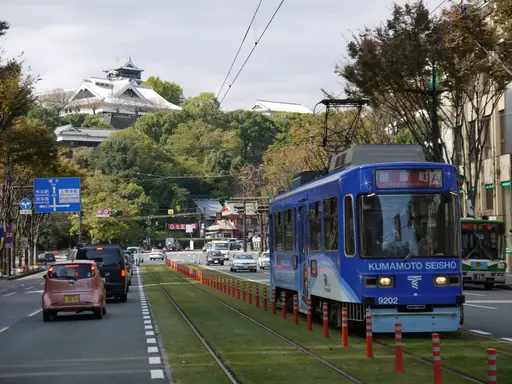
The city streetcars are the easiest way to get around, with buses and a ferry for the main sights.

Trams and buses:
The streetcars run about every seven minutes from Kagoshima-Chuo Station toward Tenmonkan and the waterfront.
IC cards such as Suica and ICOCA work on board. A circular City View bus links the main sights, including Shiroyama and Sengan-en.

Day passes:
Day passes for the trams, buses and the Sakurajima ferry are sold in the city, so ask at an information desk which one suits your plans.

Walking and ferry:
Tenmonkan and the streets around it are compact enough to walk.
For the Sakurajima ferry take a tram to Suizokukan-guchi and walk to the terminal, which takes about 25 minutes in total. On the island a circular bus runs from the port to the volcano viewpoints. Taxis are plentiful and a car only makes sense for trips beyond the city.

Food in Kagoshima

Food in Kagoshima is built around the local black pig, with fish from the bay and sweet potato in a supporting role. Tenmonkan has the most choice for dinner. Vegetarians should ask about the stock since fish and pork broth are common.

Kurobuta pork:
Kurobuta pork is tender and well marbled.
It appears as shabu-shabu, tonkatsu cutlets and rice bowls, so it's easy to find at both casual and sit-down restaurants.

Fish dishes:
Satsuma-age is a fried fish cake made from minced fish and vegetables.
It's sold at stalls and shops and eaten with udon or rice. Kibinago, a small silver fish from the bay, is served as sashimi or tempura.

Sweets:
Shirokuma is the local shaved ice with fruit, sweet beans and condensed milk.
Its name means polar bear. Karukan is a chewy steamed sweet made from yam and rice flour that's eaten with tea.

Shochu:
Sweet potato is the base of the region's shochu, the local spirit.
It's a good match with the pork dishes.

Budget snapshot
Costs compared to home

We calculate the average costs when traveling to destinations and compare those with the living costs at your home. With this you can get an estimate of how expensive or cheap the destination is for you.

To customize this, you can set up which location and price level are used for the calculations in your account settings.

-46 %
Daily expenses in Kagoshima are around 46% lower than the average across United States. That means you'll spend a lot less on meals and getting around.
Exchange rate trend

The exchange rate price factor shows how expensive or cheap a currency currently is compared to its historical average. It's a quick way to see if a country is currently more or less affordable due to exchange rate changes.

-17 %
Your exchange rate (USD to JPY) is 17% better than in recent years. That means traveling now is considerably cheaper compared to the past.

Travel costs

To help you plan your trip, we provide estimated daily costs per person (when traveling as a pair) for different travel styles. These numbers give you an idea of what you might spend each day at this destination, including accommodation, food, transport and activities.

Additionally, we also provide average hotel costs for different travel styles to give you an estimate for the accommodation only.

Please note that these are only estimates. The real costs depend on booking times, season and other factors.

Daily cost summary

Travel style categories explained:

Backpacker:
Staying in hostels or budget hotels, cooking your own meals or eating cheap and choosing low-cost activities.

Mid-range:
Staying in mid-range hotels, eating at a mix of restaurants and casual spots and enjoying a variety of activities.

Luxury:
Staying in luxury hotels, dining out at high-end restaurants and enjoying premium experiences without worrying about the price.

Backpacker Mid-range Luxury
💵 Total costs per day, including accommodation
$60
$102
$283
🏨 Accommodation per night, per person
$35
$52
$100
🍝 Food per day
$20
$39
$120
🚕 Transportation per day
$6
$11
$63
Food & Drink
🍽️ Restaurant Dinner, per person
$16
🍛 Lunch Set, per person
$5
🍟 Fast food combo
$4.80
🍝 Preparing your own food, per day
$7.50
☕ Cappuccino
$2.80
🍺 Beer in a restaurant, 0.5 l / 16 oz
$2.60
Transportation
🚌 Public transport ticket
$1.30
🚕 Taxi Ride, 10 km / 6 mi
$40
⛽ Gas, 1 l / ¼ gal
$1.10
Other
🎞️ Movie ticket
$11.50
👩‍⚕️ Doctor's consult
$23
🤧 Cold medication
$7
💇 Basic haircut
$10.50

Safety information overview

General safety
9
Kagoshima is very safe with low crime and calm streets after dark. The main hazards are natural. Sakurajima erupts in small bursts most days and ash can fall on the city. Typhoons from late summer to autumn can disrupt ferries and flights.
Health & Medical
9
Medical care is good with large hospitals and many clinics in the city though English is limited at smaller practices. Pharmacies are easy to find. Volcanic ash can irritate eyes and lungs so people with asthma may want a mask on ash days.
Accessi­bility
7
The streets near the station and Tenmonkan are flat and mostly easy to cover by tram. Shiroyama and the Sengan-en grounds have slopes and steps. Sakurajima viewpoints are reached by bus and some paths are uneven.
Tap water
9
Tap water in Kagoshima is safe to drink like in the rest of Japan. Vending machines and convenience stores sell bottled water and cold drinks across the center. Summers are hot and humid so carry a refillable bottle on longer walks.

Looking for inspiration?

Discover
Top street food cities and local culinary markets
The best street food destinations treat the cart, stall, or hawker counter as a serious culinary format rather than a budget substitute for a real meal. In cities with strong…
Read more
Discover
Volcano destinations and volcanic landscapes
Volcanic destinations offer a category of landscape experience unavailable anywhere else, with the combination of raw geological drama, active crater environments and the…
Read more
Discover
Best couple vacation destinations in Asia
Asia is perfect for couples who want their holiday to feel like a shared adventure rather than just a change of scenery. Few continents offer so many ways to be amazed together.…
Read more
Discover
Best natural wonder destinations in Asia
Asia contains some of the most extraordinary natural wonders on earth, shaped by the collision of tectonic plates, vast river systems, volcanic activity and climatic extremes that…
Read more
Discover
Markets and street shopping in Asia
Asia has some of the most extraordinary market cultures on earth, shaped by thousands of years of trade and an extraordinary diversity of produce, cuisine, and craft traditions.…
Read more
Discover
Best destinations for first-time travelers in Asia
Asia has one of the best established beginner travel routes anywhere, largely because so many first time travelers have worn the path before you. Southeast Asia in particular…
Read more
Discover
Best street food destinations in Asia
Walk through almost any city in Asia after dark and the real dinner rush is often happening on the sidewalk rather than inside a restaurant. Southeast Asia has some of the…
Read more
Discover
Best solo travel destinations in Asia
Asia is where most solo travelers figure out they can actually do this. The backpacker trails through Southeast Asia have been running for decades, and the infrastructure along…
Read more
Discover
Top solo travel destinations and safe hubs
Traveling alone sounds like a bigger deal than it is. The first day feels strange – eating dinner by yourself, navigating without someone to double-check the map with, making every…
Read more
Discover
Best couple vacation destinations
Travelling as a couple sounds simple enough, yet the best couple vacation destinations mean something different to almost every pair. What feels romantic to one couple can feel…
Read more
Discover
Best travel destinations for seniors in Asia
Asia offers some of the most senior friendly infrastructure anywhere, alongside destinations that still call for a bit more independence and stamina. Japan in particular stands…
Read more
Discover
Best destinations for first-time travelers
A first trip abroad works best somewhere that eases you in, rather than throwing every possible culture shock and logistical headache at you at once. Some first-time travelers…
Read more
Discover
Best market destinations and street shopping
Markets are one of the most direct ways into the everyday life of a place. Where supermarkets and shopping centers smooth over local difference, a good market reflects the climate,…
Read more
Discover
Extraordinary natural wonders and scenic landscapes
Natural wonders occupy a different category from other travel destinations. They are places where the scale, the geology, the light or the sheer improbability of what exists there…
Read more
Discover
Top food destinations and culinary hotspots
Food travel has matured into a sophisticated circuit built around the world's great culinary traditions, restaurant destinations and producer landscapes that offer experiences…
Read more
Feedback