







Was this page helpful?

These place ratings give you a quick overview of how well a destination matches different types of trips.
"Best for" scores:
The specific interest scores show where this place really shines – whether it's ideal for hiking, food & drink experiences, museums or other activities. These highlights help you understand what makes the destination special at a glance.
"Your personal" scores:
This reflects how well a place matches your personal preferences. You can adjust the importances of travel topics or other personal requirements categories in your account settings.
"Suited for" badges:
These give you a quick overview of how well a destination suits specific types of travelers, to help you find the places that match your lifestyle, preferences or travel situation.
| Power Grid: |
100 V, 50 Hz Plug: Type A
Type A:
 Read about power adapters |
|---|---|
| Currency: |
Japanese Yen (JPY) $1 ≈ ¥158 |
| Cashless info: |
Rating 4/5
Cashless payments are becoming more common, especially in cities, with some shops still preferring cash. Be prepared for occasional cash-only situations in rural areas.
Save with a travel credit card |
| eSIM providers: |
Best value: Saily Flexibility: Airalo Read our in-depth comparison |
| Tipping: | Tipping is not customary in Japan and can be considered rude. Excellent service is the norm, and tipping is unnecessary in most places. |
|---|---|
| Public drinking: | Public drinking is legal and commonly accepted, particularly during festivals and events. |
| Public smoking: | Smoking is prohibited in indoor public places but allowed in designated outdoor areas. Some restaurants may have smoking sections. |
| New Year (January) |
One of the most important holidays, expect crowded temples and high prices. Plan ahead. |
|---|---|
| Golden Week (April-May) |
The busiest travel time, expect high demand for accommodation and transportation. |
| Obon (August) |
A time to honor ancestors, many businesses close, and transportation can be crowded. |
| Emergency contact: | Emergency Number: 110 (Police), 119 (Fire & Ambulance) |
|---|---|
| Taxi apps: | Uber, JapanTaxi, DiDi |
| Other: | Japan is a country of respect, so understanding local customs and etiquette is important. Public transportation is efficient, but can be crowded during peak hours. |
The best times to travel section shows how the months compare for a visit, so you can find the time of year that fits what you want to do.
Background colors of the months:
The color shows the typical temperature: yellow (hot), green (mild) and blue (cold). How strong the color is shows the travel season: full color means high season, soft color means shoulder season and soft-striped means off season.
Weather symbols:
Each month has one symbol showing what the weather is typically like, such as hot and sunny, freezing or a rainy or snowy season. Use them to quickly spot months that match the weather you want, or to avoid the ones that don't.
Crowdedness:
The people icon shows how busy the place usually is. The more people, the more crowded it gets.
Additional notes:
The gray info boxes point out special things worth knowing, like recurring weather issues or seasonal events.
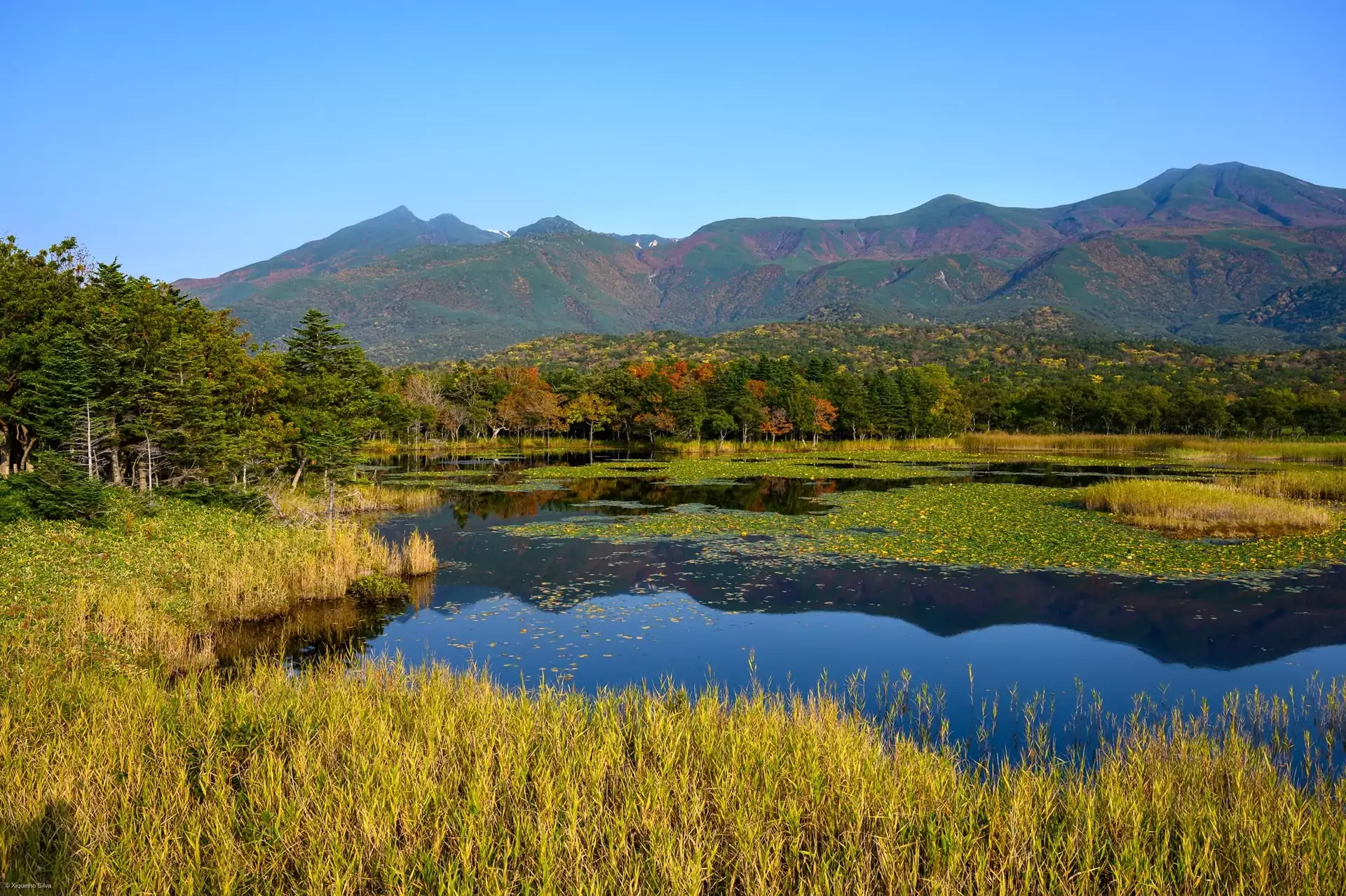
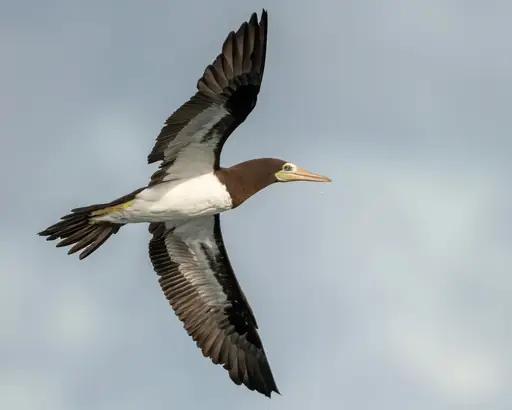
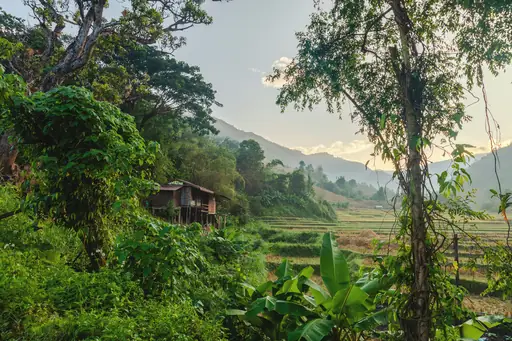
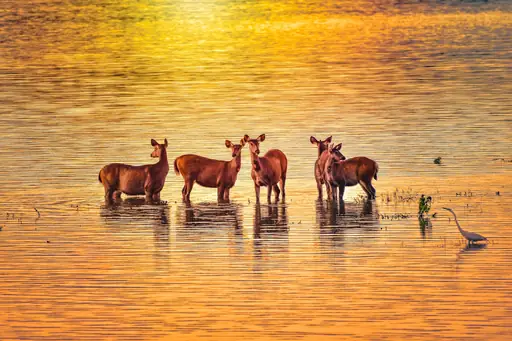
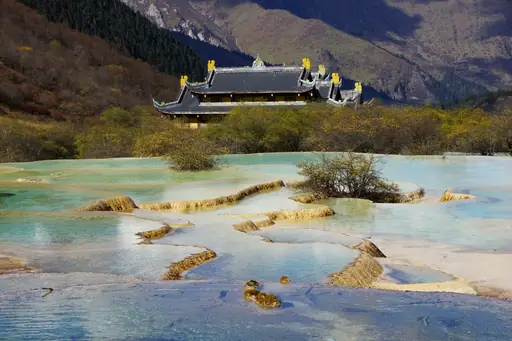
Shiretoko is one of the best-known places in Japan to see wild brown bears, with among the highest recorded densities in the world. Boat cruises run from late April to October, mostly from Utoro. Smaller boats get close to the shore where bears forage on rocky beaches. Whale and bird watching trips leave from Rausu. Dolphins, whales and sea lions turn up too, though sightings aren't guaranteed. On land the Shiretoko Five Lakes are in forest below the mountains. An elevated wooden path of about 2,600 ft to the first lake is free and open all season. Longer ground paths go through the forest and take 1.5 to 3 hours. Kamuiwakka Falls is a warm river that drops over four falls, with a pool at the base of the first where you can soak. The pass between Utoro and Rausu is 2,400 ft high at its top. On clear days the view includes Mt. Rausu and, across the Nemuro Strait, Kunashiri Island. In winter drift ice reaches the coast and tours to see it run from Rausu. In autumn salmon return to the rivers. The area is remote, so it works best as a destination of its own for two or three days rather than a stop on the way elsewhere. Utoro on the west side is the easier base because most accessible sights are close by.
Most visitors fly to Memanbetsu Airport (MMB), about 60 mi from Utoro, with flights from Tokyo Haneda taking around 1.5 hours and several daily flights from Sapporo's New Chitose Airport. A direct bus from Memanbetsu to Utoro takes about two hours. It runs only in summer and in winter from mid-January to early March. Nakashibetsu Airport (SHB) has fewer flights and an Akan Bus service to Rausu taking about 1 hour 10 minutes. By rail the JR Senmo Line reaches Shiretoko-Shari Station. Infrequent year-round buses cover the roughly 60 minutes on to Utoro. An overnight highway bus also runs between Sapporo and Utoro. Driving is the most flexible option. Abashiri is about 50 mi from the park and Sapporo about 280 mi, a drive of 6 to 7 hours. Roads to the western sights are closed from late November to late April.
Utoro is the main base on the west side of the peninsula. It has onsen hotels and ryokan with hot spring baths, some with private open-air baths, along with smaller inns and guesthouses. Staying here puts you close to the Five Lakes, Kamuiwakka Falls and the boat pier. Rausu on the east side is quieter and smaller, with inns and guesthouses geared toward fishing and wildlife trips. It works best if you plan whale watching, drift ice tours or the drive over the pass in summer. The two towns are linked by the pass. It closes in winter, so then you need to pick one side. If Utoro is full or you arrive by train, Shari town and Abashiri have more choice, though both are an hour or more from the sights. Rooms tend to fill up in summer and in the drift ice season, so book ahead then.
Public transport around Shiretoko is limited, so most visitors rent a car or join a tour. Each coast has a road. Shiretoko Pass links Utoro with Rausu in summer. Without a car you can still reach the main sights from Utoro by bus, tour or boat.
Car:
Rental outlets are at Memanbetsu Airport, in Abashiri about 50 mi away and in Kushiro about 100 mi away. Many park roads close from about late November to late April, including the pass, the Five Lakes road and the road to the falls.
Buses:
Buses from Utoro reach the Five Lakes from late April to October. Some of them start at Shiretoko-Shari Station and pass the Shiretoko Nature Center. Buses to the east coast run infrequently and take 10 to 30 minutes from Utoro. A summer bus between Utoro and Rausu crosses the pass.
Road to Kamuiwakka:
The last 7 mi to Kamuiwakka Falls is a gravel road. In peak summer it's closed to private cars and shuttle buses take over.
Food here centers on seafood from the Nemuro Strait and the Sea of Okhotsk, with salmon as the signature ingredient. Autumn is the salmon season.
Salmon dishes:
Chan chan yaki is salmon grilled on a hot plate with cabbage and onion in a miso sauce. Ikura don is a rice bowl topped with salmon roe.
Kaisen-don:
Kaisen-don is a rice bowl with sashimi such as crab, scallops, sea urchin and salmon roe. Rausu is the main fishing hub on the peninsula and serves it, as do other local restaurants.
Dried fish and Rausu kombu, a rare kind of kelp, are common souvenirs. The roadside station in Rausu has seafood shops and a dining room. Choices are thinner away from Utoro and Rausu, so stock up on snacks before a day at the lakes or on the pass.
We calculate the average costs when traveling to destinations and compare those with the living costs at your home. With this you can get an estimate of how expensive or cheap the destination is for you.
To customize this, you can set up which location and price level are used for the calculations in your account settings.
The exchange rate price factor shows how expensive or cheap a currency currently is compared to its historical average. It's a quick way to see if a country is currently more or less affordable due to exchange rate changes.
To help you plan your trip, we provide estimated daily costs per person (when traveling as a pair) for different travel styles. These numbers give you an idea of what you might spend each day at this destination, including accommodation, food, transport and activities.
Additionally, we also provide average hotel costs for different travel styles to give you an estimate for the accommodation only.
Please note that these are only estimates. The real costs depend on booking times, season and other factors.
Travel style categories explained:
Backpacker:
Staying in hostels or budget hotels, cooking your own meals or eating cheap and choosing low-cost activities.
Mid-range:
Staying in mid-range hotels, eating at a mix of restaurants and casual spots and enjoying a variety of activities.
Luxury:
Staying in luxury hotels, dining out at high-end restaurants and enjoying premium experiences without worrying about the price.
| Backpacker | Mid-range | Luxury | |
|---|---|---|---|
| 💵 Total costs per day, including accommodation | |||
| 🏨 Accommodation per night, per person | |||
| 🍝 Food per day | |||
| 🚕 Transportation per day |
| 🍽️ Restaurant Dinner, per person | |
|---|---|
| 🍛 Lunch Set, per person | |
| 🍟 Fast food combo | |
| 🍝 Preparing your own food, per day | |
| ☕ Cappuccino | |
| 🍺 Beer in a restaurant, 0.5 l / 16 oz |
| 🚌 Public transport ticket | |
|---|---|
| 🚕 Taxi Ride, 10 km / 6 mi | |
| ⛽ Gas, 1 l / ¼ gal |
| 🎞️ Movie ticket | |
|---|---|
| 👩⚕️ Doctor's consult | |
| 🤧 Cold medication | |
| 💇 Basic haircut |
Log in to add this place to a travel list and get a summary of all recommended items for your whole trip.
