

Asia › Japan › Kerama Shoto National Park

Kerama Shoto National Park

Scroll
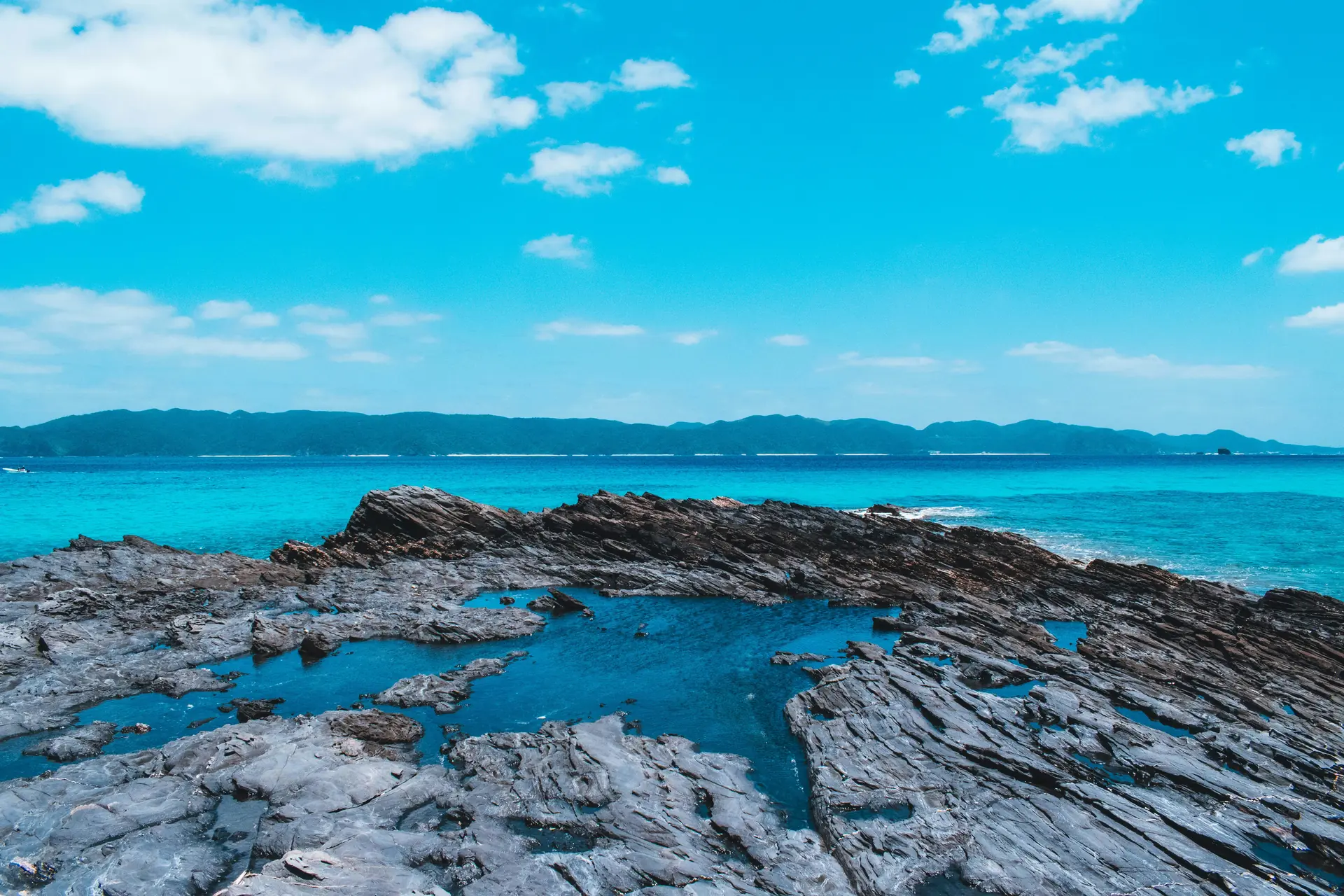
Kerama blue seas, coral and whales

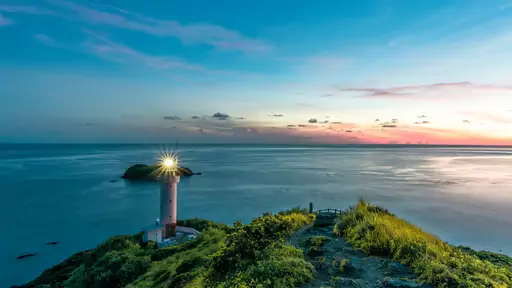
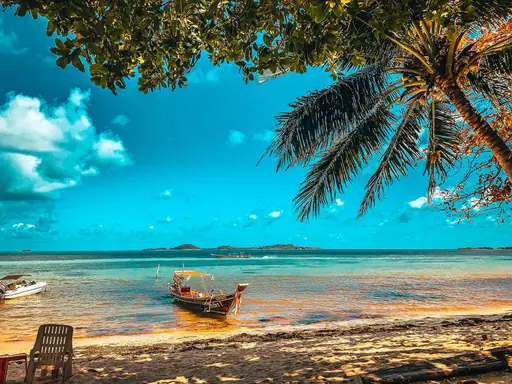
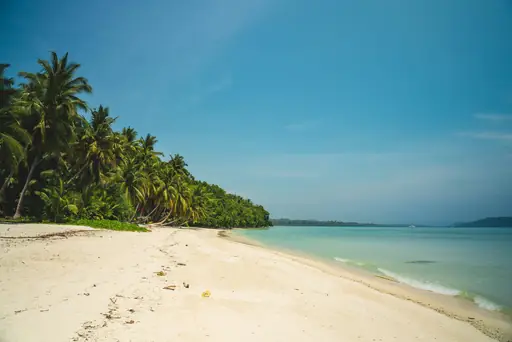
Kerama Shoto National Park covers the Kerama Islands, a small group in the East China Sea west of Okinawa's main island. Japan designated it in 2014 and most of the protected area is sea. Tokashiki is the largest island while Zamami and Aka have the main beaches and villages. Visitors can snorkel over coral, dive or paddle a kayak in water known as Kerama blue. Humpback whales pass through in winter. Boats from Naha take roughly 40 minutes to just over an hour so the islands work as a day trip, though a night or two gives you more time on the water.

National Park in Japan
Climate zone: Humid subtropical

Humid subtropical: Warm temperate climates with hot, humid summers, mild winters and evenly distributed rainfall, common on eastern continental margins.

See climate table
Price level: $$$
$Cheap
$$Medium
$$$Expensive, upscale
$$$+Very expensive, luxury
See price details
Safety: 7.2
General Safety:9
Health & medical:5
Accessibility:3
Tap water:6
Read details
Tourist English: 2/5
English is spoken at visitor centers, dive shops, and some guesthouses, but less so elsewhere. Most signs at main attractions are bilingual. A translation app is helpful for restaurants or remote areas.
Last update: Oct 19, 2026
* We earn a commission from some links on this page.
Kerama Shoto National Park Summary

These place ratings give you a quick overview of how well a destination matches different types of trips.

"Best for" scores:
The specific interest scores show where this place really shines – whether it's ideal for hiking, food & drink experiences, museums or other activities. These highlights help you understand what makes the destination special at a glance.

"Your personal" scores:
This reflects how well a place matches your personal preferences. You can adjust the importances of travel topics or other personal requirements categories in your account settings.

"Suited for" badges:
These give you a quick overview of how well a destination suits specific types of travelers, to help you find the places that match your lifestyle, preferences or travel situation.

Read how our scores work
Outstanding for tropical islands and marine life. Go snorkeling and diving in crystal-clear waters, relax on white beaches, watch sea turtles and enjoy boat trips between quiet islands.
Place score
8.4
Best at:
Islands
10
Sea
10
Snorkeling
10
Beaches
9
Spotless
9
Personal score
?
Log in to see how this place matches your personal travel interests.
Suited for
👶 7
Families
🧓 3
Seniors
❤️ 8
Couples
♻️ 7
Sustainability
Japan – Quick facts
Power Grid: 100 V, 50 Hz
Plug: Type A
Type A:
Diagram of a Type A power plug

Read about power adapters
Currency: Japanese Yen (JPY)
$1 ≈ ¥158
Cashless info: Rating 4/5
Cashless payments are becoming more common, especially in cities, with some shops still preferring cash. Be prepared for occasional cash-only situations in rural areas.

Save with a travel credit card
eSIM providers: Best value: Saily
Flexibility: Airalo
Read our in-depth comparison
Tipping: Tipping is not customary in Japan and can be considered rude. Excellent service is the norm, and tipping is unnecessary in most places.
Public drinking: Public drinking is legal and commonly accepted, particularly during festivals and events.
Public smoking: Smoking is prohibited in indoor public places but allowed in designated outdoor areas. Some restaurants may have smoking sections.
New Year
(January)
One of the most important holidays, expect crowded temples and high prices. Plan ahead.
Golden Week
(April-May)
The busiest travel time, expect high demand for accommodation and transportation.
Obon
(August)
A time to honor ancestors, many businesses close, and transportation can be crowded.
Emergency contact: Emergency Number: 110 (Police), 119 (Fire & Ambulance)
Taxi apps: Uber, JapanTaxi, DiDi
Other: Japan is a country of respect, so understanding local customs and etiquette is important. Public transportation is efficient, but can be crowded during peak hours.
Best times to travel

The best times to travel section shows how the months compare for a visit, so you can find the time of year that fits what you want to do.

Background colors of the months:
The color shows the typical temperature: yellow (hot), green (mild) and blue (cold). How strong the color is shows the travel season: full color means high season, soft color means shoulder season and soft-striped means off season.

Weather symbols:
Each month has one symbol showing what the weather is typically like, such as hot and sunny, freezing or a rainy or snowy season. Use them to quickly spot months that match the weather you want, or to avoid the ones that don't.

Crowdedness:
The people icon shows how busy the place usually is. The more people, the more crowded it gets.

Additional notes:
The gray info boxes point out special things worth knowing, like recurring weather issues or seasonal events.

for Kerama Shoto National Park, Japan
🌧️
Jan
🌬️
Feb
🌬️
Mar
🌬️
Apr
⛈️
May
⛈️
Jun
🌦️
Jul
⛈️
Aug
🌦️
Sep
🌦️
Oct
🌬️
Nov
🌧️
Dec
High season: July - Sep.
Shoulder season: Jan. - June, Oct.
Crowdedness: 6 (Many tourists)
Tap on a month for more info Hover over a month for more info
Humpback whale watching from Naha and the islands runs January to March
Ferries from Naha often cancelled during typhoons (August to October) and winter storms
Golden Week (late April to early May) and Obon (mid August): ferries and lodging fill up

Why travel to Kerama Shoto National Park?

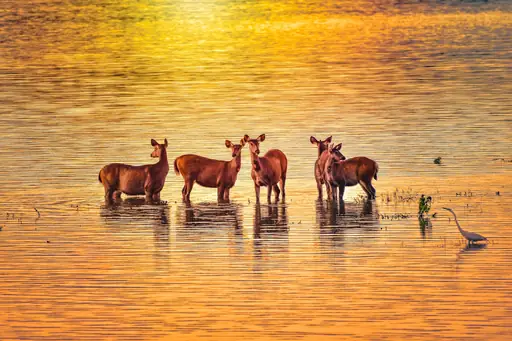
The Kerama blue sea is clear enough to see coral from the beach and the surrounding waters have been a Ramsar wetland since 2005. The park holds about 248 species of reef-building coral, roughly 62 percent of those found in Japan. Snorkelers can swim off Furuzamami Beach on Zamami or Nishibama Beach on Aka and Tokashiki has its own beaches at Tokashiku and Aharen. Green and hawksbill turtles live in the area and may be seen while snorkeling. The swimming season runs from about May to October. Humpback whales breed around the islands and are often seen from December to April, with boat tours from Zamami and Tokashiki running from January to March. Tours put you close to the animals but sightings depend on the sea conditions on the day. The land is small but worth a walk. Tokashiki is the largest island and its highest point is Mount Akama at about 750 ft. Zamami has hilltop observatories that have views over the bays. The Kerama deer, a small sika deer subspecies, live on Geruma and Yakabi. Aka, Geruma and Fukaji are linked by bridges. Two or three nights suits island hopping and a single day covers one island at an easy pace. Naha is the base for both.

🏯Places worth seeing
  • 1 Tokashiku Beach
  • 2 Aharen Beach
  • 3 Nishibama Beach
  • 4 Inazaki observatory
  • 5 Ama Beach
  • 6 Furuzamami Beach
  • 7 Aka Bridge
  • 8 Gerama-bashi Bridge
  • 9 Amuro Island
🏞️Natural landmarks
  • 1 Aka Island
  • 2 Tokashiki Island
  • 3 Zamami Island
  • 4 Geruma Island
🍽️Eat & Drink
  • 1 Boku no Mise Ojisan
    Boku no Mise Ojisan is a casual Zamami diner known for pork cutlet bowls, each served with a small bowl of Okinawa soba. It is on Zamami’s village street, about four minutes on foot from Zamami Port.
  • 2 Little Kitchen
    Little Kitchen serves Asian-influenced and Okinawan fusion dishes using island ingredients. The restaurant occupies a bright orange building in Zamami village, near the port, and offers substantial shared plates alongside local beer and awamori.
  • 3 Nanamaru
    Nanamaru is a small izakaya in Zamami village serving Okinawan dishes, local fish sashimi and awamori. Its menu follows the island catch and seasonal produce, and the restaurant is within walking distance of Zamami Port.
  • 4 Mozuku Soba Wayama Mozuku
    Wayama Mozuku specializes in Okinawa soba kneaded with locally harvested mozuku seaweed. The restaurant is in Ama on Zamami Island, near Ama Beach, and serves noodles with pork ribs, vegetables and island-made condiments.
  • 5 Cafe Bar Mugi
    Cafe Bar Mugi serves house-baked bread, curry and drinks in central Zamami village. It is close to Zamami Port, working as a daytime café and evening bar with Okinawan beer and awamori alongside simple island meals.
  • 6 Beach House Aka
    Beach House Aka is an open-terrace restaurant facing Maehama Beach on Aka Island. It serves changing lunch plates, steak sets and cold beer, about ten minutes on foot from Aka Port along the island’s coastal village road.
  • 7 Cafe and Gohan Guu Guu
    Cafe and Gohan Guu Guu serves Okinawan dishes and set meals using local ingredients in the centre of Aka Island. It is about four minutes on foot from Aka Port, on the village road toward the island’s beaches.
  • 8 Haana Cafe
    Haana Cafe is a small beachside café near Maehama Beach on Aka Island. It serves island-tofu smoothies and light meals, providing a local Okinawan refreshment stop along the sandy coast south of Aka village.
  • 9 Parlor Miyama
    Parlor Miyama is a casual diner inside Aka Port Terminal, serving Okinawa soba, taco rice and island-style set meals. Its location beside the ferry dock makes it a practical food stop for arrivals, departures and inter-island transfers.
  • 10 Tatsu no Mise
    Tatsu no Mise has a shop on the first floor and a diner above it in Aka village. The menu includes Okinawa soba, curry and pork-cutlet rice bowls, a short walk from Aka Port and the island’s central streets.
🎈Events
  • Traditional Mochi-Pounding (January 1st)
  • Whale Watching Season (January-March)
  • Spring Marine Festival
  • Summer Beach Festivals
  • Autumn Island Festivals
  • Winter Marine Activities Festival
  • Humpback Whale Watching Season (Jan–Mar)
  • Kerama Blue Festival
  • Rhododendron Bloom (Spring)
  • Fireworks on Zamami

Knowledge before you go

  • Book high-speed boat seats ahead, since they sell out.
  • Boats to Aharen on Tokashiki from Zamami or Aka need a reservation made the day before.
  • Whale watching tours run from January to March while swimming and snorkeling are best from May to October.
  • Coral spawns around June and some of the larvae drift to reefs on Okinawa's main island.

How to travel to Kerama Shoto National Park

Boats from Tomari Port in Naha are the way to reach the islands. High-speed boats take roughly 35 to 50 minutes to Tokashiki and 50 to 70 minutes to Zamami via Aka. Slower car ferries take about twice as long. High-speed boats can sell out and are more likely than car ferries to be cancelled in high waves, so book ahead and keep a spare day in winter and in typhoon season. Tomari Port is a short taxi ride from Naha Airport (OKA). Naha receives flights from many cities across Japan. The small airport on the Keramas isn't used for regular flights. Once on the islands you can continue by village ferry between Zamami, Aka and Aharen.

Access summary

  • From Naha Airport (OKA): Monorail or taxi to Tomari Port, then ferry.
  • From Naha city: High-speed boat or ferry to Kerama Islands, about 35–70 minutes.
  • From mainland Japan: Fly to Naha, then onward ferries; popular for diving/whales.

Where to stay in Kerama Shoto National Park

Most lodging is on Zamami, Aka and Tokashiki. It runs from small inns and family-run minshuku to pensions and a few resort-style hotels. Zamami's village is near the port and has the widest choice, so it's the easiest base for beaches and boat trips. Aka is quieter and Tokashiki has camping for those who want it. Rooms are limited because the islands are small. Book well ahead for the whale season from January to March and for summer weekends and holidays. Some lodgings offer port pickup, which helps when you arrive with luggage. Staying in Naha works for a day trip but the boat schedule leaves only a few hours on the island. A night on an island gives you time for an early snorkel before the day boats arrive and a quiet evening after they leave.

How to get around Kerama Shoto National Park

Each island in the Keramas is its own small world, so getting around means ferries between them and short trips on foot or by rental on each island. Zamami is the easiest, with the village and most lodgings and shops near the port. Aka, Geruma and Fukaji connect by bridge so you can cross them by bicycle or on foot.

Zamami:
The two main beaches are about a 20-minute walk from the village and buses also run from the port to Furuzamami and Ama beaches.
Cars, mopeds and bicycles can be rented and some lodgings and tour operators offer pickup from the port.

Village ferry:
The village ferry run by Mitsushima links Zamami, Aka and Aharen on Tokashiki.
Trips between Aka and Zamami run daily and need no reservation. Trips to or from Aharen Port must be reserved through the Zamami Village Office the day before.

Cars and small boats:
A car adds little on Zamami.
On the larger islands it helps to arrange transport with your lodging in advance since distances between beaches and villages are longer. Small boats also run from Zamami Port to the uninhabited islets of Gahi and Agenashiku with no fixed schedule.

Food in Kerama Shoto National Park

Food on the Keramas is simple island cooking built around fresh seafood and the usual Okinawan dishes such as Okinawa soba and stir-fries with bitter melon. Many inns serve dinner and breakfast to guests which is often the easiest way to eat well.

Outside lodgings the choice is thin. Each village has a few small restaurants and shops and many close early. Beaches have little beyond a snack hut such as the one at Furuzamami Beach.

If you stay on a smaller island it helps to buy snacks and water in Naha or at the village shop before heading to a beach. Vegetarians will find few meat-free choices in small restaurants, so it's worth asking your lodging in advance.

Budget snapshot
Costs compared to home

We calculate the average costs when traveling to destinations and compare those with the living costs at your home. With this you can get an estimate of how expensive or cheap the destination is for you.

To customize this, you can set up which location and price level are used for the calculations in your account settings.

-51 %
Daily expenses in the region are around 51% lower than the average across United States. That means you'll spend a lot less on meals and getting around.
Exchange rate trend

The exchange rate price factor shows how expensive or cheap a currency currently is compared to its historical average. It's a quick way to see if a country is currently more or less affordable due to exchange rate changes.

-17 %
Your exchange rate (USD to JPY) is 17% better than in recent years. That means traveling now is considerably cheaper compared to the past.

Travel costs (Data for Naha, Japan - 19 miles away)

To help you plan your trip, we provide estimated daily costs per person (when traveling as a pair) for different travel styles. These numbers give you an idea of what you might spend each day at this destination, including accommodation, food, transport and activities.

Additionally, we also provide average hotel costs for different travel styles to give you an estimate for the accommodation only.

Please note that these are only estimates. The real costs depend on booking times, season and other factors.

Daily cost summary

Travel style categories explained:

Backpacker:
Staying in hostels or budget hotels, cooking your own meals or eating cheap and choosing low-cost activities.

Mid-range:
Staying in mid-range hotels, eating at a mix of restaurants and casual spots and enjoying a variety of activities.

Luxury:
Staying in luxury hotels, dining out at high-end restaurants and enjoying premium experiences without worrying about the price.

Backpacker Mid-range Luxury
💵 Total costs per day, including accommodation
$47
$123
$290
🏨 Accommodation per night, per person
$20
$75
$131
🍝 Food per day
$20
$40
$127
🚕 Transportation per day
$7
$8
$32
Food & Drink
🍽️ Restaurant Dinner, per person
$15
🍛 Lunch Set, per person
$4.70
🍟 Fast food combo
$5
🍝 Preparing your own food, per day
$8
☕ Cappuccino
$3
🍺 Beer in a restaurant, 0.5 l / 16 oz
$3.30
Transportation
🚌 Public transport ticket
$1.60
🚕 Taxi Ride, 10 km / 6 mi
$20
⛽ Gas, 1 l / ¼ gal
$0.95
Other
🎞️ Movie ticket
$10
👩‍⚕️ Doctor's consult
$33
🤧 Cold medication
$10
💇 Basic haircut
$14

Safety information overview

General safety
9
The Kerama Islands are very safe, with little crime and the sea is the main risk. Currents and boat traffic affect swimmers and summer brings jellyfish, so stay near the beach or join a guided trip. Typhoons in late summer and autumn can cancel ferries.
Health & Medical
5
Medical services on the islands are limited and serious cases go to Naha by boat. English-speaking staff are uncommon and divers should carry insurance that covers treatment for decompression sickness. Strong sun and summer heat are the other everyday concern.
Accessi­bility
3
Accessibility is limited. Boarding the boats involves gangways and steps, island roads are hilly and beaches are reached by paths or stairs. Zamami's village is compact which helps. Lodgings or tour operators often offer pickup from the port.
Tap water
6
Tap water on the islands is safe to drink, as in the rest of Japan. Village shops and vending machines sell bottled water and drinks. Beaches and trails have few shops so carry water with you, especially in summer.

Looking for inspiration?

Discover
Most beautiful beaches and coastal escapes
For a lot of people, a beach is the whole point of a holiday, but what makes a beach day perfect really depends on personal taste. Some travellers want isolation and the feeling…
Read more
Discover
Stunning national parks and wilderness areas
National parks exist because someone decided that certain landscapes were too important to lose. The best of them protect ecosystems, wildlife and natural processes that would…
Read more
Discover
Best island getaway destinations in Asia
Asia's island destinations span an extraordinary range, from the densely developed resort islands of Southeast Asia and the volcanic archipelagos of the Pacific rim to the remote…
Read more
Discover
Best couple vacation destinations in Asia
Asia is perfect for couples who want their holiday to feel like a shared adventure rather than just a change of scenery. Few continents offer so many ways to be amazed together.…
Read more
Discover
Best natural wonder destinations in Asia
Asia contains some of the most extraordinary natural wonders on earth, shaped by the collision of tectonic plates, vast river systems, volcanic activity and climatic extremes that…
Read more
Discover
Top island destinations and tropical getaways
Island travel offers a self-contained quality that few other destination types match, with defined geography, distinct local culture and the particular atmosphere that comes from…
Read more
Discover
Best destinations for first-time travelers in Asia
Asia has one of the best established beginner travel routes anywhere, largely because so many first time travelers have worn the path before you. Southeast Asia in particular…
Read more
Discover
Best rural retreat destinations in Asia
Rural retreat travel is defined by the deliberate removal from urban pace and density, with landscape immersion, slower rhythms and direct engagement with food, nature and local…
Read more
Discover
Best solo travel destinations in Asia
Asia is where most solo travelers figure out they can actually do this. The backpacker trails through Southeast Asia have been running for decades, and the infrastructure along…
Read more
Discover
Top solo travel destinations and safe hubs
Traveling alone sounds like a bigger deal than it is. The first day feels strange – eating dinner by yourself, navigating without someone to double-check the map with, making every…
Read more
Discover
Best couple vacation destinations
Travelling as a couple sounds simple enough, yet the best couple vacation destinations mean something different to almost every pair. What feels romantic to one couple can feel…
Read more
Discover
Asia's best beach destinations and coastal escapes
Asia's beaches range from some of the most visited in the world to stretches of coast that see almost no tourism at all. The region has enough variety that generalisations don't…
Read more
Discover
Best wildlife destinations in Asia
Asia holds some of the most extraordinary wildlife on earth, from the great apes of equatorial rainforest to marine ecosystems of exceptional richness, endemic island species found…
Read more
Discover
Stunning national parks and wilderness areas in Asia
Picture a wooden boat sliding through river mist at sunrise, with monkeys shaking the branches overhead and a cup of tea going cold in your hand. The national parks and wilderness…
Read more
Discover
Best destinations for first-time travelers
A first trip abroad works best somewhere that eases you in, rather than throwing every possible culture shock and logistical headache at you at once. Some first-time travelers…
Read more
Feedback
