














Was this page helpful?

| Opening hours: |
|
||
|---|---|---|---|
| Public website: | www.zoo-berlin.de |
| Power Grid: |
230 V, 50 Hz Plug: Type C , Type F
Type C:
  Read about power adapters |
|---|---|
| Currency: |
Euro (EUR) $1 ≈ €0.90 |
| Cashless info: |
Rating 4/5
Cards are widely accepted, especially in urban areas, but small establishments may prefer cash. Be prepared for occasional cash-only situations.
Save with a travel credit card |
| eSIM providers: |
Best value: Saily Flexibility: Airalo Read our in-depth comparison |
| Tipping: | Tipping is common in restaurants, typically 5-10%. For taxis, it is customary to round up to the nearest euro. Tipping in cash is more common than adding it to card payments. |
|---|---|
| Public drinking: | Public drinking is allowed in most parts of Germany, especially in beer gardens and public events, but some local regulations may restrict it in specific areas. |
| Public smoking: | Smoking is prohibited indoors in public places such as restaurants, trains, and buses. Designated smoking areas are available outside many buildings. |
| Oktoberfest (September) |
Huge crowds in Munich. Expect high hotel rates and crowded transportation. |
|---|---|
| Christmas (December) |
Christmas markets are popular, expect crowded cities and higher prices. |
| Labour Day (May) |
Many shops are closed, and there are celebrations throughout the country. |
| Emergency contact: | Police: 110, Emergency Number: 112 (Fire, Ambulance) |
|---|---|
| Taxi apps: | Uber, Free Now, myTaxi |
| Other: | Germany is well-equipped for tourists, with good public transport and high-quality facilities. However, be prepared for language barriers in some rural areas. |
The best times to travel section shows how the months compare for a visit, so you can find the time of year that fits what you want to do.
Background colors of the months:
The color shows the typical temperature: yellow (hot), green (mild) and blue (cold). How strong the color is shows the travel season: full color means high season, soft color means shoulder season and soft-striped means off season.
Weather symbols:
Each month has one symbol showing what the weather is typically like, such as hot and sunny, freezing or a rainy or snowy season. Use them to quickly spot months that match the weather you want, or to avoid the ones that don't.
Crowdedness:
The people icon shows how busy the place usually is. The more people, the more crowded it gets.
Additional notes:
The gray info boxes point out special things worth knowing, like recurring weather issues or seasonal events.
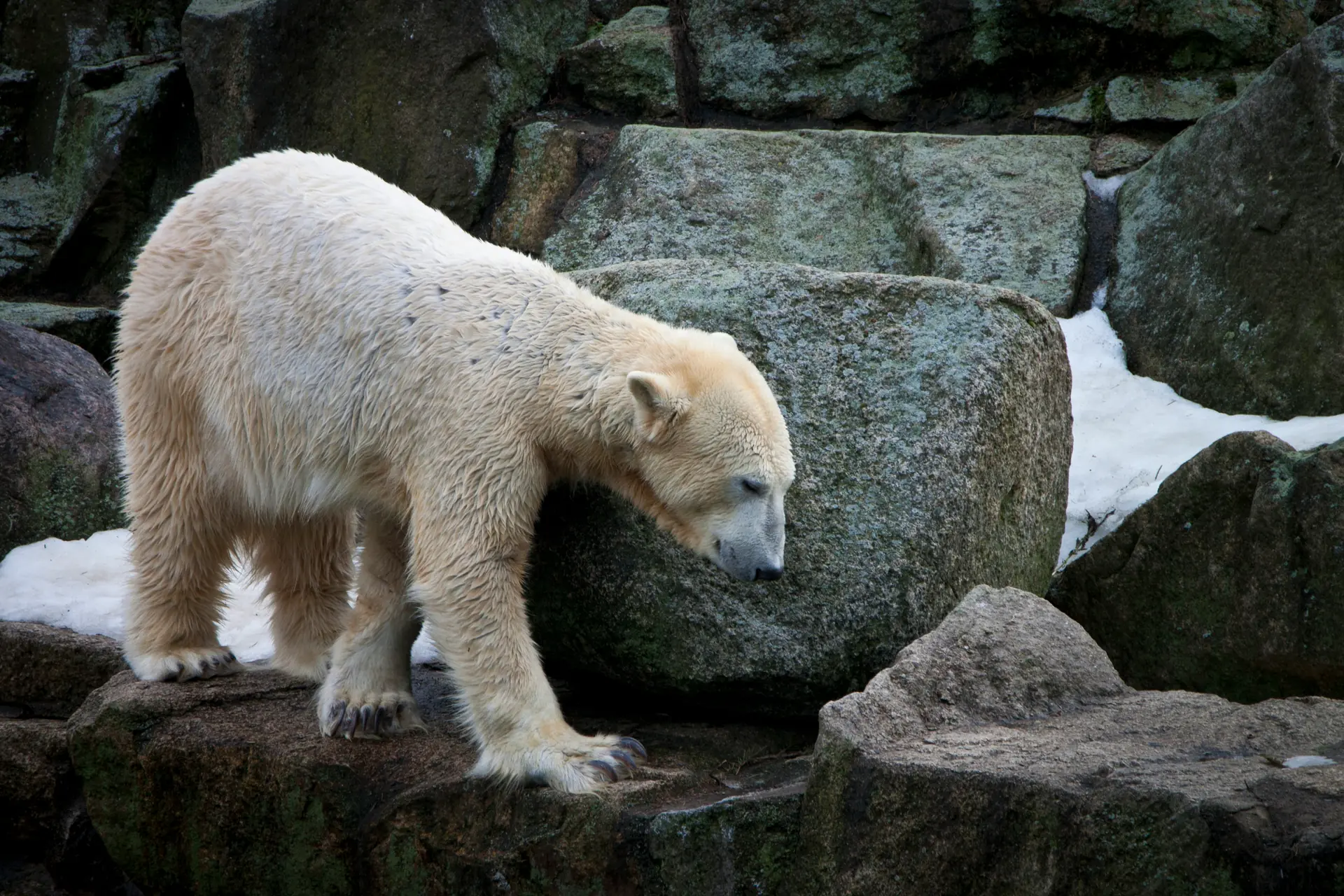
Berlin Zoological Garden dates from 1844 and is the oldest zoo in Germany. Its founding is credited to the naturalist Alexander von Humboldt and Martin Lichtenstein. Its collection of nearly 1,200 species spreads over 0.1 sq mi in the City West and ranks among the largest of any zoo in the world.
The zoo was heavily damaged in World War II and many animals died. It was rebuilt in the decades that followed and gained worldwide attention when the polar bear Knut was born here in 2006. The main entrance is the Elephant Gate, built in 1899. The second entrance at the Lion Gate is also worth a look before you go in.
The Panda Garden is the best known enclosure and is home to Meng Meng and Jiao Qing, the only giant pandas in Germany. Elsewhere on the grounds you can see the rhino pagoda, the hippo house, the big cat house, the antelope house and the Pinguinwelt. The Hans im Glück petting zoo is aimed at younger children. Feedings and training sessions run through the day and the times are posted on the zoo's website. Aquarium Berlin stands on the same grounds as a separate building with three floors that hold a tropical crocodile hall, a shark reef, jellyfish, reptiles and insects.
Plan on half a day for the zoo alone and more if you add the aquarium. The grounds are mostly flat. Guided tours start at the Lion Gate and some are offered in German Sign Language. Dogs aren't allowed anywhere in the zoo.
The easiest way to reach the zoo is by train to Zoologischer Garten station, about 650 ft away. It's served by the S-Bahn lines S3, S5, S7 and S9 and the U-Bahn lines U2 and U9. Regional trains also stop there and the S-Bahn ride from the Hauptbahnhof takes roughly 10 minutes. The U-Bahn station Kurfürstendamm (U1 and U9) is about 1,000 ft away and several bus lines stop nearby. Zoologischer Garten is also on the S9, which runs from Berlin Brandenburg Airport (BER) in under an hour. BER is in fare zone C so you need an ABC ticket for the trip and a single ticket for zones A and B costs €4 ($4.48) for the rest of the city. The Lion Gate on Hardenbergplatz is the closest gate to the station and the Elephant Gate on Budapester Straße is the main entrance. A car isn't needed since parking around the zoo is limited and paid.
The zoo lies in the City West, so the streets around Zoologischer Garten station and along Kurfürstendamm have the most hotels within walking distance, from budget options to upscale ones. The area right around the station is busy and can be loud late in the evening while the side streets in Charlottenburg are calmer. Staying in Mitte is another option, since Museum Island and Alexanderplatz are around 15 minutes away by S-Bahn and you reach the zoo with one direct ride. Apartments and hostels are available in both areas. Rooms in the City West fill up for trade fairs and around Christmas and New Year, so book ahead for those dates.
Food inside the zoo comes from several restaurants and kiosks on the grounds, which serve German dishes, snacks and drinks. Prices are typical for a large attraction so many families eat before or after the visit. The aquarium is on the same grounds so visitors can use the same options during a combined visit.
Outside the gates the area around Zoologischer Garten station has bakeries, supermarkets and fast food. Kurfürstendamm and the streets of Charlottenburg have restaurants for every budget. Currywurst stands near the station are a quick option if you want a Berlin classic before heading home.
Log in to add this place to a travel list and get a summary of all recommended items for your whole trip.
We calculate the average costs when traveling to destinations and compare those with the living costs at your home. With this you can get an estimate of how expensive or cheap the destination is for you.
To customize this, you can set up which location and price level are used for the calculations in your account settings.
The exchange rate price factor shows how expensive or cheap a currency currently is compared to its historical average. It's a quick way to see if a country is currently more or less affordable due to exchange rate changes.
