










Was this page helpful?

These place ratings give you a quick overview of how well a destination matches different types of trips.
"Best for" scores:
The specific interest scores show where this place really shines – whether it's ideal for hiking, food & drink experiences, museums or other activities. These highlights help you understand what makes the destination special at a glance.
"Your personal" scores:
This reflects how well a place matches your personal preferences. You can adjust the importances of travel topics or other personal requirements categories in your account settings.
"Suited for" badges:
These give you a quick overview of how well a destination suits specific types of travelers, to help you find the places that match your lifestyle, preferences or travel situation.
| Power Grid: |
100 V, 50 Hz Plug: Type A
Type A:
 Read about power adapters |
|---|---|
| Currency: |
Japanese Yen (JPY) $1 ≈ ¥158 |
| Cashless info: |
Rating 4/5
Cashless payments are becoming more common, especially in cities, with some shops still preferring cash. Be prepared for occasional cash-only situations in rural areas.
Save with a travel credit card |
| eSIM providers: |
Best value: Saily Flexibility: Airalo Read our in-depth comparison |
| Tipping: | Tipping is not customary in Japan and can be considered rude. Excellent service is the norm, and tipping is unnecessary in most places. |
|---|---|
| Public drinking: | Public drinking is legal and commonly accepted, particularly during festivals and events. |
| Public smoking: | Smoking is prohibited in indoor public places but allowed in designated outdoor areas. Some restaurants may have smoking sections. |
| New Year (January) |
One of the most important holidays, expect crowded temples and high prices. Plan ahead. |
|---|---|
| Golden Week (April-May) |
The busiest travel time, expect high demand for accommodation and transportation. |
| Obon (August) |
A time to honor ancestors, many businesses close, and transportation can be crowded. |
| Emergency contact: | Emergency Number: 110 (Police), 119 (Fire & Ambulance) |
|---|---|
| Taxi apps: | Uber, JapanTaxi, DiDi |
| Other: | Japan is a country of respect, so understanding local customs and etiquette is important. Public transportation is efficient, but can be crowded during peak hours. |
The best times to travel section shows how the months compare for a visit, so you can find the time of year that fits what you want to do.
Background colors of the months:
The color shows the typical temperature: yellow (hot), green (mild) and blue (cold). How strong the color is shows the travel season: full color means high season, soft color means shoulder season and soft-striped means off season.
Weather symbols:
Each month has one symbol showing what the weather is typically like, such as hot and sunny, freezing or a rainy or snowy season. Use them to quickly spot months that match the weather you want, or to avoid the ones that don't.
Crowdedness:
The people icon shows how busy the place usually is. The more people, the more crowded it gets.
Additional notes:
The gray info boxes point out special things worth knowing, like recurring weather issues or seasonal events.
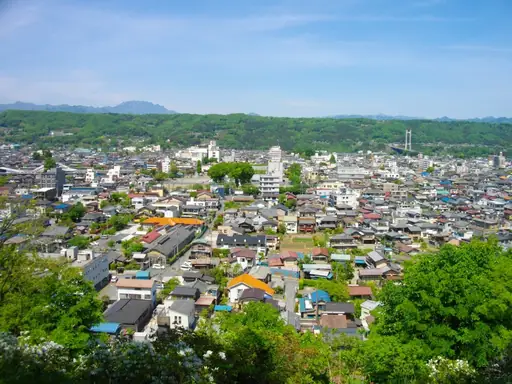
Tomioka is known for the Tomioka Silk Mill, built in 1872 with French advisors as a model of Japan's industrial push. It ran for 115 years until it closed in 1987, which is why so much of it survives. The timber-framed brick reeling factory and cocoon storehouses are among the few large buildings of their kind left in Japan. Workers got eight-hour days and Sunday holidays along with on-site housing and a medical center, which was unusual for the time. The Sekaito Visitor Center is a short walk away in a former cocoon warehouse restored by Kengo Kuma. Its two floors of exhibits explain the silk process from cocoon to thread and give the mill buildings more meaning when you walk through them. Outside the mill the town is quiet. Mt. Myogi, 3,600 ft high, rises west of the center and Myogi Shrine at its foot has a red gate about 39 ft high. Mt. Myogi Panorama Park has views of the mountain along with cosmos fields and autumn color. Sakurayama Park is another short stop. Tomioka is one of four sites listed together as the Tomioka Silk Mill and Related Sites, so silk fans can add the others nearby. Most visitors spend half a day here and treat it as a day trip from Tokyo.
Trains from Tokyo are the easiest way to reach Tomioka. Take the Joetsu or Hokuriku Shinkansen from Tokyo Station to Takasaki in under an hour and then change to the Joshin Dentetsu line toward Shimonita. The ride to Joshu-Tomioka Station takes about 40 minutes and the whole trip from Tokyo is under two hours. From Nagano or Karuizawa the Hokuriku Shinkansen also reaches Takasaki. Tokyo's two airports, Haneda (HND) and Narita (NRT), are the nearest major ones and you continue by train via Tokyo Station. Driving is possible via the Joshin-etsu Expressway and takes roughly two hours from central Tokyo, depending on traffic.
Takasaki is the practical base for the area. It has plentiful business hotels around the station and shinkansen links to Tokyo, Nagano and Niigata. From there the Joshin Dentetsu line reaches Tomioka in about 40 minutes. Staying there also leaves the evening free for Takasaki's restaurants, since the mill visit takes only half a day. Tomioka itself has only a small number of places to stay and is quiet in the evening. If you want a hot spring stay, Ikaho Onsen is about an hour north of Tomioka and Mt. Haruna is beyond it. Rooms in all of these places fill up on autumn weekends and holidays, so book ahead for those dates.
Central Tomioka is small enough to walk. The silk mill is about a 10 minute walk from Joshu-Tomioka Station through town.
Taxis and buses:
Taxis wait at the stand outside the station. Sights farther out, such as Myogi Shrine, Mt. Myogi and the panorama park, are spread along hilly roads and are easier by taxi or rental car than on foot. Local buses exist but run infrequently.
Joshin Dentetsu line:
Beyond Tomioka the Joshin Dentetsu line is the main public link. It runs between Takasaki and Shimonita and stops at several small stations along the way.
Car:
A car helps only if you want to see more than one sight outside the town center in a day.
Food in Tomioka is simple and local with a few regional dishes. Okkirikomi is a local dish of flat noodles boiled with plenty of vegetables. Horumon-age is a skewer of fried fish paste coated in breadcrumbs. Gunma is also known for konnyaku, which you'll see in many local meals and shops.
Restaurants cluster around Joshu-Tomioka Station and the road toward the silk mill. Choices are limited compared with a big city, so plan your meal times around the mill visit. Convenience stores and shops near the station cover snacks and drinks. Takasaki has a much wider range if you return there for dinner.
We calculate the average costs when traveling to destinations and compare those with the living costs at your home. With this you can get an estimate of how expensive or cheap the destination is for you.
To customize this, you can set up which location and price level are used for the calculations in your account settings.
The exchange rate price factor shows how expensive or cheap a currency currently is compared to its historical average. It's a quick way to see if a country is currently more or less affordable due to exchange rate changes.
To help you plan your trip, we provide estimated daily costs per person (when traveling as a pair) for different travel styles. These numbers give you an idea of what you might spend each day at this destination, including accommodation, food, transport and activities.
Additionally, we also provide average hotel costs for different travel styles to give you an estimate for the accommodation only.
Please note that these are only estimates. The real costs depend on booking times, season and other factors.
Travel style categories explained:
Backpacker:
Staying in hostels or budget hotels, cooking your own meals or eating cheap and choosing low-cost activities.
Mid-range:
Staying in mid-range hotels, eating at a mix of restaurants and casual spots and enjoying a variety of activities.
Luxury:
Staying in luxury hotels, dining out at high-end restaurants and enjoying premium experiences without worrying about the price.
| Backpacker | Mid-range | Luxury | |
|---|---|---|---|
| 💵 Total costs per day, including accommodation | |||
| 🏨 Accommodation per night, per person | |||
| 🍝 Food per day | |||
| 🚕 Transportation per day |
| 🍽️ Restaurant Dinner, per person | |
|---|---|
| 🍛 Lunch Set, per person | |
| 🍟 Fast food combo | |
| 🍝 Preparing your own food, per day | |
| ☕ Cappuccino | |
| 🍺 Beer in a restaurant, 0.5 l / 16 oz |
| 🚌 Public transport ticket | |
|---|---|
| 🚕 Taxi Ride, 10 km / 6 mi | |
| ⛽ Gas, 1 l / ¼ gal |
| 🎞️ Movie ticket | |
|---|---|
| 👩⚕️ Doctor's consult | |
| 🤧 Cold medication | |
| 💇 Basic haircut |
Log in to add this place to a travel list and get a summary of all recommended items for your whole trip.
