
ntt, CC BY-SA 3.0, via Wikimedia Commons
Asia › Japan › Chichibu

Chichibu

Scroll
UNESCO float festival and mountain shrines

Chichibu is a city in a mountain basin northwest of Tokyo, known for its December night festival of lit floats and for the carved dragon, tiger and owl at Chichibu Shrine. It has been a pilgrimage stop for centuries and a silk market town as well. Visitors can also climb to Hitsujiyama Park for its spring moss phlox. Buses go up to Mitsumine Shrine in the mountains, while the town center is small enough to cover on foot. It works as a day trip from Tokyo, but staying a night suits anyone who wants an evening onsen soak or the festival.

City in Japan
Climate zone: Humid subtropical

Humid subtropical: Warm temperate climates with hot, humid summers, mild winters and evenly distributed rainfall, common on eastern continental margins.

See climate table
Price level: $$$
$Cheap
$$Medium
$$$Expensive, upscale
$$$+Very expensive, luxury
See price details
Safety: 8.2
General Safety:9
Health & medical:7
Accessibility:6
Tap water:9
Read details
Tourist English: 2/5
English is spoken at major hotels, tourist centers, and some museums, but less so in small shops and restaurants. Signage is improving, but a translation app is helpful for smooth travel.
Last update: Oct 19, 2026
* We earn a commission from some links on this page.
Chichibu Summary

These place ratings give you a quick overview of how well a destination matches different types of trips.

"Best for" scores:
The specific interest scores show where this place really shines – whether it's ideal for hiking, food & drink experiences, museums or other activities. These highlights help you understand what makes the destination special at a glance.

"Your personal" scores:
This reflects how well a place matches your personal preferences. You can adjust the importances of travel topics or other personal requirements categories in your account settings.

"Suited for" badges:
These give you a quick overview of how well a destination suits specific types of travelers, to help you find the places that match your lifestyle, preferences or travel situation.

Read how our scores work
Strong in nature escapes and seasonal festivals. Hike forested mountains, visit historic shrines, enjoy river activities and experience colorful autumn foliage and traditional celebrations.
Place score
7.4
Best at:
Spotless
9
Mountains
8
Spirits
8
Fall foliage
8
Flowers
8
Personal score
?
Log in to see how this place matches your personal travel interests.
Suited for
👶 7
Families
🧓 6
Seniors
🛡️ 8
Travel Beginners
👩 7
Solo
Japan – Quick facts
Power Grid: 100 V, 50 Hz
Plug: Type A
Type A:
Diagram of a Type A power plug

Read about power adapters
Currency: Japanese Yen (JPY)
$1 ≈ ¥158
Cashless info: Rating 4/5
Cashless payments are becoming more common, especially in cities, with some shops still preferring cash. Be prepared for occasional cash-only situations in rural areas.

Save with a travel credit card
eSIM providers: Best value: Saily
Flexibility: Airalo
Read our in-depth comparison
Tipping: Tipping is not customary in Japan and can be considered rude. Excellent service is the norm, and tipping is unnecessary in most places.
Public drinking: Public drinking is legal and commonly accepted, particularly during festivals and events.
Public smoking: Smoking is prohibited in indoor public places but allowed in designated outdoor areas. Some restaurants may have smoking sections.
New Year
(January)
One of the most important holidays, expect crowded temples and high prices. Plan ahead.
Golden Week
(April-May)
The busiest travel time, expect high demand for accommodation and transportation.
Obon
(August)
A time to honor ancestors, many businesses close, and transportation can be crowded.
Emergency contact: Emergency Number: 110 (Police), 119 (Fire & Ambulance)
Taxi apps: Uber, JapanTaxi, DiDi
Other: Japan is a country of respect, so understanding local customs and etiquette is important. Public transportation is efficient, but can be crowded during peak hours.
Best times to travel

The best times to travel section shows how the months compare for a visit, so you can find the time of year that fits what you want to do.

Background colors of the months:
The color shows the typical temperature: yellow (hot), green (mild) and blue (cold). How strong the color is shows the travel season: full color means high season, soft color means shoulder season and soft-striped means off season.

Weather symbols:
Each month has one symbol showing what the weather is typically like, such as hot and sunny, freezing or a rainy or snowy season. Use them to quickly spot months that match the weather you want, or to avoid the ones that don't.

Crowdedness:
The people icon shows how busy the place usually is. The more people, the more crowded it gets.

Additional notes:
The gray info boxes point out special things worth knowing, like recurring weather issues or seasonal events.

for Chichibu, Japan
☀️
Jan
☀️
Feb
🌤️
Mar
🌤️
Apr
🌤️
May
🌦️
Jun
⛈️
Jul
🌦️
Aug
🌦️
Sep
⛈️
Oct
☀️
Nov
☀️
Dec
High season: April - May, Nov. - Dec.
Shoulder season: Jan. - Feb., July - Oct.
Crowdedness: 4 (Moderate tourist numbers)
Tap on a month for more info Hover over a month for more info
Chichibu Night Festival, December 2 to 3: floats and fireworks, very crowded, trains and hotels book out early
Moss phlox (shibazakura) at Hitsujiyama Park, mid April to early May: busiest during Golden Week
Ice formations at Misotsuchi and Ashigakubo, January to February: best in the coldest weeks

Why travel to Chichibu?

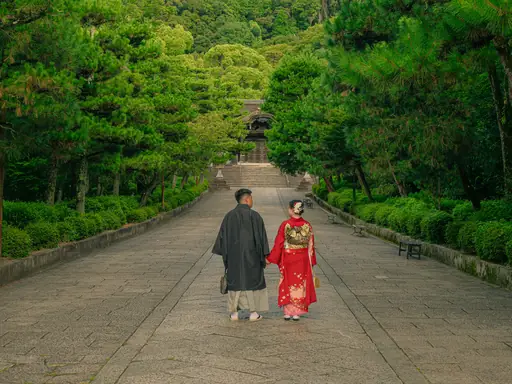
The Chichibu Night Festival on December 2 and 3 is one of Japan's three great float festivals and a UNESCO-listed event. Six large floats are hauled through the streets and up the steep Dangozaka hill on the evening of December 3 with fireworks over the city afterward. Outside the festival days the streets are quiet and Chichibu Shrine is easy to explore at your own pace. Its current buildings date to the 1590s and were built on the orders of Tokugawa Ieyasu. The eaves carry colorful carvings of a tiger, a North Star owl, a chained dragon and three monkeys who see, hear and speak well. The dragon and the monkeys are attributed to the carver Hidari Jingoro. In spring the moss phlox hills of Hitsujiyama Park bloom from mid-April to early May with Mount Buko behind them. Away from town the scenery is mountainous. Mitsumine Shrine is at about 3,600 ft and has stone wolves at its gate instead of the usual guardian dogs. The Chichibu pilgrimage links 34 Kannon temples over about 60 mi. A walk of 4 mi from Kagemori Station takes in four of them in a day. One day is enough for the shrine, the town center and Hitsujiyama. With a second day you have time for Mitsumine or the temples. Nagatoro and its river gorge are about 20 to 25 minutes away by train if you want to add them to the trip.

🏯Places worth seeing
  • 1 Chichibu Shrine
  • 2 Mitsumine-jinja Shrine
  • 3 Chichibu Festival Hall
🏞️Natural landmarks
  • 1 Hitsujiyama Park
  • 2 三十槌の氷柱
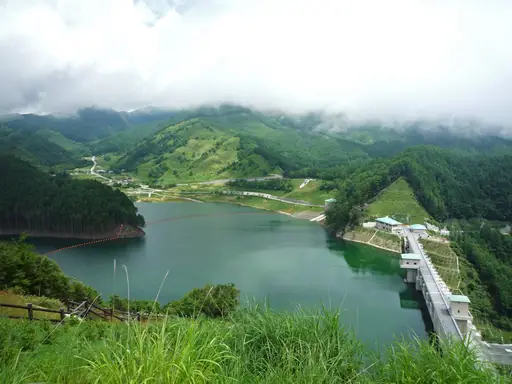
  • 3 Lake Chichibu
  • 4 Minoyama Park
  • 5 Ara River
🍽️Eat & Drink
  • 1 Yasudaya Hinodamachi
    Yasudaya serves Chichibu’s waraji katsudon: thin pork cutlets, shaped like straw sandals, fried and set over rice with a soy-based sauce. The Hinodamachi branch is about a 15-minute walk from Seibu-Chichibu Station and follows the Ogano-origin recipe.
  • 2 Soba no Mori
    Soba no Mori prepares hand-made buckwheat noodles from stone-ground domestic flour in a historic building at Chichibu Furusato-kan. The restored former bank stands near Chichibu Shrine in central Chichibu, and the menu includes local pork-miso dishes.
  • 3 Chinbata
    Chinbata specializes in buta miso don, rice bowls topped with Chichibu pork marinated in miso. It stands on a hillside west of Seibu-Chichibu Station, where diners can look toward Mount Buko from the restaurant’s raised setting.
  • 4 Masakiya
    Masakiya serves waraji katsu mabushi, a variation on Chichibu’s sandal-shaped pork cutlet dish eaten plain, with condiments, or with broth. It is located in Onohara, north of central Chichibu, near Onohara Station on the Chichibu Railway.
  • 5 Chichibu Waraji Katsu Tei
    Chichibu Waraji Katsu Tei makes waraji katsudon with Chichibu-brand Himebuta pork. It is inside Matsuri no Yu beside Seibu-Chichibu Station, combining the area’s cutlet-and-rice specialty with a station-side hot-spring complex.
  • 6 Chichibu Shokudo Nigurumaya
    Chichibu Shokudo Nigurumaya is a local-food restaurant within Michi-no-Eki Chichibu. It serves pork miso set meals, waraji katsudon, hand-cut soba, miso potato and okkirikomi noodles, bringing several regional dishes together near Chichibu Station.
  • 7 Mahollo Bar
    Mahollo Bar is a café-bar within Chichibu Omotesando Lab, near Chichibu Shrine. It pours local Bear Meet Beer and offers drinks alongside small dishes, reflecting Chichibu’s mix of beer, sake, wine and whisky producers.
  • 8 Musubi no Yu Cafe
    Musubi no Yu Cafe serves ochazuke and café dishes in Uenomachi, central Chichibu. The venue combines a restaurant with private sauna facilities, around a short walk from Ohanabatake Station and the streets near Chichibu’s historic centre.
  • 9 Bukou Shuzo
    Founded in 1753, Bukou Shuzo brews Buko Masamune sake using local spring water. Its more than 200-year-old building is a Registered Tangible Cultural Property, about a 15-minute walk from Seibu-Chichibu Station, with tastings at the shop.
  • 10 Yao Honten
    Yao Honten has brewed Chichibu Nishiki sake for about 270 years and operates a tasting bar and shop in the city. The venue also offers sake ice cream, near Chichibu’s old commercial streets and a short walk from Chichibu Shrine.
🎈Events
  • Chichibu Night Festival (Dec)
  • Chichibu Kawase Festival (July)
  • Chichibu Ondo Dance Festival (Aug)
  • Funadama Festival (Aug 15)
  • Yoshida Ryusei Bamboo Rocket Festival (Oct)
  • Chichibu Meisen Festival
  • Spring Shibazakura Festival (Apr–May)
  • Autumn Momiji Festival
  • Misotsuchi Icicle Festival (Jan–Feb)
  • Hachiman Shrine Autumn Festival

Knowledge before you go

  • Reach Hitsujiyama Park before 10:00 AM in the moss phlox weeks.
  • Mitsumine Shrine buses run only a few times a day, so check the timetable first.
  • Chichibu Shrine's carvings sit on all four sides of the main hall, so walk the full circuit.
  • The Ichiro's Malt distillery doesn't take regular visitors, but several bars and a shop at Seibu-Chichibu Station sell the whisky.

How to travel to Chichibu

The simplest way to reach Chichibu is a direct Seibu limited express from Ikebukuro in Tokyo, which takes about 80 minutes to Seibu-Chichibu Station. Seats are reserved and a limited express charge is added to the fare. A cheaper option is an ordinary Seibu express to Hanno with a change to the Chichibu Line, which takes around 20 minutes longer. Seibu also sells one-day passes that cover its network and in one version the Chichibu Railway between Nogami and Mitsumineguchi. Via JR you can take a Shinkansen or local train from Tokyo to Kumagaya (about 35 minutes by Shinkansen) and switch to the Chichibu Railway for around 70 minutes to Chichibu Station. A Japan Rail Pass covers the JR part but not the Chichibu Railway. By car, take the Kan-Etsu Expressway to Hanazono Interchange and follow Route 140 for 30 to 50 minutes. Alternatively leave the Ken-O Expressway at Sayama-Hidaka and follow Route 299 for about an hour. From central Tokyo the drive takes roughly 90 minutes to 2 hours. Flights arrive at Haneda (HND) or Narita (NRT) and the trip continues through Tokyo to Ikebukuro.

Access summary

  • From Tokyo airports: Train via central Tokyo and Ikebukuro to Seibu-Chichibu, ~3 hours.
  • From Tokyo (Ikebukuro): Seibu Limited Express to Seibu-Chichibu, about 80–100 minutes.
  • From Kumagaya: JR plus Chichibu Railway trains, typically around 70–90 minutes.

Where to stay in Chichibu

The center around Seibu-Chichibu Station is the easiest place to stay, with business hotels, small ryokan and guesthouses a short walk from the trains, the shrine and the Matsuri no Yu bathhouse. A few old buildings in the center have been turned into inns. Chichibu Station is quieter and a little closer to the shrine. Some larger hotels with their own baths are farther out and can mean a walk of about 20 minutes to the station, so it's worth checking the distance. Campsites and log houses for campers are outside the center. Rooms are limited for a town this size and fill early around the festival and in the moss phlox weeks. If everything is booked, Nagatoro has riverside inns a short train ride away. Tokyo also works as a base for a day trip. Mitsumine Shrine has its own pilgrim lodging near the top, which is worth checking if you want to start early in the mountains.

How to get around Chichibu

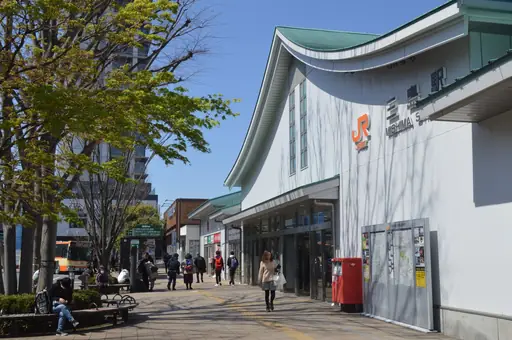
Central Chichibu is compact enough to cover on foot between its two main stations, Seibu-Chichibu and Chichibu. Chichibu Shrine is a 10 to 15 minute walk from Seibu-Chichibu and a few steps from Chichibu Station. Hitsujiyama Park is about 20 minutes on foot from Seibu-Chichibu.

Trains:
The Chichibu Railway links the town with Nagatoro and the temples along the valley.
Ohanabatake Station is about five minutes' walk from Seibu-Chichibu. The SL Paleo Express steam train runs on selected days, mostly weekends, between Kumagaya and Mitsumineguchi and needs a reserved seat ticket on top of the fare.

Buses and taxis:
Seibu Kanko buses leave from outside Seibu-Chichibu for Mitsumine Shrine (about 75 minutes) and a loop bus serves Muse Park.
Taxis wait near the station and bicycles can be rented in front of it.

Car:
A car helps if you want to link Mitsumine and several out-of-the-way temples in one day.
If you're only here for the town, the shrine and Hitsujiyama it's more trouble than it's worth, especially when the roads around the park tend to jam up in bloom season.

Food in Chichibu

Chichibu's cooking is hearty and built around miso, pork and soba. The valley isn't rice country so buckwheat noodles are everywhere and many soba shops have their own recipe. The food court and shops at Seibu-Chichibu Station make an easy first stop. Convenience stores cover early mornings. Vegetarians can manage with plain soba and miso potato but should ask about fish stock in broths and sauces.

Pork rice bowls:
Waraji katsudon is two long pork cutlets in a sweet sauce over rice, named for a straw sandal.
Butamisodon is miso-marinated pork grilled over rice.

Miso potato:
Miso potato is steamed potato fried in batter and coated in miso sauce.
It began as a farmers' mid-morning snack and stalls around the center sell it.

Local drinks:
Local drinks include sake from four breweries, wine and the Ichiro's Malt whisky made in the city.

Budget snapshot
Costs compared to home

We calculate the average costs when traveling to destinations and compare those with the living costs at your home. With this you can get an estimate of how expensive or cheap the destination is for you.

To customize this, you can set up which location and price level are used for the calculations in your account settings.

-43 %
Daily expenses in Chichibu are around 43% lower than the average across United States. That means you'll spend a lot less on meals and getting around.
Exchange rate trend

The exchange rate price factor shows how expensive or cheap a currency currently is compared to its historical average. It's a quick way to see if a country is currently more or less affordable due to exchange rate changes.

-17 %
Your exchange rate (USD to JPY) is 17% better than in recent years. That means traveling now is considerably cheaper compared to the past.

Travel costs

To help you plan your trip, we provide estimated daily costs per person (when traveling as a pair) for different travel styles. These numbers give you an idea of what you might spend each day at this destination, including accommodation, food, transport and activities.

Additionally, we also provide average hotel costs for different travel styles to give you an estimate for the accommodation only.

Please note that these are only estimates. The real costs depend on booking times, season and other factors.

Daily cost summary

Travel style categories explained:

Backpacker:
Staying in hostels or budget hotels, cooking your own meals or eating cheap and choosing low-cost activities.

Mid-range:
Staying in mid-range hotels, eating at a mix of restaurants and casual spots and enjoying a variety of activities.

Luxury:
Staying in luxury hotels, dining out at high-end restaurants and enjoying premium experiences without worrying about the price.

Backpacker Mid-range Luxury
💵 Total costs per day, including accommodation
$46
$91
$254
🏨 Accommodation per night, per person
$15
$35
$67
🍝 Food per day
$23
$45
$135
🚕 Transportation per day
$8
$11
$52
Food & Drink
🍽️ Restaurant Dinner, per person
$17
🍛 Lunch Set, per person
$6.50
🍟 Fast food combo
$5
🍝 Preparing your own food, per day
$9
☕ Cappuccino
$3.30
🍺 Beer in a restaurant, 0.5 l / 16 oz
$3
Transportation
🚌 Public transport ticket
$2
🚕 Taxi Ride, 10 km / 6 mi
$32
⛽ Gas, 1 l / ¼ gal
$1.15
Other
🎞️ Movie ticket
$12
👩‍⚕️ Doctor's consult
$39
🤧 Cold medication
$8
💇 Basic haircut
$16

Safety information overview

General safety
9
Chichibu is very safe for visitors, with little street crime. The real risks are on mountain trails, where slopes turn slick after rain and icy in winter. Bears and wild boar live in the surrounding forests, so hikers on remote paths carry a bell.
Health & Medical
7
Chichibu has hospitals and pharmacies in the town center, but English-speaking staff are limited. A translation app helps with the language gap and Tokyo's larger hospitals are about 80 minutes away by train. Ticks live on forest paths in warm months, so long trousers help.
Accessi­bility
6
Central Chichibu is mostly flat and walkable. Hitsujiyama Park is a 20-minute walk from the stations and partly uphill, but taxis cover it if needed. Mitsumine Shrine and many pilgrimage temples involve stairs and steep paths, with few step-free alternatives.
Tap water
9
Tap water in Chichibu is safe to drink, like almost everywhere in Japan. Bottled drinks are easy to find in town. Shops are few around Mitsumine and on the trails, so carry water on hikes.

Packing recommendations for Chichibu

Log in to add this place to a travel list and get a summary of all recommended items for your whole trip.

Looking for inspiration?

Discover
Best couple vacation destinations in Asia
Asia is perfect for couples who want their holiday to feel like a shared adventure rather than just a change of scenery. Few continents offer so many ways to be amazed together.…
Read more
Discover
Best natural wonder destinations in Asia
Asia contains some of the most extraordinary natural wonders on earth, shaped by the collision of tectonic plates, vast river systems, volcanic activity and climatic extremes that…
Read more
Discover
Best destinations for first-time travelers in Asia
Asia has one of the best established beginner travel routes anywhere, largely because so many first time travelers have worn the path before you. Southeast Asia in particular…
Read more
Discover
Best rural retreat destinations in Asia
Rural retreat travel is defined by the deliberate removal from urban pace and density, with landscape immersion, slower rhythms and direct engagement with food, nature and local…
Read more
Discover
Best solo travel destinations in Asia
Asia is where most solo travelers figure out they can actually do this. The backpacker trails through Southeast Asia have been running for decades, and the infrastructure along…
Read more
Discover
Top solo travel destinations and safe hubs
Traveling alone sounds like a bigger deal than it is. The first day feels strange – eating dinner by yourself, navigating without someone to double-check the map with, making every…
Read more
Discover
Best couple vacation destinations
Travelling as a couple sounds simple enough, yet the best couple vacation destinations mean something different to almost every pair. What feels romantic to one couple can feel…
Read more
Discover
Best destinations for first-time travelers
A first trip abroad works best somewhere that eases you in, rather than throwing every possible culture shock and logistical headache at you at once. Some first-time travelers…
Read more
Discover
Top rural retreat destinations and countryside getaways
Rural retreat travel is defined by the deliberate removal from urban pace and density, with landscape immersion, slower rhythms and direct engagement with food, nature and local…
Read more
Discover
Extraordinary natural wonders and scenic landscapes
Natural wonders occupy a different category from other travel destinations. They are places where the scale, the geology, the light or the sheer improbability of what exists there…
Read more
Discover
Most beautiful beaches and coastal escapes
For a lot of people, a beach is the whole point of a holiday, but what makes a beach day perfect really depends on personal taste. Some travellers want isolation and the feeling…
Read more
Discover
Stunning national parks and wilderness areas
National parks exist because someone decided that certain landscapes were too important to lose. The best of them protect ecosystems, wildlife and natural processes that would…
Read more
Discover
Intimate escapes and romantic getaways
The most memorable trips for couples tend to have less to do with luxury and more to do with the quality of shared experience. A place that slows you down, removes the usual…
Read more
Feedback