







Was this page helpful?

| Opening hours: |
|
||||
|---|---|---|---|---|---|
| Public website: | www.tokyo-zoo.net |
| Power Grid: |
100 V, 50 Hz Plug: Type A
Type A:
 Read about power adapters |
|---|---|
| Currency: |
Japanese Yen (JPY) $1 ≈ ¥158 |
| Cashless info: |
Rating 4/5
Cashless payments are becoming more common, especially in cities, with some shops still preferring cash. Be prepared for occasional cash-only situations in rural areas.
Save with a travel credit card |
| eSIM providers: |
Best value: Saily Flexibility: Airalo Read our in-depth comparison |
| Tipping: | Tipping is not customary in Japan and can be considered rude. Excellent service is the norm, and tipping is unnecessary in most places. |
|---|---|
| Public drinking: | Public drinking is legal and commonly accepted, particularly during festivals and events. |
| Public smoking: | Smoking is prohibited in indoor public places but allowed in designated outdoor areas. Some restaurants may have smoking sections. |
| New Year (January) |
One of the most important holidays, expect crowded temples and high prices. Plan ahead. |
|---|---|
| Golden Week (April-May) |
The busiest travel time, expect high demand for accommodation and transportation. |
| Obon (August) |
A time to honor ancestors, many businesses close, and transportation can be crowded. |
| Emergency contact: | Emergency Number: 110 (Police), 119 (Fire & Ambulance) |
|---|---|
| Taxi apps: | Uber, JapanTaxi, DiDi |
| Other: | Japan is a country of respect, so understanding local customs and etiquette is important. Public transportation is efficient, but can be crowded during peak hours. |
The best times to travel section shows how the months compare for a visit, so you can find the time of year that fits what you want to do.
Background colors of the months:
The color shows the typical temperature: yellow (hot), green (mild) and blue (cold). How strong the color is shows the travel season: full color means high season, soft color means shoulder season and soft-striped means off season.
Weather symbols:
Each month has one symbol showing what the weather is typically like, such as hot and sunny, freezing or a rainy or snowy season. Use them to quickly spot months that match the weather you want, or to avoid the ones that don't.
Crowdedness:
The people icon shows how busy the place usually is. The more people, the more crowded it gets.
Additional notes:
The gray info boxes point out special things worth knowing, like recurring weather issues or seasonal events.
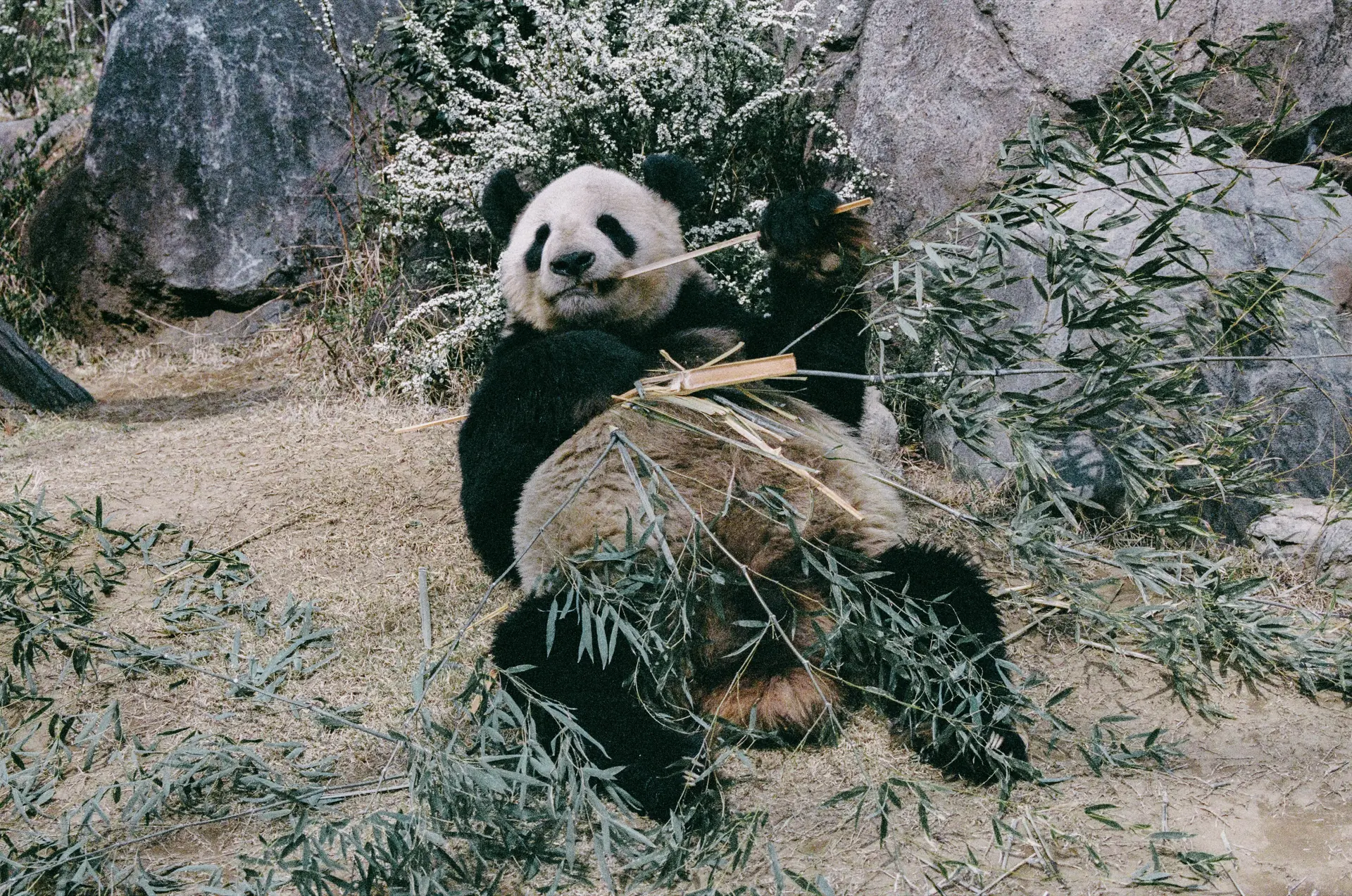
Ueno Zoo is the oldest zoo in Japan, opened in 1882 on grounds within Ueno Park. About 0.1 sq mi hold more than 3,000 animals from roughly 400 species. The giant pandas that made it famous worldwide have returned to China. The rest of the collection is large enough to fill a full visit, with plenty of species to see in both halves of the grounds.
The East Area holds many of the best known animals. Western lowland gorillas, Sumatran tigers, Asiatic elephants, Indian lions, bears and otters live here, along with gibbons, monkeys and a bird section. A Five-storied Pagoda is among the enclosures and makes an unusual backdrop for a zoo visit. Shinobazu Pond, next to the grounds, is a habitat for wild cormorants.
The West Area is home to African animals such as rhinos, hippos, pygmy hippos, giraffes, zebras and okapis. Lemurs, aye-ayes, aardvarks and maned wolves live here too. The Small Mammal House and the Vivarium, which holds reptiles, amphibians and fish, are also in this part. A Children's Zoo with a petting area suits small children.
Most visitors need two to four hours and families with young children often take longer. Expect plenty of walking from one half of the grounds to the other, with some slopes along the way. Tickets are sold until 4:00 PM and the zoo closes at 5:00 PM, while the Vivarium and Small Mammal House close half an hour earlier. Adults pay ¥600 ($3.79) while children 12 and under enter free. The nearby museums and Shinobazu Pond make it easy to combine the zoo with other stops.
Trains are the easiest way to reach the zoo, which is in Ueno Park next to Ueno Station. JR Yamanote and Keihin-Tohoku trains stop at Ueno along with the Ginza and Hibiya subway lines. Tokyo Station is roughly 10 minutes away on JR while Shinjuku takes about 25 to 30 minutes. Shinkansen trains from northern Japan also stop at Ueno. From the Park Exit of JR Ueno Station the main gate is about a 5 minute walk. Keisei Ueno Station and Nezu Station on the Chiyoda line are other options, each within a 5 to 10 minute walk. From Narita Airport (NRT) the Keisei Skyliner reaches Keisei Ueno in about 40 minutes. From Haneda Airport (HND) the Keikyu line and a change onto JR takes roughly an hour. The zoo has no parking lot so driving isn't practical, although paid lots nearby exist and a train is far simpler.
Ueno is a practical base with a wide spread of business hotels, budget chains, hostels and small inns around the station and along the streets to the north. Staying here puts the zoo, the park museums and Ameyoko market within walking distance. Ueno is also the Tokyo end of the Keisei Skyliner, which makes airport days from Narita simple. Asakusa is a short subway ride away on the Ginza line and has a similar mix of guesthouses and hostels. Akihabara is one stop away on JR and suits travelers who want newer hotels. Prices in this part of Tokyo are often lower than in Shinjuku or Ginza. You don't have to stay near the zoo. Most visitors come from wherever they're based in Tokyo, since the station links to so many lines. Rooms tighten during cherry blossom season in late March and early April, when the park is busiest.


Food around the zoo is mostly casual Japanese fare plus cafes and quick snacks. Inside the grounds you'll find restaurants and shops, though they can be crowded at midday on weekends and holidays. Eating before or after the visit is often easier.
Outside the gates Ueno Park has food stalls and benches while the streets beside the station hold many small restaurants. Ameyoko market, near Ueno Station, sells street snacks, fresh fruit and dried goods. The station buildings have department store food halls and supermarkets, which are handy for a picnic.
Convenience stores near the station sell onigiri, sandwiches and drinks at any hour. Vegetarians may find the options limited since many dishes rely on fish stock.
Log in to add this place to a travel list and get a summary of all recommended items for your whole trip.
We calculate the average costs when traveling to destinations and compare those with the living costs at your home. With this you can get an estimate of how expensive or cheap the destination is for you.
To customize this, you can set up which location and price level are used for the calculations in your account settings.
The exchange rate price factor shows how expensive or cheap a currency currently is compared to its historical average. It's a quick way to see if a country is currently more or less affordable due to exchange rate changes.
