Morio, CC BY-SA 3.0, via Wikimedia Commons
Asia › Japan › Mie › Suzuka › Climate

Suzuka climate data

Suzuka features a humid subtropical climate with four distinct seasons, marked by hot, humid, and rainy summers and cool, occasionally windy winters. The city experiences significant rainfall, especially from June to September, and enjoys a reasonable amount of sunshine year-round. Seasonal contrasts, cherry blossoms, and autumn foliage make Suzuka attractive for visitors throughout the year.

Best times to travel

The best times to travel section shows how the months compare for a visit, so you can find the time of year that fits what you want to do.

Background colors of the months:
The color shows the typical temperature: yellow (hot), green (mild) and blue (cold). How strong the color is shows the travel season: full color means high season, soft color means shoulder season and soft-striped means off season.

Weather symbols:
Each month has one symbol showing what the weather is typically like, such as hot and sunny, freezing or a rainy or snowy season. Use them to quickly spot months that match the weather you want, or to avoid the ones that don't.

Crowdedness:
The people icon shows how busy the place usually is. The more people, the more crowded it gets.

Additional notes:
The gray info boxes point out special things worth knowing, like recurring weather issues or seasonal events.

for Suzuka, Japan
🌤️
Jan
🌤️
Feb
🌤️
Mar
🌤️
Apr
🌤️
May
🌤️
Jun
🔥
Jul
🔥
Aug
🌤️
Sep
🌤️
Oct
🌤️
Nov
🌤️
Dec
High season: July, Sep.
Shoulder season: March - May, Aug., Oct. - Nov.
Crowdedness: 4 (Moderate tourist numbers)
Tap on a month for more info Hover over a month for more info
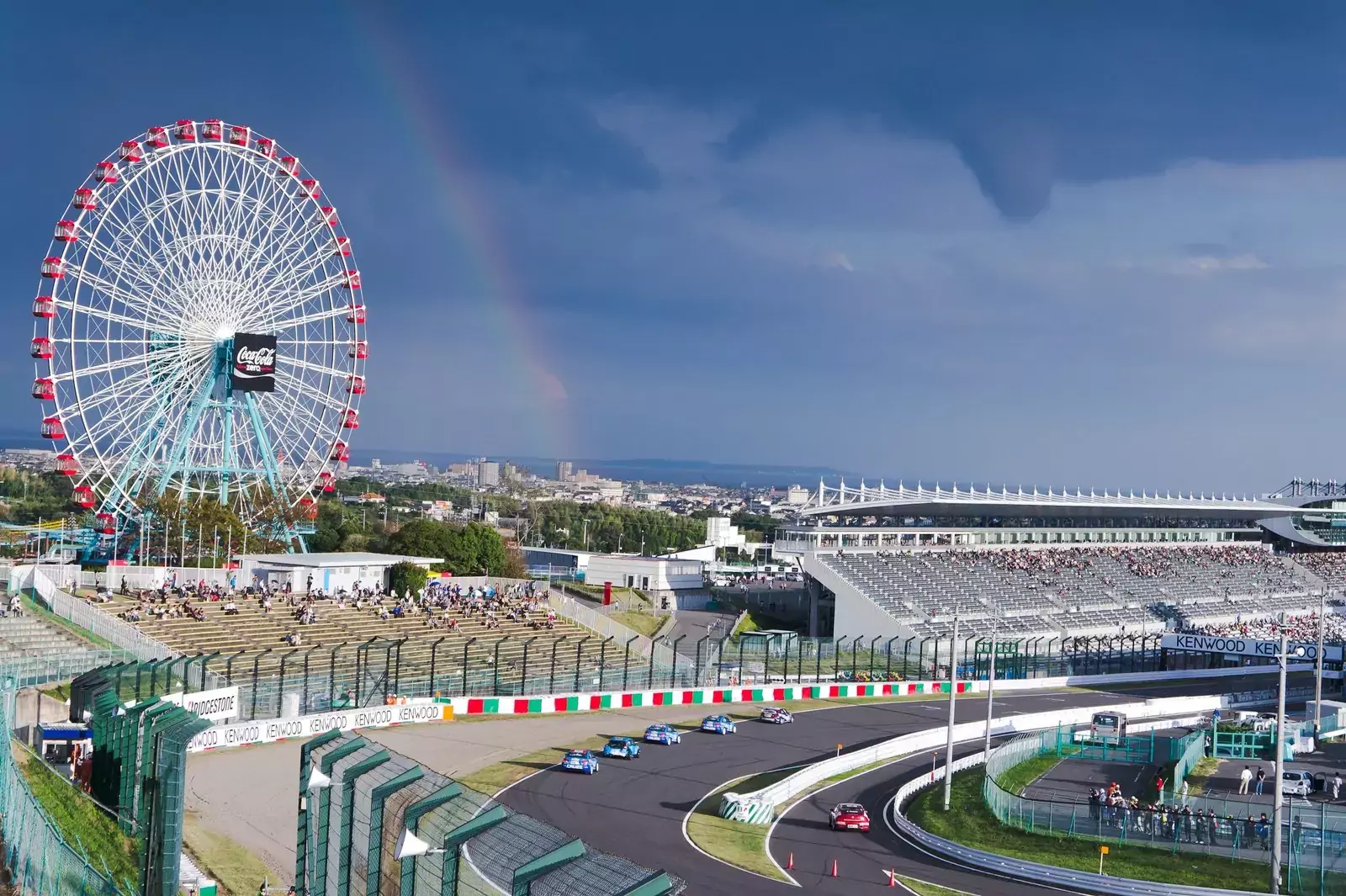
Formula 1 Japanese Grand Prix at Suzuka Circuit, usually September, brings a major crowd spike and booked-out hotels across the region
Suzuka 8 Hours motorcycle endurance race, late July or early August, draws large motorsport crowds

The climate of Suzuka

Suzuka, located in Mie Prefecture, experiences a humid subtropical climate (Köppen Cfa) with notable seasonal changes. Summers (June–August) are hot, humid, and often cloudy, with average highs reaching 31–32°C in August and lows around 23°C. The rainy season, or 'tsuyu,' occurs from early June to mid-July, bringing frequent and sometimes intense rainfall. July is typically the wettest month, with over 230 mm of rain, and typhoons may impact the area from August to October, occasionally causing strong winds and heavy downpours. Sunshine hours peak in July and August, averaging 6–7 hours per day.

Winters (December–February) are cool to cold, with average highs of 8–10°C and lows near 2–4°C. Snowfall is rare and light, but the season can be windy and mostly clear. Spring (March–May) and autumn (September–November) offer the most comfortable weather, with mild temperatures (13–23°C), moderate rainfall, and abundant sunshine. Cherry blossoms bloom in late March to early April, while autumn foliage colors the city from late October through November. Suzuka receives about 1,700–1,850 mm of precipitation annually, with September also being notably wet. Winds are generally moderate, but can pick up during storms and typhoons. Daylight hours range from about 9.8 in winter to 14.5 in summer.

Average climate data for Suzuka, Japan
Month Jan Feb Mar Apr May Jun Jul Aug Sep Oct Nov Dec Year
Average maximum temperature (°F) 44 47 53 62 73 78 85 89 80 70 60 49 89
Average minimum temperature (°F) 35 35 39 46 56 64 71 74 67 58 47 39 35
Average precipitation (inch) 0 0 1 1 1 2 3 2 2 2 0 0 15
Average rainfall days (days) 7 6 10 10 9 14 18 17 14 11 6 6 128
Average snowfall (inch) 0 0 0 0 0 0 0 0 0 0 0 0 1
Average snowfall days (days) 3 2 0 0 0 0 0 0 0 0 0 1 6
Average relative humidity (%) 76 74 74 73 74 78 83 78 79 78 77 78 77
Average wind speed (mph) 6 6 6 6 5 4 4 4 5 5 5 6 5
Average water temperature (°F) 60 58 58 61 66 72 78 81 79 74 69 64 68
Average daily daylight hours (h) 10 10 12 13 14 14 14 13 12 11 10 9 12
Average daily sunshine hours (h) 5 5 6 8 9 8 8 9 7 6 5 5 7
Average cloud coverage (%) 42 43 42 44 41 48 55 44 47 43 36 40 44
Average UV index 2 2 3 4 5 6 7 6 5 4 3 2 4

Travel info

  • Spring (March–May): Mild (6–23°C), cherry blossoms late March to early April, moderate rainfall. Ideal for sightseeing and outdoor activities; bring layers and a light jacket.
  • Summer (June–August): Hot, humid, and rainy (20–32°C), rainy season in June–July, typhoon risk in August–September. Wear breathable clothing, use sun protection, and carry rain gear.
  • Autumn (September–November): Comfortable (13–25°C), beautiful autumn foliage, wettest in September. Great for festivals and outdoor walks; pack layers and a rain jacket.
  • Winter (December–February): Cool and mostly dry (2–10°C), rare light snow, many sunny days but can be windy. Warm layers recommended, but heavy winter gear is rarely needed.
  • Rainy season is early June to mid-July; expect frequent showers but travel is possible.
  • Peak typhoon season is August–October; monitor forecasts for possible disruptions.
  • UV index is high from May to September; sun protection is essential.
  • Cherry blossom and autumn foliage periods are peak travel seasons – book accommodations early.

The best time to visit Suzuka

The best time to visit Suzuka is in spring (late March to May) and autumn (late September to November). These seasons offer mild, comfortable temperatures, lower humidity, and the city’s most beautiful scenery – cherry blossoms or vibrant autumn leaves. Outdoor activities, sightseeing, and festivals are especially enjoyable during these clear, pleasant months.

The worst time to visit Suzuka

The least favorable time to visit Suzuka is from June to early September, when the city experiences its rainy season, peak summer heat, and high humidity. Typhoons may also occur in late summer and early autumn, bringing heavy rain and possible travel disruptions. Outdoor activities can be uncomfortable during this period.

Frequently asked questions

What is the climate like in Suzuka throughout the year?

Suzuka has a humid subtropical climate with hot, humid summers and cool, windy winters. Rainfall is significant, especially from June to September, while spring and autumn are mild and pleasant.

When is the rainy season in Suzuka?

The rainy season in Suzuka typically occurs from early June to mid-July, bringing frequent and sometimes heavy rainfall. September is also wet, especially during typhoon season.

Does Suzuka get snow in winter?

Snowfall in Suzuka is rare and usually light. Winters are generally cool, with temperatures rarely dropping below freezing, but can feel colder due to wind.

What are the average summer temperatures in Suzuka?

Summer temperatures in Suzuka range from 23°C at night to 32°C during the day. Humidity is high, making it feel hotter, especially in July and August.

Is Suzuka affected by typhoons?

Yes, Suzuka can be affected by typhoons, mainly from August to October. Typhoons bring heavy rain and strong winds, so travelers should monitor weather forecasts during this period.

When is the best time to see cherry blossoms in Suzuka?

Cherry blossoms in Suzuka usually bloom from late March to early April. This period offers mild weather and is ideal for outdoor activities and hanami (flower viewing) parties.

How much sunshine does Suzuka get annually?

Suzuka enjoys a reasonable amount of sunshine, with the highest number of sunshine hours in July and August—around 6 to 7 hours per day on average.

Minimum and maximum temperatures in Suzuka

The warmest month, with the highest average maximum temperature, is August (88.5 °F). The month with the lowest average maximum temperature is January (44.5 °F). Overall, the average maximum temperature over the whole year is 65.8 °F.

The month with the highest average minimum temperature is August (73.9 °F). The coldest month, with the lowest average minimum temperature, is January (34.6 °F). Overall, the average minimum temperature over the whole year is 52.5 °F.

Water temperature in Suzuka

The month with the highest average water temperature is August (80.9 °F). The month with the lowest average water temperature is March (58.4 °F). Overall, the average water temperature over the whole year is 68.4 °F.

Rainfall amount in Suzuka

The wettest month, with the highest amount of precipitation, is July (2.9 inch). The driest month, with the least amount of precipitation, is January (0.4 inch). Over the whole year there are 15 inch of rainfall on average.

Rainfall days in Suzuka

The month with the most days of rain is July (17.7 days). The month with the fewest days of rain is November (6.1 days). Over the whole year there are 128.3 days of rain on average.

Snowfall amount in Suzuka

The month with the most snowfall is January (0.2 inch). The months with the least snowfall are April, May, June, July, August, September, October and November (0 inch). Over the whole year there are 0.6 inch of snowfall on average.

Snowfall days in Suzuka

The month with the most days of snowfall is January (2.7 days). The months with the fewest days of snowfall are April, May, June, July and August (0 days). Over the whole year there are 6.1 days of snowfall on average.

Relative humidity in Suzuka

The month with the highest average relative humidity is July (83 %). The month with the lowest average relative humidity is April (73.5 %). The overall average relative humidity over the whole year is 76.8 %.

Wind speed in Suzuka

The windiest month, with the highest average wind speed, is January (6.4 mph). The calmest month, with the lowest average wind speed, is July (4.1 mph). The overall average wind speed over the whole year is 5.3 mph.

Cloud coverage in Suzuka

The month with the cloudiest skies, so the highest cloud coverage, is July (54.9 %). The month with the clearest skies, so the lowest cloud coverage, is November (36.1 %). Over the whole year there is an average cloud coverage of 43.8 %.

Daylight hours and sunshine hours in Suzuka

The month with the longest days, so the most daylight, is June (Average daylight: 14 h). The month with the shortest days, so the least daylight, is December (Average daylight: 9.1 h). Over the whole year there are 11.9 h of daylight per day on average.

The month with the most sunshine per day is August (Average sunshine: 9.1 h). The month with the least sunshine per day is January (Average sunshine: 5 h). Over the whole year there are 6.8 h of sunlight per day on average.

UV index in Suzuka

The month with the highest average UV index is July (UV index: 7). The months with the lowest average UV index are January, February and December (UV index: 2). Over the whole year the average UV index is 4.1.

Was this page helpful?
Feedback