










Was this page helpful?

These place ratings give you a quick overview of how well a destination matches different types of trips.
"Best for" scores:
The specific interest scores show where this place really shines – whether it's ideal for hiking, food & drink experiences, museums or other activities. These highlights help you understand what makes the destination special at a glance.
"Your personal" scores:
This reflects how well a place matches your personal preferences. You can adjust the importances of travel topics or other personal requirements categories in your account settings.
"Suited for" badges:
These give you a quick overview of how well a destination suits specific types of travelers, to help you find the places that match your lifestyle, preferences or travel situation.
| Power Grid: |
110 V, 60 Hz Plug: Type A , Type B
Type A:
  Read about power adapters |
|---|---|
| Currency: |
CFP Franc (XPF) $1 ≈ CFPF 107 |
| Cashless info: |
Rating 4/5
Cashless payments are widely accepted in larger cities and tourist areas, but cash is often preferred in more rural locations. Credit cards are commonly used in resorts and hotels.
Save with a travel credit card |
| eSIM providers: |
Best value: Saily Read our in-depth comparison |
| Tipping: | Tipping is not mandatory in French Polynesia but appreciated. A 10% tip is common in restaurants, and small tips for hotel staff and taxi drivers are welcome. |
|---|---|
| Public drinking: | Public drinking is not permitted in many areas of French Polynesia, and alcohol is typically consumed in licensed venues such as bars and restaurants. |
| Public smoking: | Smoking is prohibited in indoor public spaces but is allowed in designated outdoor areas. |
| French National Day (July 14) |
Celebrates France's national holiday |
|---|---|
| Heiva Festival (July) |
A celebration of traditional Polynesian culture and dance |
| Emergency contact: | Emergency Numbers: 17 (Police), 15 (Ambulance), 18 (Fire) |
|---|---|
| Taxi apps: | Uber |
| Other: | French Polynesia is known for its stunning islands, crystal-clear waters, and overwater bungalows. It's a popular destination for luxury tourism, snorkeling, diving, and experiencing Polynesian culture. |
The best times to travel section shows how the months compare for a visit, so you can find the time of year that fits what you want to do.
Background colors of the months:
The color shows the typical temperature: yellow (hot), green (mild) and blue (cold). How strong the color is shows the travel season: full color means high season, soft color means shoulder season and soft-striped means off season.
Weather symbols:
Each month has one symbol showing what the weather is typically like, such as hot and sunny, freezing or a rainy or snowy season. Use them to quickly spot months that match the weather you want, or to avoid the ones that don't.
Crowdedness:
The people icon shows how busy the place usually is. The more people, the more crowded it gets.
Additional notes:
The gray info boxes point out special things worth knowing, like recurring weather issues or seasonal events.
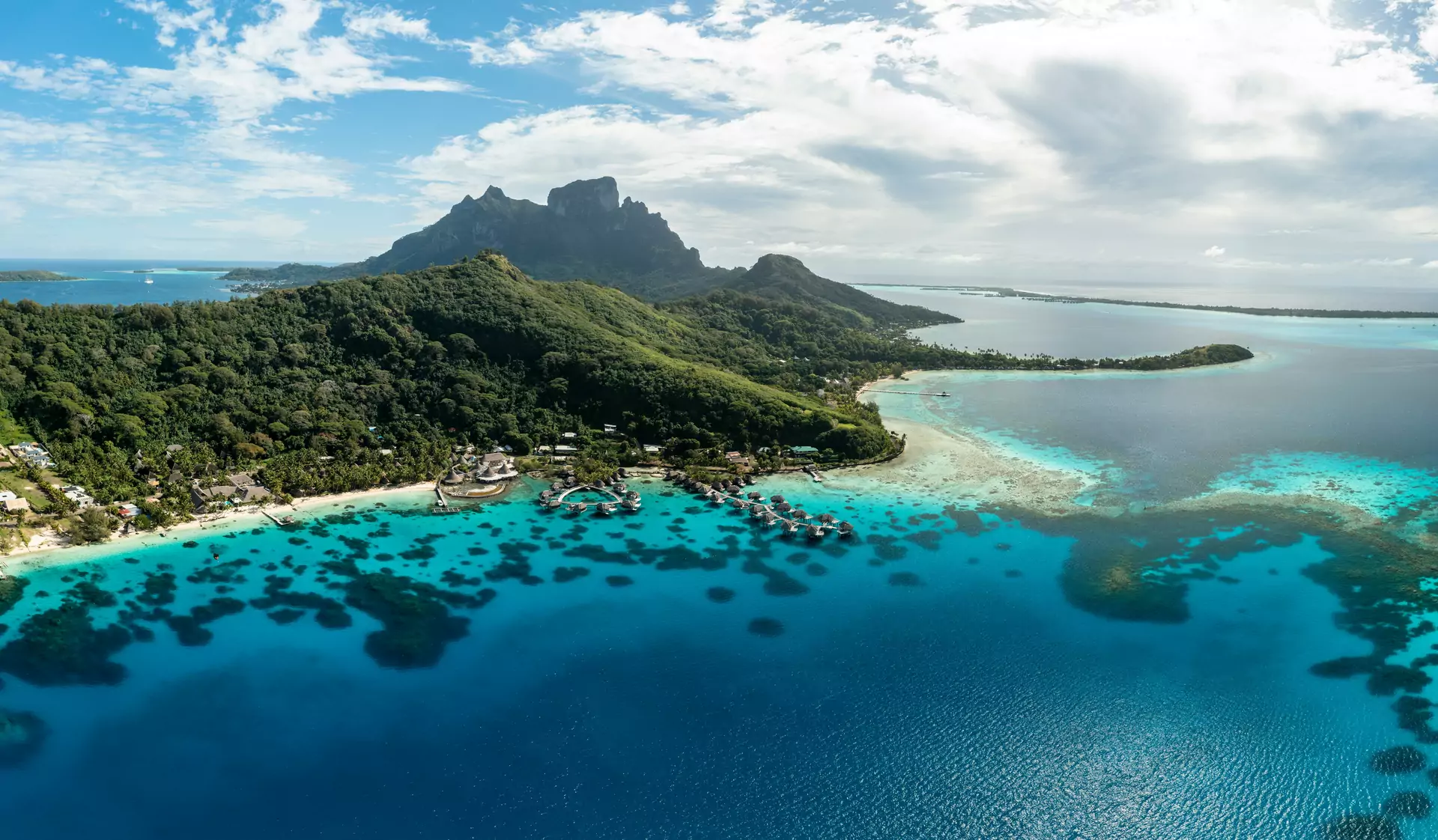
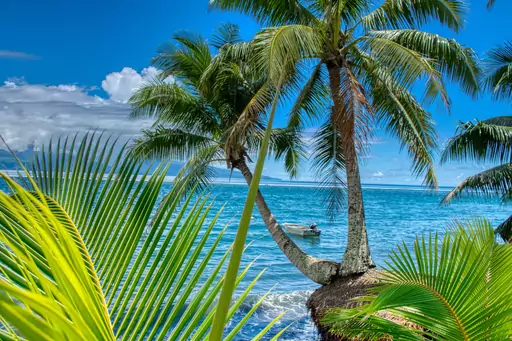
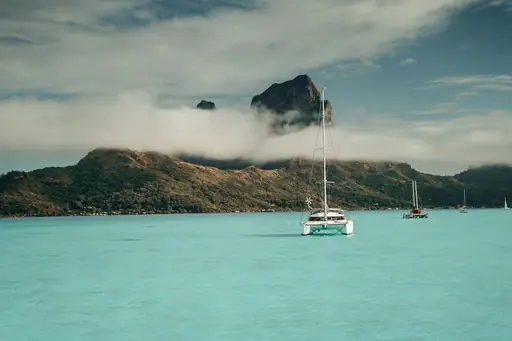
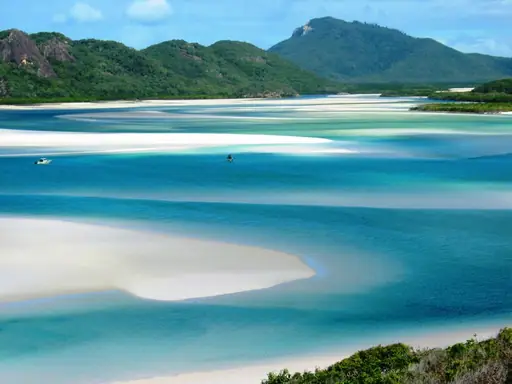
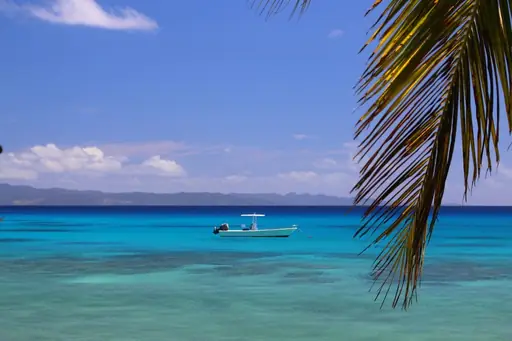
Bora Bora suits people who want a lagoon holiday with little else to plan. The water inside the reef is shallow and very clear, in shades of blue and green that change with the light. You can snorkel over coral gardens and swim with rays and reef sharks on a guided trip. Kayaks and paddleboards let you move between the islets. Boat tours also stop at quiet sandbars and white-sand motu for lunch. On land the main sight is Mount Otemanu, a volcanic peak best seen from the lagoon or from the ring road. Guided hikes reach viewpoints on the lower slopes. Vaitape has a small harbor, a few shops and remains from the American base set up in World War II, including old guns above the coast. ATV and 4x4 tours cover these sites in a couple of hours. Matira Beach at the south end is the main public beach, with shallow water and views toward the motu. The island is expensive. Most visitors stay at resorts on the motu, where meals and boat transfers add to the bill. Guesthouses on the main island are a much cheaper way to see the same lagoon. The drier months from May to October are the most popular. Plan two to four nights, often as an add-on after Tahiti or Moorea.
Most visitors fly from Tahiti. Air Tahiti flights from Tahiti-Faa'a International Airport (PPT) in Papeete take about 50 minutes and land at Bora Bora Airport (BOB) on Motu Mute, a small islet north of the main island. International flights don't land here, so you connect in Tahiti from Los Angeles, Auckland, Tokyo or other hubs. A short boat ride takes you from the airport to Vaitape or straight to your resort. Many resorts meet arriving flights with their own boats, so confirm the transfer in advance. Some ships also sail from Tahiti, but they take much longer than the plane. Many nationalities can visit French Polynesia for up to 90 days without a visa, but the rules depend on your passport. Your passport usually needs to be valid for at least three months after you leave. Declare anything taxable or restricted at customs.
Bora Bora is known for resorts built on private islets and over the lagoon. Overwater bungalows have glass floors and a ladder into the water. Prices are among the highest in French Polynesia. Meals and boat transfers are usually extra. Guesthouses and smaller hotels on the main island are a cheaper option. Matira has the most choice, with a beach, a few restaurants and views of the lagoon. Vaitape suits you if you want shops and the boat quay close by. From there you reach the motu on day tours. Check before booking what the rate includes, especially boat transfers and breakfast. Rooms can be fully booked months ahead for the drier months from May to October, so reserve early for that period. Many resorts set a minimum stay of two or three nights.


The main island has a flat ring road of about 20 mi and most of the activity is on the water. Traffic drives on the right and is light. Getting to the motu always needs a boat.
Bikes and scooters:
Bicycles and motor scooters can be rented near Vaitape and Matira. The ring road takes a few hours by bike. Start early because midday is hot. Watch for the few cars on the narrow stretches.
Cars and taxis:
Cars can be rented for a day, which suits the ring road and the WWII sites. Taxis are few, so ask your hotel to arrange pickups for dinner and airport transfers.
Boats:
Resort shuttles and water taxis link the motu with Vaitape and the airport. Most stop in the evening, so check the last departure before you go out. Lagoon tours leave from the same quays.
Tours:
Guided ATV tours, 4x4 trips, lagoon cruises and helicopter flights are available. Book them ahead in the busy months.
Food on Bora Bora is built around fresh fish and imported ingredients, so prices are high. Resorts have their own restaurants. The main island has waterfront places, snack bars and small shops. Waterfront restaurants are popular, so reserve ahead. Tipping isn't expected.
Poisson cru:
Raw tuna marinated in lime juice and mixed with coconut milk, cucumber and onion. It's served cold as a starter or a light lunch and is on most menus around the island.
Grilled fish:
Tuna and mahi-mahi are served grilled with vanilla sauce or coconut cream, usually with rice or breadfruit. It's the standard dinner order in restaurants on the main island.
Ma'a Tahiti:
A traditional feast of pork, fish and root crops cooked in an underground oven. Resorts and tour operators serve it on set nights, often with dance.
Self-catering:
Small supermarkets near Vaitape and Matira sell bread, fruit and basics. They help if your guesthouse has a kitchen and keep costs down.
We calculate the average costs when traveling to destinations and compare those with the living costs at your home. With this you can get an estimate of how expensive or cheap the destination is for you.
To customize this, you can set up which location and price level are used for the calculations in your account settings.
The exchange rate price factor shows how expensive or cheap a currency currently is compared to its historical average. It's a quick way to see if a country is currently more or less affordable due to exchange rate changes.
Log in to add this place to a travel list and get a summary of all recommended items for your whole trip.
