















Was this page helpful?

These place ratings give you a quick overview of how well a destination matches different types of trips.
"Best for" scores:
The specific interest scores show where this place really shines – whether it's ideal for hiking, food & drink experiences, museums or other activities. These highlights help you understand what makes the destination special at a glance.
"Your personal" scores:
This reflects how well a place matches your personal preferences. You can adjust the importances of travel topics or other personal requirements categories in your account settings.
"Suited for" badges:
These give you a quick overview of how well a destination suits specific types of travelers, to help you find the places that match your lifestyle, preferences or travel situation.
| Power Grid: |
110 V, 60 Hz Plug: Type A , Type B
Type A:
  Read about power adapters |
|---|---|
| Currency: |
Colombian Peso (COP) $1 ≈ COP 3,158.18 |
| Cashless info: |
Rating 3/5
Cashless payments are becoming more common, especially in cities. Credit and debit cards are widely accepted, but cash is still preferred in many rural areas.
Save with a travel credit card |
| eSIM providers: |
Best value: Saily Flexibility: Airalo Read our in-depth comparison |
| Tipping: | Tipping is not obligatory, but a tip of 5-10% is appreciated in restaurants. Taxis generally do not expect a tip, but rounding up the fare is common. |
|---|---|
| Public drinking: | Public drinking is not allowed in some areas, especially in cities. It is best to consume alcohol in licensed venues like bars or restaurants. |
| Public smoking: | Smoking is prohibited in indoor public spaces, including restaurants, bars, and public transport. |
| Independence Day (July 20) |
National holiday celebrating Colombia's independence with parades and festivities |
|---|---|
| Christmas (December 25) |
Celebrated with family gatherings and festive meals |
| Emergency contact: | Emergency Number: 123 |
|---|---|
| Taxi apps: | Uber, Cabify |
| Other: | Colombia is known for its coffee, vibrant culture, and beautiful landscapes, including the Andes mountains and Caribbean beaches. |
The best times to travel section shows how the months compare for a visit, so you can find the time of year that fits what you want to do.
Background colors of the months:
The color shows the typical temperature: yellow (hot), green (mild) and blue (cold). How strong the color is shows the travel season: full color means high season, soft color means shoulder season and soft-striped means off season.
Weather symbols:
Each month has one symbol showing what the weather is typically like, such as hot and sunny, freezing or a rainy or snowy season. Use them to quickly spot months that match the weather you want, or to avoid the ones that don't.
Crowdedness:
The people icon shows how busy the place usually is. The more people, the more crowded it gets.
Additional notes:
The gray info boxes point out special things worth knowing, like recurring weather issues or seasonal events.
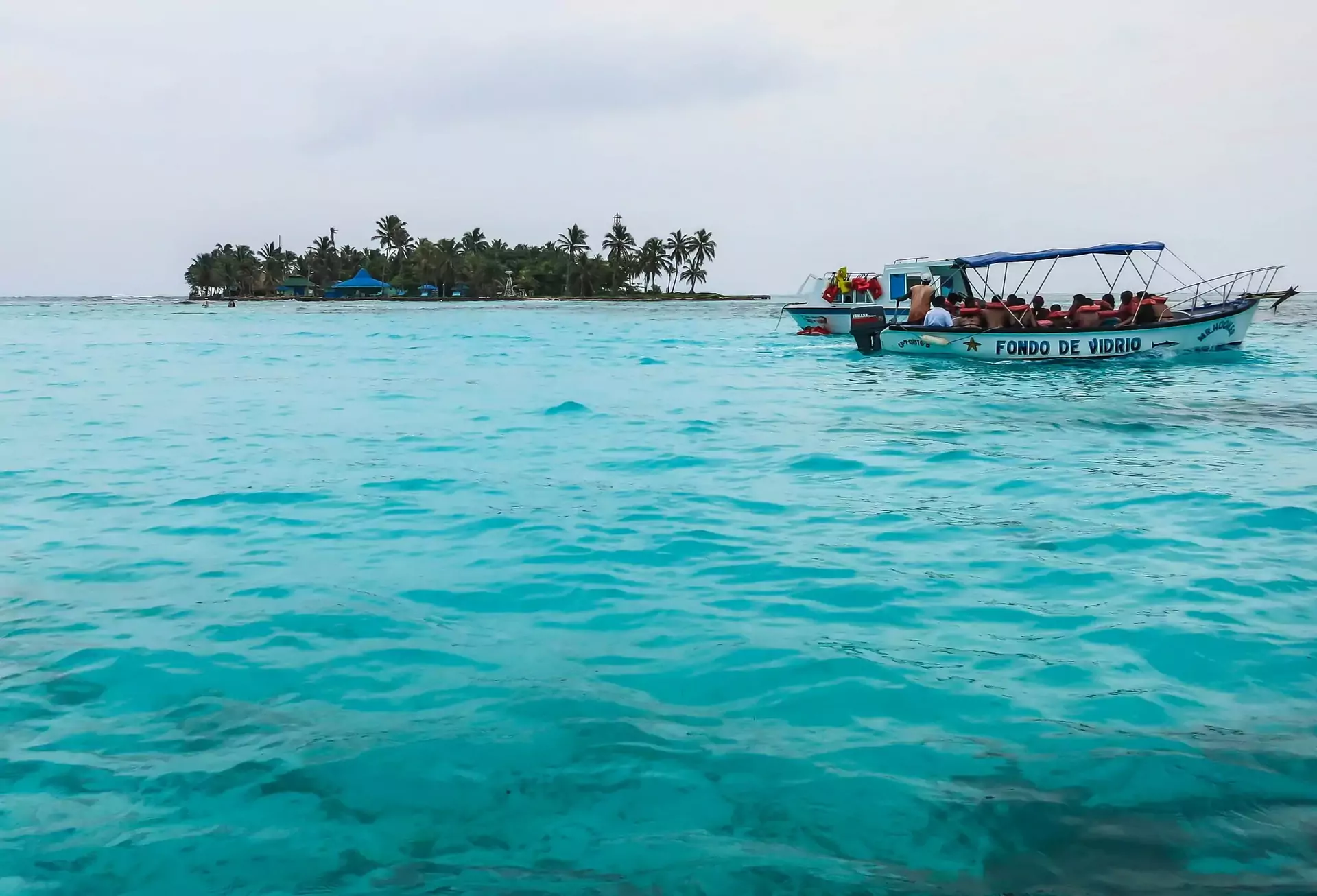
Water is the reason to come to San Andrés. The sea near the cays is calm and shallow enough for easy snorkeling. Divers have nearly forty sites to choose from. Most of the beaches in town are busy, so the better swimming is usually on the boat trips. Johnny Cay is about 15 minutes away by boat and has a beach with palms and reggae music. The Acuario cays, including Haynes Cay and Rose Cay, have shallow water where you can snorkel from the shore. A nearby tour lets visitors feed stingrays in the shallows. On land, West View is a spot on the west coast with platforms for swimming and snorkeling. The Hoyo Soplador on the south coast is a blowhole where seawater shoots up through the rock when the waves are big. Raizal culture is part of the trip. The island's English-speaking Protestant community, with its Creole language and Baptist churches, is different from mainland Colombia. Music such as reggae, soca and calypso is common. Some native inns are run by Raizal families. The town center is also a duty-free zone with shops selling electronics and perfume. San Andrés suits people who want a beach trip with boat days and a bit of local culture. There's little else to do beyond that, so three or four days is enough. Providencia, a quieter island to the north, has its own page.
Flying is the way to reach San Andrés. Gustavo Rojas Pinilla International Airport (ADZ) is at the northern end of the island, a few minutes by taxi from the town and most hotels. Direct flights come from Bogotá, Medellín, Cartagena and other Colombian cities. International flights are limited, so many travelers connect through Bogotá or Panama City. Non-residents need a tourist card to enter the island. It can be bought at the airport desk or arranged ahead through the Gobernación's online platform. Colombia allows many nationalities, including British citizens, to visit visa-free for up to 90 days. You need an onward or return ticket and a passport valid on entry. Six months of validity is recommended. There's no regular passenger ferry from the mainland. Providencia, the other main island in the archipelago, is reached by small plane or by boat from San Andrés. Check schedules ahead because crossings can be cancelled in rough weather.
Most visitors stay in one of two areas. The town center and Spratt Bight have hotels, hostels and apartments within walking distance of the beach, shops and restaurants, which suits short stays and early flights. San Luis on the east coast is quieter and has a long beach, beachfront hotels and resort-style places. Many hotels sell packages with meals included. The Raizal community offers native inns, which are family-run guesthouses in traditional homes. Sound Bay and the hill area known as La Loma have this type of stay and give a more local feel than the resort areas. Prices tend to be mid-range to high for Colombia, with more choice at the upper end. The island fills up in December and January, around Easter and during Colombian school holidays, so book early for those periods. Outside them, rooms are easier to find and sometimes cheaper.
The island is small and one road follows the whole coast. The main town, called El Centro, is at the northern end next to the airport and Spratt Bight beach. Most hotels, shops and restaurants are in or near the town, while the quieter beaches and sights are along the road to the south and east.
Rental cars and carts:
Renting a car is a common way to tour the island. Golf carts and scooters are available too. A full loop takes a couple of hours with stops. Driving is straightforward, though you should watch for scooters and pedestrians.
Taxis:
Taxis are easy to find in town and are the simplest way to reach beaches and sights without driving. Agree the fare first or ask your hotel to book a licensed driver.
Buses:
Local buses go around the island on the ring road and cost little. They're slower and less frequent than taxis, but they work for reaching the beaches along the coast.
Boats:
Boats leave from the town area for Johnny Cay and the Acuario cays. Tours are usually sold by operators and hotels and include the return trip.
San Andrés food is Caribbean island cooking built on fresh fish, crab, coconut and plantain, with English-speaking Raizal dishes next to Colombian ones. Restaurants in town serve seafood and international food. Supermarkets are well stocked but prices tend to be higher than on the mainland since most food is imported.
Rondón:
The island's best-known dish is a slow-cooked stew of fish, conch or pork with coconut milk, yam, plantain and dumplings. It's filling and often shared.
Fried fish:
Whole fried fish such as mojarra or red snapper is served with coconut rice and fried plantain. It's the standard meal at beachfront restaurants.
Crab:
Crab appears in empanadas, soup and stews. It's a local favorite and shows up on many menus, often with coconut rice or fried plantain on the side.
Cocoloco:
A coconut cocktail served in the shell, usually with rum. It's sold at beach bars and is popular in the afternoon.
We calculate the average costs when traveling to destinations and compare those with the living costs at your home. With this you can get an estimate of how expensive or cheap the destination is for you.
To customize this, you can set up which location and price level are used for the calculations in your account settings.
The exchange rate price factor shows how expensive or cheap a currency currently is compared to its historical average. It's a quick way to see if a country is currently more or less affordable due to exchange rate changes.
Log in to add this place to a travel list and get a summary of all recommended items for your whole trip.
