
Last update: Oct 23, 2026
* We earn a commission from some links on this page.
Fiji Summary
These place ratings give you a quick overview of how well a destination matches different types of trips.
"Best for" scores:
The specific interest scores show where this place really shines – whether it's ideal for hiking, food & drink experiences, museums or other activities. These highlights help you understand what makes the destination special at a glance.
"Your personal" scores:
This reflects how well a place matches your personal preferences. You can adjust the importances of travel topics or other personal requirements categories in your account settings.
"Suited for" badges:
These give you a quick overview of how well a destination suits specific types of travelers, to help you find the places that match your lifestyle, preferences or travel situation.
Suited for
Fiji – Quick facts
| Power Grid: |
240 V, 50 Hz Plug: Type I
Type I:
 Read about power adapters |
|---|---|
| Currency: |
Fiji Dollar (FJD) $1 ≈ FJD 2.25 |
| Cashless info: |
Rating 4/5
Cashless payments are accepted in larger towns and tourist areas, but cash is still widely used in rural regions. Credit cards are commonly accepted in resorts and hotels.
Save with a travel credit card |
| eSIM providers: |
Best value: Saily Flexibility: Airalo Read our in-depth comparison |
| Tipping: | Tipping is not expected in Fiji, but it is appreciated for good service. A 10% tip is common in restaurants, and small tips for hotel staff and taxi drivers are appreciated. |
|---|---|
| Public drinking: | Public drinking is allowed in Fiji, but it is generally consumed in licensed venues such as bars, restaurants, and resorts. |
| Public smoking: | Smoking is prohibited in indoor public spaces but allowed in designated outdoor areas. |
| Fiji Day (October 10) |
Celebrates Fiji's independence |
|---|---|
| Christmas (December 25) |
Celebrated with family gatherings and meals |
| Emergency contact: | Emergency Number: 911 |
|---|---|
| Taxi apps: | Uber, Fiji Taxi |
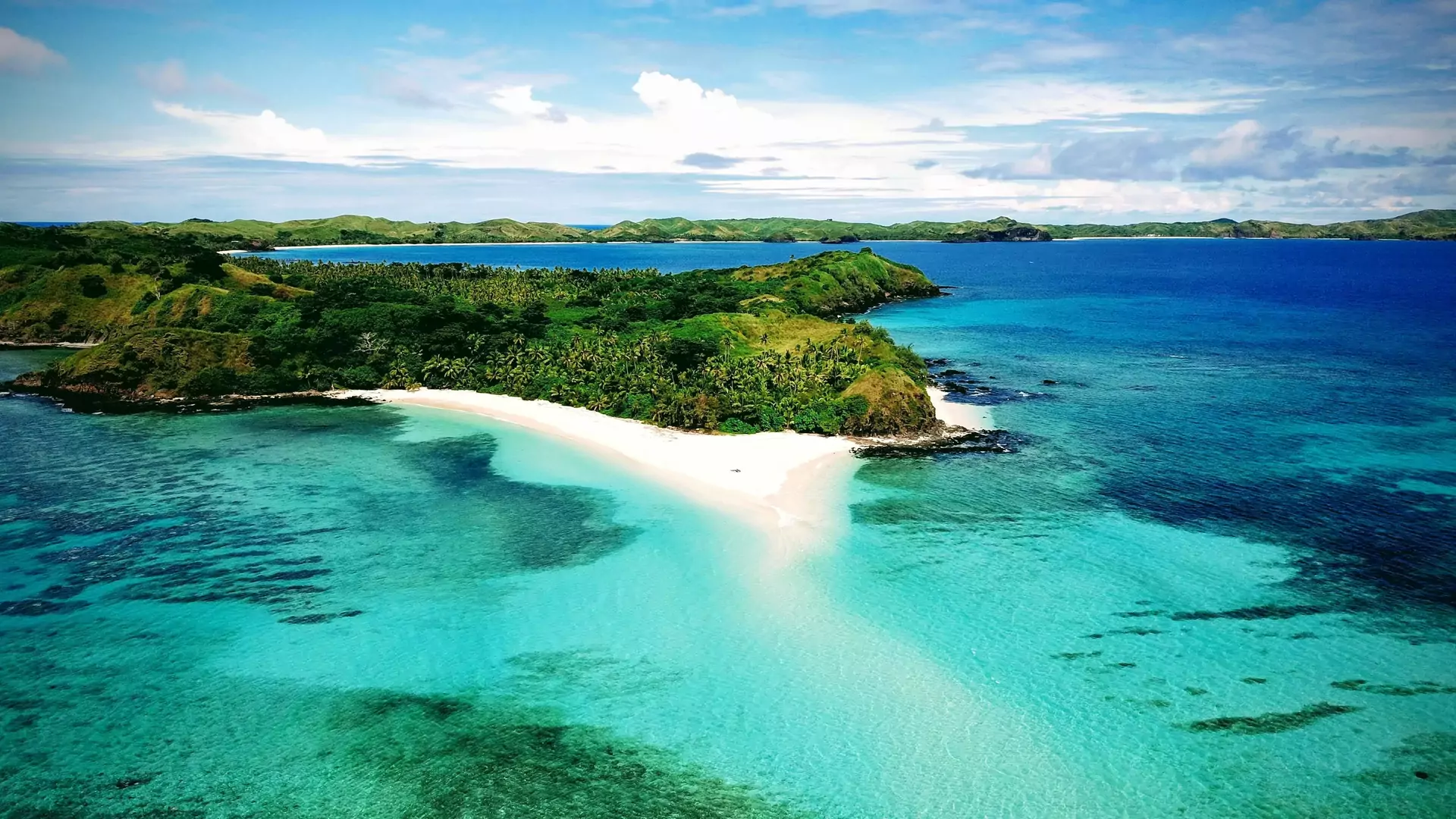
| Other: | Fiji is famous for its beautiful beaches, crystal-clear waters, and vibrant coral reefs. It is a popular destination for snorkeling, diving, and relaxation. |
Best times to travel
The best times to travel section shows how the months compare for a visit, so you can find the time of year that fits what you want to do.
Background colors of the months:
The color shows the typical temperature: yellow (hot), green (mild) and blue (cold). How strong the color is shows the travel season: full color means high season, soft color means shoulder season and soft-striped means off season.
Weather symbols:
Each month has one symbol showing what the weather is typically like, such as hot and sunny, freezing or a rainy or snowy season. Use them to quickly spot months that match the weather you want, or to avoid the ones that don't.
Crowdedness:
The people icon shows how busy the place usually is. The more people, the more crowded it gets.
Additional notes:
The gray info boxes point out special things worth knowing, like recurring weather issues or seasonal events.
for Fiji, Fiji
Dry season May to October is best for beaches and diving; wet season November to April brings heavy rain and cyclone risk
Australian and New Zealand school holidays (late June to July, December to January) bring peak crowds and prices
Climate varies by island group: the Yasawas and Mamanucas are driest, while Suva and the southeast of Viti Levu are wet year-round
Don't miss
- 🌊 Snorkel in the crystal-clear waters of the Mamanuca Islands
- 🏖️ Relax on the pristine sands of Natadola Beach
- 🐠 Explore the underwater coral gardens at Rainbow Reef
- ⛰️ Hike to the summit of Mount Tomanivi, Fiji’s highest peak
- 🌺 Visit the traditional Fijian villages and learn local customs
- 🌅 Join a sunset cruise around the islands
You've been here?
Log in to manage your own bucket list! Why travel to Fiji?
Fiji suits people who want warm water, coral reefs and a place where local culture is part of the trip. Snorkeling and diving are a big reason to come, with reef sites around the Mamanuca and Yasawa islands, Beqa Lagoon south of Viti Levu, Rainbow Reef off Taveuni and the Great Astrolabe Reef around Kadavu. Boat trips from Yasawa resorts include swims with manta rays and snorkeling with reef sharks. On land, Fijian village life is easy to see. Many resorts and tour operators arrange village visits and kava ceremonies. Some resorts hold a lovo, a feast cooked in an underground oven. Taveuni has rainforest walks and waterfalls in Bouma National Heritage Park. Sigatoka Sand Dunes National Park on Viti Levu has coastal walking trails. Levuka on Ovalau, the former capital, is a UNESCO World Heritage Site and a port town of colonial-era wooden buildings. Getting between islands takes time, so a week usually works best with one or two bases rather than many. The main cities are stops on the way rather than the reason to go. Nadi has the airport and the large Sri Siva Subramaniya Hindu temple. Suva has the Fiji Museum and a big municipal market, enough for a day. If you like beach time more than sightseeing, the Mamanucas are the closest island group to Nadi and need the least transfer time.
🏯Places worth seeing
-
1
Rotuma
🎡Places for activities
🏞️Natural landmarks
🛍️Shopping
🎈Events
-
Fiji Day
-
Hibiscus Festival
-
Bula Festival
-
Diwali
-
Fiji International Jazz & Blues Festival
-
South Indian Fire Walking Festival
-
Coral Coast Festival
-
Fiji Regatta Week
-
Lautoka Sugar Festival
-
Fiji International Golf Tournament
Knowledge before you go
- Mobile coverage is patchy on outer islands, so download maps beforehand.
- Cover shoulders and knees in villages. A bundle of kava roots is the customary gift for the chief.
- Only use taxis and minibuses with yellow number plates, since unlicensed ones are often uninsured.
- Keep a spare day before an international flight, because cyclone weather can suspend island boat services.
How to travel to Fiji
Flying is the practical way to reach Fiji. Nadi International Airport (NAN) on the west side of Viti Levu is the main gateway. Nausori Airport (SUV), roughly 30 minutes from Suva, is the smaller international airport and the hub for domestic flights to the east. Fiji Airways flies nonstop to Nadi from Los Angeles, Sydney, Auckland, Singapore and Hong Kong among other cities. Flights take about three hours from Auckland and ten to eleven hours from Los Angeles. From Europe you usually connect in one of these hubs. Nadi airport is about 20 minutes from Port Denarau, where the island catamarans leave. Island operators often include coach transfers from Nadi hotels. Suva is about 120 mi from Nadi by road, around three hours by car or four by express bus. No ferries run from neighboring countries, but cruise ships call at ports including Suva and Lautoka. Citizens of many countries can enter without a visa for up to four months. The passport has to be valid for at least six months after you leave.
Access summary
- Nadi & nearby islands: Fly to Nadi (NAN) from Australia, NZ, US, Asia.
- Mamanuca/Yasawa islands: Boat or seaplane transfers from Nadi/Port Denarau resorts.
- Fiji Airways hub at Nadi; oneworld Connect partner with broad regional network.
Check your route from anywhere
Where to stay in Fiji
Fiji has accommodation for most budgets, from large resorts to backpacker hostels and small family-run lodges on the outer islands. On Viti Levu, Denarau is a resort enclave a short drive from Nadi and next to the island ferry terminal. The Coral Coast has beach resorts on the south coast between Sigatoka and Pacific Harbour. Nadi itself suits a night or two around flights. Island stays are the usual choice for beach time. The Mamanucas are closest to Nadi and have mostly mid-range to upscale resorts. The Yasawas range from dorm-style lodges to high-end resorts and are served by hop-on hop-off catamaran passes. Taveuni and Kadavu have smaller lodges and dive resorts and take longer to reach. Many island resorts sell packages that include meals and activities, which helps where there's little else nearby. Around Christmas, domestic flights and island rooms can be booked months ahead. Suva has city hotels and suits you if you're here for the capital rather than the beach.
Hotel recommendations
*by rating and popularity. Commissions have no influence on the rankings.


How to get around Fiji
Most trips have two stages. On Viti Levu the main road goes from Nadi along the Coral Coast to Suva. Buses, taxis and rental cars cover it. Other islands need a boat or a small plane, which resorts can usually arrange.
Buses:
Express buses link Nadi and Suva in roughly four hours and local buses run shorter routes on Viti Levu, Vanua Levu and Taveuni. Fares are low. Routes and payment methods change, so ask at the station.
Taxis:
Taxis wait near the bus stations in Nadi and Suva. Licensed ones have yellow number plates. A taxi or carrier van for a day of sightseeing can be simpler than renting a car.
Car:
Vehicles drive on the left. A rental car gives you freedom along the Coral Coast, but many roads are in poor condition and dangerous at night because of pedestrians, stray animals and little street lighting.
Boats:
Catamarans from Port Denarau serve the Mamanuca and Yasawa islands, with a daily run up through the Yasawas. Rough seas can disrupt the ferries to Vanua Levu, Taveuni and Kadavu, which are slower and run less often.
Domestic flights:
Small planes are the quickest way to Vanua Levu, Taveuni and Kadavu, mostly from Nadi and Nausori. Nadi to Suva takes about 30 minutes in the air. Baggage allowances are small.
Food in Fiji
Fijian cooking is built around seafood, coconut and root crops like taro and cassava. The large Indo-Fijian community adds curries and roti. Chinese food is common too. Resort restaurants often mix international dishes with a few local ones. Markets and supermarkets in Nadi, Suva and other towns sell fruit, vegetables and fish, which helps if your accommodation has a kitchen. Street food is limited.
Kokoda:
Raw fish, often mahi mahi, cured in lime juice and coconut cream with onion and tomato. It's usually a starter and is sometimes served in a coconut shell.
Lovo:
Meat, fish and root vegetables cooked in an underground oven with hot stones. It's usually made for celebrations. Some resorts hold one on a set night each week.
Kava:
A drink called yaqona, made from pounded kava root and water and shared from a coconut shell cup. It tastes earthy and slightly numbs the mouth. It's offered at welcome ceremonies. Regular heavy drinking can affect the liver.
Curries:
Fish and vegetable curries with roti or rice are everyday meals in Suva and Nadi, where curry houses are easy to find. Rourou, taro leaves cooked in coconut cream, is a common Fijian side dish.
Budget snapshot
Costs compared to home
We calculate the average costs when traveling to destinations and compare those with the living costs at your home. With this you can get an estimate of how expensive or cheap the destination is for you.
To customize this, you can set up which location and price level are used for the calculations in your account settings.
Daily expenses in Fiji are around 52% lower than the average across United States. That means you'll spend a lot less on meals and getting around.
Exchange rate trend
The exchange rate price factor shows how expensive or cheap a currency currently is compared to its historical average. It's a quick way to see if a country is currently more or less affordable due to exchange rate changes.
Your exchange rate (USD to FJD) is 3% better than in recent years. That means traveling now costs around the same compared to the past.
Travel costs
To help you plan your trip, we provide estimated daily costs per person (when traveling as a pair) for different travel styles. These numbers give you an idea of what you might spend each day at this destination, including accommodation, food, transport and activities.
Additionally, we also provide average hotel costs for different travel styles to give you an estimate for the accommodation only.
Please note that these are only estimates. The real costs depend on booking times, season and other factors.
Daily cost summary
Travel style categories explained:
Backpacker:
Staying in hostels or budget hotels, cooking your own meals or eating cheap and choosing low-cost activities.
Mid-range:
Staying in mid-range hotels, eating at a mix of restaurants and casual spots and enjoying a variety of activities.
Luxury:
Staying in luxury hotels, dining out at high-end restaurants and enjoying premium experiences without worrying about the price.
| Backpacker | Mid-range | Luxury | |
|---|---|---|---|
| 💵 Total costs per day, including accommodation | |||
| 🏨 Accommodation per night, per person | |||
| 🍝 Food per day | |||
| 🚕 Transportation per day |
Food & Drink
| 🍽️ Restaurant Dinner, per person | |
|---|---|
| 🍛 Lunch Set, per person | |
| 🍟 Fast food combo | |
| 🍝 Preparing your own food, per day | |
| ☕ Cappuccino | |
| 🍺 Beer in a restaurant, 0.5 l / 16 oz |
Transportation
| 🚌 Public transport ticket | |
|---|---|
| 🚕 Taxi Ride, 10 km / 6 mi | |
| ⛽ Gas, 1 l / ¼ gal |
Other
| 🎞️ Movie ticket | |
|---|---|
| 👩⚕️ Doctor's consult | |
| 🤧 Cold medication | |
| 💇 Basic haircut |
Safety information overview
General safety
Fiji is generally safe, with occasional theft in Nadi, Suva and tourist areas. Extra care is wise when walking at night. Rip currents near reefs, unlit rural roads at night and the November to April cyclone season are the main risks.
Health & Medical
Healthcare is adequate for routine problems in Nadi and Suva but limited elsewhere. Hospitals often want cash up front, so insurance with evacuation cover matters. Mosquito-borne dengue and Zika are the infections to watch and the only recompression chamber for divers is in Suva.
Accessibility
Accessibility is limited. Town sidewalks are often uneven and unfriendly to wheelchairs and strollers. Island transfers can mean stepping onto small boats and beaches. Domestic planes are small. Some larger resorts have step-free rooms, so ask before booking.
Tap water
Tap water is generally safe in Nadi, Suva and most hotels and resorts, but it can look murky after heavy rain. Rural areas and outer islands often rely on tank or spring water, so stick to bottled or boiled water there.
Packing recommendations for Fiji
Log in to add this place to a travel list and get a summary of all recommended items for your whole trip.
🥾
Hiking boots
📷
Camera
🚰
Reusable water bottle
👕
Light, breathable clothing
🕶️
Sunglasses
🪰
Insect repellent
🩱
Swimwear
🧕
Modest clothing covering shoulders and knees
for village visits
🤿
Snorkeling gear
though rentals are available
🔋
Power bank
🩹
Basic first aid kit
🌞
Reef-safe sunscreen
👒
Sun hat
📃
Travel insurance
🪪
Copies of passport and important documents
📱
Travel eSIM
🔌
Universal power adapter
🩺
Prescription medication
💳
Credit card with no foreign transaction fees
🛂
Passport
Related articles & guides for Fiji



Nearby recommended places
Looking for inspiration?

Discover
Most beautiful beaches and coastal escapes
For a lot of people, a beach is the whole point of a holiday, but what makes a beach day perfect really depends on personal taste. Some travellers want isolation and the feeling…
Read more

Discover
Intimate escapes and romantic getaways
The most memorable trips for couples tend to have less to do with luxury and more to do with the quality of shared experience. A place that slows you down, removes the usual…
Read more
Discover
Top cruise destinations and major routes
Cruise travel has evolved considerably beyond its traditional demographic and now encompasses everything from large resort ships carrying thousands of passengers to small…
Read more
Discover
Top slow travel destinations and immersive experiences
Slow travel works against the instinct to see as much as possible in the shortest time, favouring depth over distance covered. The destinations best suited to it tend to reward…
Read more

Discover
Top island destinations and tropical getaways
Island travel offers a self-contained quality that few other destination types match, with defined geography, distinct local culture and the particular atmosphere that comes from…
Read more
Discover
Top volunteering destinations and ethical travel programs
The best volunteer travel destinations are the ones where the programme actually meets a need the community has identified, rather than one built mainly around the experience for…
Read more
Discover
Top boating destinations and cruising waters
Boating travel encompasses an enormous range of experiences from river cruising and canal boating to motor yacht charter, liveaboard diving and the growing circuit of destinations…
Read more

Discover
Top hot springs destinations and thermal resorts
Hot spring travel sits at the intersection of natural landscape, geological spectacle and bathing culture, with the world's most rewarding destinations combining accessible thermal…
Read more

Discover
Top luxury destinations and exclusive getaways
Luxury travel is defined less by price than by the quality of attention, access and experience that money can unlock at the top end of the market. The most rewarding luxury…
Read more

Discover
Top solo travel destinations and safe hubs
Traveling alone sounds like a bigger deal than it is. The first day feels strange – eating dinner by yourself, navigating without someone to double-check the map with, making every…
Read more

Discover
Best couple vacation destinations
Travelling as a couple sounds simple enough, yet the best couple vacation destinations mean something different to almost every pair. What feels romantic to one couple can feel…
Read more

Discover
Top surfing destinations and wave breaks
A genuinely great surf destination needs more than one good wave: it needs consistency, the right swell exposure and enough variety to suit more than one skill level and board. The…
Read more
Discover
Top flower destinations and botanical gardens
Flower travel has developed a dedicated following built around the world's most significant wildflower seasons, bulb field landscapes and botanical garden collections that offer…
Read more

Discover
Best destinations for first-time travelers
A first trip abroad works best somewhere that eases you in, rather than throwing every possible culture shock and logistical headache at you at once. Some first-time travelers…
Read more
Discover
Top scuba diving destinations and coral reefs
The world's best diving destinations share a few things in common: visibility, healthy reef structure and enough marine biodiversity to reward repeated dives in the same spot.…
Read more
What other users say about travelfilters
“travelfilters made it easy for me to find ski areas and compare what else they offer, so that I could find the best place for my personal travel style.”

Chris
Snowboarding & Onsen trip to Japan
“I love how transparent the data feels. There is no pushy upsell, just honest information and settings I can tune to my own travel style.”

Maria
After booking her 2027 winter escape
“The level of detail for each destination and how well those are displayed, make planning feel confident instead of overwhelming.”

Mina
Planned a week in New York City
“We used travelfilters for our planning from start to end. The trip turned out even better than expected, thanks to all their tools and customization options.”

Allan & Etienne
Trip to Japan to see autumn foliage
“Thanks to travelfilters, I found some hidden gems to see. Being able to filter for exactly your interests is a game changer for my travel planning.”

Michael
Tour through the old cities of Northern Italy
“The customizable filters helped me find a quiet beach town with good wifi and low season crowds in under five minutes.”

Diego
Weekend Escape to Llanes, Spain
“The airport connection map saved me hours by showing good flight options from my home airport to lesser-known cities.”

Nguyen
Planning a 2027 trip to France
“The website is clean, fast and focused on the search itself, which makes travelfilters feel more like a professional tool than an ad-heavy booking site.”

Hassan
Christmas Market trip, Germany
